French

Part 6 · Epilogue

Episode 51: Tout est bien qui finit bien

Getting Away I

  • 29 min video
  • About 80 min with practice
  • A2–B1

One last drink on the terrace of the Deux Magots before the big trip — and the whole cast parades past: Jean-Pierre off to Martinique, Uncle Guillaume ruined, Fersen fauché comme les blés, and Aunt Georgette, who has won le gros lot! Learn to say bring me back… (Rapportez-moi…), react to the unbelievable (Pincez-moi ! Dites-moi que je rêve !) and hear casual French next to polite French.

Start with Episode 1 free in two taps. Add your email when you are ready and every episode, this one included, opens for 7 days. No card needed.

A scene from French in Action episode 51, Tout est bien qui finit bien
minutes of video
29
CEFR level
A2–B1
key words
34
grammar patterns
3

By the end you can

  • have a drink and order in a café: On prend un pot ? — Garçon, une bouteille de cidre, s'il vous plaît.
  • ask someone to bring something back and offer to pay: Rapportez-moi une bouteille de porto. Je vous rembourserai.
  • react when you can't believe your eyes: Pincez-moi ! Dites-moi que je rêve ! Ce n'est pas possible !
  • say someone has no money, casually or politely: Il est fauché. Il n'a pas un rond. — Il n'a aucune fortune.
  • say what something looks like or belongs to with faire: Ça fait snob. Ça fait partie de l'éducation. Ça me fait quelque chose.

Listen out for

Five things to notice the first time you watch. Spotting them is half the lesson.

  • Hubert keeps asking for the cider — count how many times! (Alors, cette bouteille de cidre ? … Notre cidre ? … Ce cidre !)
  • Each passer-by says where they're going: Je pars pour la Grèce, Je pars pour Katmandou, Je vais à Bordeaux, On part demain au Portugal.
  • Two ways to say 'broke': casual fauché, pas un rond — and its opposite, Georgette's gros lot.
  • Watch Colette's face on Toujours aussi puant ! — shoulders, eyebrows, lips all at once.
  • The cork! Watch where it lands — and what the man in black leaves on his table.

Scene by scene

The episode in 13 short scenes, with the time each one starts in the video.

  1. Starts at 0:00

    1.Everyone passes by

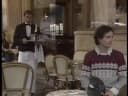
    The English narrator sets up the episode: all the bit players pass by — Uncle Guillaume has lost his fortune, Aunt Georgette has won the lottery, and the man in black leaves notes about Mireille.

  2. Starts at 1:08

    2.A drink at the Deux Magots

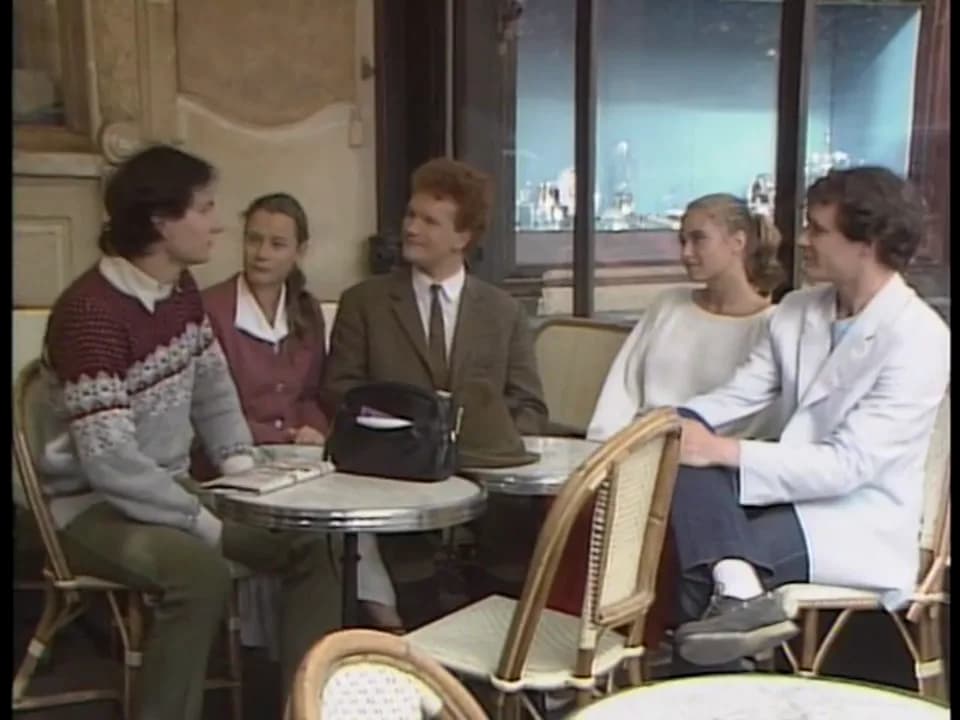
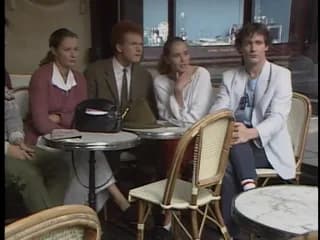
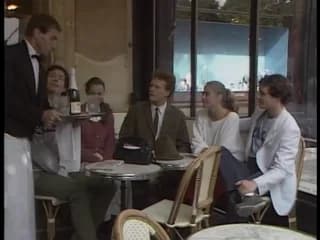
    The five friends sit on the terrace of the Deux Magots. Jean-Michel finds it snobbish; Hubert says it's part of Robert's education. Hubert orders sparkling cider — the waiter has none. Jean-Pierre Bourdon hurries past: a girl is waiting for him at the Club Med in Martinique.

  3. Starts at 2:38

    3.Godmother, sister, uncle…

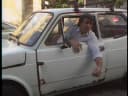
    The parade begins: Mme Courtois is off to Bulgaria for a yogurt cure (Minouche goes into boarding); Ghislaine leaves for Brighton; Cécile and her husband pass on new racing bikes, heading for Portugal — Colette asks them for a bottle of port. Uncle Victor drives by in his 2CV, off to Bordeaux.

  4. Starts at 4:31

    4.Uncle Guillaume is ruined

    Uncle Guillaume passes in an old banger: he sold his 604 after losing everything at roulette in Monte Carlo, and is off to Kathmandu, where you can live for next to nothing. Then Fersen, the muscular Swede on a moped, heads for Greece — he never had an Alpine; he's flat broke.

  5. Starts at 5:53

    5.Aunt Georgette's jackpot

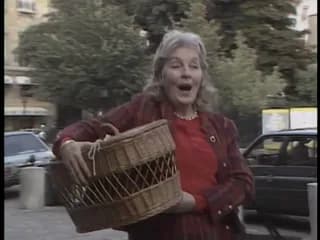
    Mireille can't believe her eyes: Aunt Georgette, in a pale blue convertible beside a tanned, bearded man. She has won the jackpot with a ticket Fido found, met Georges again the next day, and they're off to get engaged at the Taj Mahal.

  6. Starts at 7:54

    6.The cork flies

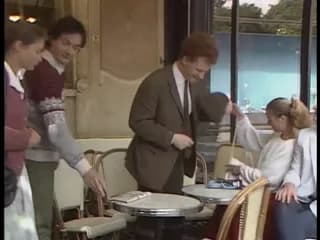
    The cider finally arrives. Robert opens it — carefully, but not carefully enough. The cork hits a man in the forehead; he runs off, leaving dark glasses and a notebook full of notes about Mireille… and an illegible 'plan of attack'.

Show the other 7 scenes
  1. 7Un pot, ça fait snobThe professor explains: un pot (a jar of jam, a pot of paint… and a drink), ça fait snob / sport / romantique, faire partie de, ça me fait quelque chose, and Robert's postérieur bien frotté de littérature.Starts at 9:10
  2. 8Your turn: order the ciderListen to Hubert and the waiter again, then take Hubert's part: Garçon ! Une bouteille de cidre bouché, s'il vous plaît. — Débrouillez-vous, trouvez-nous du cidre.Starts at 12:51
  3. 9Review: who went by?The professor replays the parade: Jean-Pierre, Mme Courtois and her yogurt cure, dawn (l'aube), racing bikes, port that costs pour rien, Uncle Victor's roof rack and fishing rods, Guillaume's vieux tacot and his ruin — trois fois rien.Starts at 13:39
  4. 10Fauché, pincez-moi, beau ténébreuxFauché comme les blés (wheat that's been cut = no money), pas un rond, pincez-moi (a crab, a clothes peg, Marie-Laure), une écharpe, un beau ténébreux, bronzé, la soie and un collier de barbe.Starts at 17:28
  5. 11Le gros lot, c'est délirantLe gros lot, a ticket found par terre, respirer (breathe in!), enivrant (the scent of roses, sea air) and délirant — at her age, getting engaged at the Taj Mahal!Starts at 20:33
  6. 12Déboucher, frapper, s'enfuirDéboucher a bottle of mousseux, the cork saute, a gerbe of cider, the cork frappe the waiter and the man in black en plein front, he s'enfuit en renversant chairs and leaves a carnet whose pages are noircies de notes.Starts at 22:32
  7. 13What do you remember?Quick questions with pictures: a drink or a cure? a kick in the backside? what do you say to friends going to Portugal? broke or rolling in money? And the mystery stays: who is the man in black? Mystère et boule de gomme.Starts at 25:43

Key phrases, with Hindi and Punjabi pronunciation

Real lines from this episode, written the way they sound in Latin letters, Devanagari and Gurmukhi.

  • C'est une drôle d'idée de venir prendre un pot ici.It's a funny idea to come and have a drink here.
    say tün DROHL dee-DAY duh vneer pra(n)-dr(uh) a(n) PO ee-SEEसे tün द्ग़ोल दी-दे दअ व्नीग़ प्ग़ाँद्ग़ ऐँ पो ई-सीਸੇ tün ਦ੍ਗ਼ੋਲ ਦੀ-ਦੇ ਦਅ ਵ੍ਨੀਗ਼ ਪ੍ਗ਼ਾਂਦ੍ਗ਼ ਐਂ ਪੋ ਈ-ਸੀ
  • Débrouillez-vous, trouvez-nous du cidre.Sort it out, find us some cider.
    day-broo-yay-VOO, troo-vay-NOO dü SEEDRदे-ब्ग़ू-ये-वू, त्ग़ू-वे-नू dü सीद्ग़ਦੇ-ਬ੍ਗ਼ੂ-ਯੇ-ਵੂ, ਤ੍ਗ਼ੂ-ਵੇ-ਨੂ dü ਸੀਦ੍ਗ਼
  • Rapportez-moi une bouteille de porto.Bring me back a bottle of port.
    ra-por-tay-MWA ün boo-TEY duh por-TOग़ा-पोग़-ते-मुआ ün बू-तेय दअ पोग़-तोਗ਼ਾ-ਪੋਗ਼-ਤੇ-ਮੁਆ ün ਬੂ-ਤੇਯ ਦਅ ਪੋਗ਼-ਤੋ
  • Je vous rembourserai.I'll pay you back.
    zhuh voo ra(n)-boor-se-RAYझ़अ वू ग़ाँ-बूग़-सअ-ग़ेਝ਼ਅ ਵੂ ਗ਼ਾਂ-ਬੂਗ਼-ਸਅ-ਗ਼ੇ
  • Il est fauché comme les blés.He's flat broke.
    ee-lay fo-SHAY kom lay BLAYई-ले फ़ो-शे कोम ले ब्लेਈ-ਲੇ ਫ਼ੋ-ਸ਼ੇ ਕੋਮ ਲੇ ਬ੍ਲੇ

Sounds to master in this episode

French sounds explained through the Hindi and Punjabi sounds you already make, with real lines from the episode to copy.

  • The ch of chat/ʃ/

    शਸ਼

    French ch is always soft श / ਸ਼ — never the ch of English church: *chemise, fauché, bouchon, écharpe, chic, déboucher. Hold it long and smooth: fo-SHAY, boo-SHO(N)*.

    • Il est fauché comme les blés.He's flat broke.
    • Attention de ne pas faire sauter le bouchon.Careful not to make the cork pop.
  • Equal beats♩♩♩

    तबला ठेकाਤਬਲਾ ਠੇਕਾ

    Many French sentences fall into two rhythmic groups. The voice rises at the end of the first group, then falls at the end of the second: Il n'a pas changé ↗ | celui-là ↘. On part demain ↗ | au Portugal ↘. Copy the melody — it makes you sound French at once.

    • Eh bien, il n'a pas changé, celui-là.Well, he hasn't changed, that one.
    • On part demain au Portugal.We're leaving for Portugal tomorrow.

Grammar patterns in this episode

Each pattern comes from real lines in the episode. Here is the short version; in the course you notice it in the video first, then drill it.

  1. 1Fauché, la nana, un tacot — casual vs. correct French

    French has levels of speech (niveaux de langue). Friends, Jean-Michel and Marie-Laure talk casually (familier): fauché, pas un rond, la nana, un tacot, une bagnole, des balles (francs), puant, ouais. Hubert's mother or Aunt Amélie would choose the more correct word: il n'a aucune fortune, pas un sou, cette jeune personne, une vieille voiture. Understand both; use the casual ones only with friends.

    From the episode

    Il est fauché comme les blés.

    He's flat broke.

    Hindi and Punjabi link

    Just like Hindi/Punjabi: you'd say यार, मैं कड़का हूँ / ਯਾਰ, ਮੈਂ ਕੜਕਾ ਹਾਂ to a friend, but never to your boss. Fauché is French कड़का.

  2. 2Rapportez-moi, dites-le-moi — commands with pronouns

    In a positive command, the pronouns go after the verb, joined with dashes: rapportez-moi, donnez-nous, allez-y. me → moi, te → toi: dépêche-toi. With two pronouns, le / la / les comes first: dis-le-moi, rends-les-moi, apportez-la-leur. In a negative command, everything goes back before the verb, in the normal order: Ne me le dis pas ! N'y allez pas ! And to warn someone: Attention de ne pas + infinitive.

    From the episode

    Rapportez-moi une bouteille de porto.

    Bring me back a bottle of port.

    Hindi and Punjabi link

    Hindi glues 'for me' into the command too: मुझे बताओ / ਮੈਨੂੰ ਦੱਸੋ = dites-moi; हमें दो / ਸਾਨੂੰ ਦਿਓ = donnez-nous. French just puts the 'me / us' after the verb.

  3. 3Ça fait snob, ça me fait quelque chose — the many jobs of faire

    Faire does many jobs. Ça fait + adjective = it looks: ça fait snob, ça fait sport, il fait très jeune. Faire partie de = to be part of. And ça me fait quelque chose = it moves me, it affects me; ça ne me fait rien = I don't care, it doesn't bother me. The person who is moved is an indirect pronoun before fait: me, te, lui, nous, vous, leur. Past: ça lui a fait quelque chose.

    From the episode

    Vous ne trouvez pas que ça fait un peu snob, non ?

    Don't you think it's a bit snobbish?

    Hindi and Punjabi link

    Remember the film कुछ कुछ होता है / ਕੁਝ ਕੁਝ ਹੁੰਦਾ ਹੈ? Mujhe kuch kuch hota hai = ça me fait quelque chose! Same build: 'to me' + 'something happens'. Mujhe = me, use = lui, hamein = nous.

Words you will meet

Each word is written the way it sounds in Devanagari and Gurmukhi.

  • prendre un potto have a drinkप्ग़ाँद्ग़ ऐँ पोਪ੍ਗ਼ਾਂਦ੍ਗ਼ ਐਂ ਪੋ
  • ça fait snobit looks snobbishसा फ़े स्नोबਸਾ ਫ਼ੇ ਸ੍ਨੋਬ
  • faire partie deto be part ofफ़ैग़ पाग़-ती दअਫ਼ੈਗ਼ ਪਾਗ਼-ਤੀ ਦਅ
  • le postérieurm.the backsideलअ पोस-ते-ग़्यअग़ਲਅ ਪੋਸ-ਤੇ-ਗ਼੍ਯਅਗ਼
  • le cidrem.ciderलअ सीद्ग़ਲਅ ਸੀਦ੍ਗ਼
  • débrouillez-voussort it out yourself!दे-ब्ग़ू-ये-वूਦੇ-ਬ੍ਗ਼ੂ-ਯੇ-ਵੂ
  • je suis presséI'm in a hurryझ़अ सुई प्ग़ै-सेਝ਼ਅ ਸੁਈ ਪ੍ਗ਼ੈ-ਸੇ
  • puantobnoxious, stinkingpü-आँpü-ਆਂ
  • la marrainef.godmotherला मा-ग़ैनਲਾ ਮਾ-ਗ਼ੈਨ
  • un vélo de coursem.a racing bikeऐँ वे-लो दअ कूग़सਐਂ ਵੇ-ਲੋ ਦਅ ਕੂਗ਼ਸ
  • rembourserto pay backग़ाँ-बूग़-सेਗ਼ਾਂ-ਬੂਗ਼-ਸੇ
  • la galerief.the roof rackला गाल-ग़ीਲਾ ਗਾਲ-ਗ਼ੀ

Plus 22 more words in the lesson, each with its pronunciation.

Practice in all four skills

Listening, speaking, reading and writing: the four skills TEF Canada and TCF Canada score. Every task is built from this episode's own lines.

  • Listening

    8 dictation lines cut from the video: hear it, type it, check every accent. Plus 3 textbook audio drills.

    A line you will write down

    Je suis pressé.

    I'm in a hurry.

  • Speaking

    Shadow 8 lines after the actors, answer 6 questions aloud, then a short role-play with Tante Georgette.

    How the role-play opens

    Oh, ma petite ! Tu ne devineras jamais ce qui m'arrive ! Je te le donne en mille !

    Oh, my dear! You'll never guess what's happened to me! I'll give you a thousand guesses!

  • Reading

    A short story, “A parade at the Deux Magots”, retold with this episode's words, then 5 questions on it.

    The story starts

    La veille du départ, les cinq amis prennent un pot à la terrasse des Deux Magots.

  • Writing

    8 fill-in sentences, 5 sentences to build and 2 short writing tasks with feedback.

    A writing task

    You're sitting in a café and suddenly see someone you never expected — a teacher, a cousin, a film star. Write what you say to your friends, and what that person tells you.

Then a self-test of 7 questions to finish the episode, and new words go into your review deck.

Culture notes

The Deux Magots: where Sartre sat

In Saint-Germain-des-Prés, right opposite the church, the café des Deux Magots calls itself le rendez-vous de l'élite intellectuelle. In the 1940s–50s, Jean-Paul Sartre and Simone de Beauvoir wrote there and at the neighbouring Café de Flore. Hemingway's café was the Closerie des Lilas. Today you pay for the legend — so Jean-Michel finds it un peu snob.

Hindi and Punjabi linkLike Kolkata's Indian Coffee House on College Street, where poets and students argued for decades — the coffee is just the excuse.


Cider from Normandy

French cidre is made from fermented apples, in Normandy and Brittany, and it's alcoholic (around 4–5%). Cidre bouché is bottled with a cork like champagne — it's sparkling, so it can pop! In Brittany it's drunk from a bowl with crêpes. Colette won't accept Breton cider: je tiens à mon cidre de Normandie.

Le gros lot

The Loterie nationale sold paper tickets (des billets) with numbers; the top prize is le gros lot. Georgette's ticket wins cinq cent mille balles — balles is slang for francs (France used francs until 2002). Today's games are the Loto and scratch cards.

Hindi and Punjabi linkLike the bumper lottery tickets sold at roadside stalls in Punjab or Kerala before Diwali or Lohri — and everyone dreams of the gros lot.

Who is in it

  • Mireilleart-history student, the one who spots everyone
  • Robertthe American, getting a literary education
  • Hubertthe aristocrat who orders the cider
  • ColetteMireille's friend, always thinking of food and drink
  • Jean-Michelthe left-winger who finds it all a bit snob
  • Tonton GuillaumeMireille's rich uncle — now ruined
  • Tante Georgettethe poor aunt who just won the jackpot

Watch this episode in your free trial

Start with Episode 1 free in two taps. Add your email when you are ready and every episode, this one included, opens for 7 days. No card needed.

Start free with Episode 1

What you get

  • Warm-up, tap-to-translate captions, words & patterns, practice
  • Hindi and Punjabi pronunciation help
  • Printable watch guide, master guide, transcript, textbook, and workbook
  • New words saved to your spaced review deck

Coming up next

Episode 52 — Tout est bien qui finit bien (II) The friends set off at last — and who is the mysterious man in black?