



French

Part 1 · Foundations

Episode 2: Genèse I

Genesis I — the story begins

  • 29 min video
  • About 103 min with practice
  • A1
  • Free

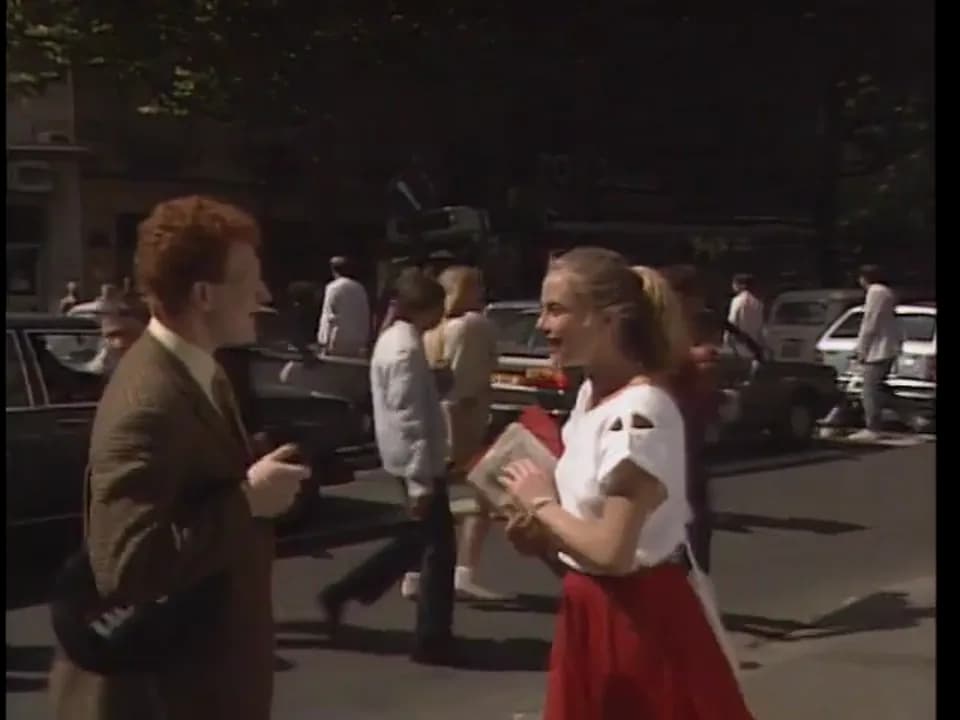
Mireille is late for class. On the way she bumps into eight people — and every chat teaches you how to say hello, how are you? and where are you going?

Start with Episode 1 as a guest in two taps. Save your progress with your email (a 6-digit code) and this episode opens, free for good.

A scene from French in Action episode 2, Genèse I
minutes of video
29
CEFR level
A1
key words
28
grammar patterns
5

By the end you can

  • greet a friend (Salut !) and a stranger (Bonjour, madame.) the right way
  • ask and answer how are you? — Ça va ? / Comment allez-vous ?
  • say where you're going: Je vais à la fac / à la bibli / au Resto-U
  • choose tu or vous without thinking
  • chant the verb aller: je vais, tu vas, il va, nous allons, vous allez, ils vont
  • say how you feel with être: je suis fatigué(e), pressé(e), malade
  • make a sentence negative: je ne vais pas…

Listen out for

Five things to notice the first time you watch. Spotting them is half the lesson.

  • Who gets tu (friends, auntie) and who gets vous (the old professor)?
  • Where is each person going: la fac, la bibli, le Resto-U?
  • The handshakes and cheek-kisses (la bise) when people meet
  • Tiens ! — the little word for 'Oh, look who it is!'

Scene by scene

The episode in 23 short scenes, with the time each one starts in the video.

  1. Starts at 0:00

    1.The last English you'll hear

    A short English intro: everyone in this course speaks French. Don't worry if you don't understand at first.

  2. Starts at 1:00

    2.The classroom: where is French spoken?

    The teacher says he's the professor and we're the students. We're going to learn French. Then a map: French is spoken in Canada, Africa, Switzerland, Belgium, France…

  3. Starts at 2:05

    3.Encounter 1: Madame Rosa

    Mireille greets the newspaper seller politely. Bonjour, ça va, au revoir.

  4. Starts at 2:28

    4.Encounter 2: Colette at the café

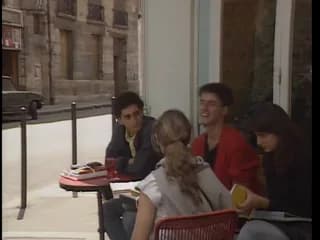
    Mireille shakes hands with Colette and her friends — but she can't stay. She's going to the university and she's in a hurry.

  5. Starts at 3:20

    5.Encounter 3: Hubert

    Relaxed Hubert is NOT going to the university. Mireille is late, so she rushes off.

  6. Starts at 3:51

    6.Encounter 4: Ousmane

    Ousmane is fine, thanks. He's going to the library (la bibli). Then lots of 'Salut !' as goodbye.

Show the other 17 scenes
  1. 7Encounter 5: Marc & CatherineOn a motorbike, going to eat at the student canteen (le Resto-U). Already? Enjoy your meal, then!Starts at 4:23
  2. 8Encounter 6: the old professorA very polite chat. The professor and Mireille use vous with each other.Starts at 4:51
  3. 9Encounter 7: Tante Georgette & FidoHer aunt isn't great — not sick, just tired. The dog Fido is perfectly fine. Oh là là, Mireille's going to be late!Starts at 5:14
  4. 10She's going to learn ItalianMireille reaches her Italian class. Then the teacher shows people learning things: to read, knit, swim, ski… apprendre = to learn. And us? We're going to learn French.Starts at 6:16
  5. 11La fac, la bibli, le Resto-UStudents shorten words: la fac = la faculté (university), la bibli = la bibliothèque (library), le Resto-U = the student canteen. Then manger: il mange, ils mangent.Starts at 8:20
  6. 12Bon appétit & merciA long montage of people saying 'bon appétit' and 'merci' — for food, flowers, help…Starts at 10:15
  7. 13Pressé, fatigué, maladeIn a hurry or not? Tired? Sick? The cows are not in a hurry. Tante Georgette is tired but not sick.Starts at 12:02
  8. 14Surprise: Tiens !When you're surprised to see someone, you say 'Tiens !' — like 'Oh, look who it is!'Starts at 14:57
  9. 15Bonjour, monsieur / madame — your turn!A cascade of bonjours with monsieur, madame, mademoiselle. Then YOU play Madame Rosa and answer Mireille.Starts at 15:30
  10. 16Salut ! (for friends)'Salut' is the casual hi — between friends and young people. Then lots of 'Ça va ?'.Starts at 16:45
  11. 17Ça va… ça ne va pasPeople who are fine — and people who are clearly NOT fine. Watch the faces!Starts at 17:23
  12. 18Au revoir… and salut as byeGoodbyes: au revoir, madame; à mercredi; bonne route… and a casual 'Allez, salut !'.Starts at 18:28
  13. 19The verb aller: going & feelingElle va à la fac (going) — elle va bien (health). Same verb! Then the full verb: je vais, tu vas, il va, nous allons, vous allez, ils vont.Starts at 19:43
  14. 20Je vais, nous allons… ils vont, elles vontGroups going to the fac: tu vas / vous allez; ils vont (men or mixed), elles vont (only women).Starts at 21:43
  15. 21Your turn: be Hubert!The video asks you to speak. You are Hubert: 'Pas mal. Et toi, ça va ?… Où vas-tu comme ça ?'Starts at 23:52
  16. 22Quick quiz: is it Mireille?'Est-ce que c'est Mireille ?' — answer oui or non before they do.Starts at 24:57
  17. 23Puppet finaleA Guignol puppet grills 'Mademoiselle Mireille': Are you sick? Tired? Where are you going? She's in a hurry!Starts at 25:50

Key phrases, with Hindi and Punjabi pronunciation

Real lines from this episode, written the way they sound in Latin letters, Devanagari and Gurmukhi.

  • Bonjour !Hello! (anyone, all day)
    bo(n)-ZHOORबोँ-झ़ूग़ਬੋਂ-ਝ਼ੂਗ਼
  • Salut, ça va ?Hi, how's it going? (friends)
    sa-LÜ sa VAसा-lü सा वाਸਾ-lü ਸਾ ਵਾ
  • Comment allez-vous ?How are you? (polite)
    ko-ma(n)-ta-lay-VOOको-माँ-ता-ले-वूਕੋ-ਮਾਂ-ਤਾ-ਲੇ-ਵੂ
  • Où est-ce que tu vas ?Where are you going?
    oo ess-kuh tü VAऊ ऐस-कअ tü वाਊ ਐਸ-ਕਅ tü ਵਾ
  • Je vais à la fac.I'm going to the university.
    zhuh vay a la FAKझ़अ वै आ ला फ़ाकਝ਼ਅ ਵੈ ਆ ਲਾ ਫ਼ਾਕ

Sounds to master in this episode

French sounds explained through the Hindi and Punjabi sounds you already make, with real lines from the episode to copy.

  • The ü of tu/y/

    ई + ऊ के होंठਈ + ਊ ਦੇ ਬੁੱਲ੍ਹ

    tu (you) ≠ tout (all). Both have round lips — your tongue decides. Hear it in salut, tu, Resto-U.

    • Salut !Hi!
    • Tu vas bien ?Are you well?
  • The ou of vous/u/

    ऊਊ

    Plain ऊ: vous, où, bonjour.

    • Où est-ce que tu vas ?Where are you going?
  • The nasal on of bon/ɔ̃/

    ओं (हों वाला)ਓਂ (ਹੋਂ ਵਾਲਾ)

    on, bon, allons, vont, sont — ओं through the nose. Never pronounce the n!

    • Nous allons.We go.
    • Ils vont.They go.
  • Liaison & linking‿

    शब्द जोड़ोਸ਼ਬਦ ਜੋੜੋ

    The silent s of nous/vous wakes up as z before a vowel: nous‿zallons, vous‿zallez, vous‿zêtes. And bon‿nappétit.

    • Vous allez où comme ça ?Where are you off to?
  • Equal beats♩♩♩

    तबला ठेकाਤਬਲਾ ਠੇਕਾ

    Syllables tend to end in a vowel sound and get equal weight — ma·lade, fa·ti·gué, a·ppé·tit — like a steady tabla beat, with the last one a little longer.

    • Bon appétit !Enjoy your meal!

Grammar patterns in this episode

Each pattern comes from real lines in the episode. Here is the short version; in the course you notice it in the video first, then drill it.

  1. 1je, tu, il, elle… and tu or vous

    Subject pronouns say who does the action: je (I), tu (you, one friend), il/elle (he/she), nous (we), vous (you — polite, or more than one), ils/elles (they). tu is for friends, family, kids and pets; vous is for strangers and elders, and for any group.

    From the episode

    Moi, je suis le professeur et vous, vous êtes les étudiants.

    Me, I'm the teacher, and you, you're the students.

    Hindi and Punjabi link

    You already have this: tu ≈ तू/तुम · ਤੂੰ, vous ≈ आप · ਤੁਸੀਂ. And French is easier than Hindi on verbs: il va, elle va — no जाता/जाती change!

  2. 2aller — to go (and to be doing)

    aller is irregular — learn it as a chant: je vais, tu vas, il va, nous allons, vous allez, ils vont. Job 1: going somewhere (Où ? → Je vais à la fac). Job 2: how you are (Comment ? → Je vais bien). Job 3: aller + infinitive = going to do something (Je vais être en retard).

    From the episode

    Je vais à la fac.

    I'm going to the university.

    Hindi and Punjabi link

    Job 2 is कैसा चल रहा है? / ਕਿਵੇਂ ਚੱਲ ਰਿਹਾ? — a movement verb for health. Job 3 is मैं सीखने वाला हूँ — the near future.

  3. 3être — how I am: tired, sick, in a hurry

    être (to be): je suis, tu es, il/elle est, nous sommes, vous êtes, ils/elles sont. Use it with describing words. A describing word adds -e for a woman: pressé → pressée, fatigué → fatiguée (sounds the same). Words ending in -e don't change: malade.

    From the episode

    Je suis pressée.

    I'm in a hurry. (Mireille)

    Hindi and Punjabi link

    fatigué = थका · ਥੱਕਿਆ, fatiguée = थकी · ਥੱਕੀ. Just like you'd say मैं थकी हूँ if you're a woman.

  4. 4ne … pas — saying 'not'

    Put ne before the verb and pas after it: je ne vais pas. Before a vowel, ne becomes n': il n'est pas.

    From the episode

    Moi, je ne vais pas à la fac.

    Me, I'm not going to the university.

    Hindi and Punjabi link

    Hindi: one word before the verb — मैं नहीं जा रहा. French: a sandwich — je ne vais pas. 🥪

  5. 53 ways to ask a question

    1) Voice only — a normal sentence with the voice going up ↗: Tu vas à la fac ? 2) est-ce que in front: Est-ce que tu vas à la fac ? 3) Flip verb and pronoun: Vas-tu à la fac ? (a -t- slips in between two vowels: Va-t-elle ?).

    From the episode

    Où est-ce que tu vas ?

    Where are you going?

    Hindi and Punjabi link

    est-ce que (ess-kuh) works exactly like क्या at the start of a Hindi question: क्या तुम कॉलेज जा रहे हो? = Est-ce que tu vas à la fac ?

Words you will meet

Each word is written the way it sounds in Devanagari and Gurmukhi.

  • bonjourhello (anyone, all day)बोँ-झ़ूग़ਬੋਂ-ਝ਼ੂਗ਼
  • salut !hi! / bye! (friends only)सा-lüਸਾ-lü
  • au revoirgoodbyeओ ग़अ-वुआग़ਓ ਗ਼ਅ-ਵੁਆਗ਼
  • Tiens !Oh, look! (surprise)त्यैंਤ੍ਯੈਂ
  • ça vahow's it going? / fineसा वाਸਾ ਵਾ
  • Comment allez-vous ?How are you? (polite)को-माँ-ता-ले-वूਕੋ-ਮਾਂ-ਤਾ-ਲੇ-ਵੂ
  • Comment vas-tu ?How are you? (friend)को-माँ वा-tüਕੋ-ਮਾਂ ਵਾ-tü
  • Je vais bien, merci.I'm well, thanks.झ़अ वै ब्यैं, मैग़-सीਝ਼ਅ ਵੈ ਬ੍ਯੈਂ, ਮੈਗ਼-ਸੀ
  • Pas mal.Not bad.पा मालਪਾ ਮਾਲ
  • Pas trop bien.Not too well.पा त्ग़ो ब्यैंਪਾ ਤ੍ਗ਼ੋ ਬ੍ਯੈਂ
  • merci (beaucoup)thank you (very much)मैग़-सी (बो-कू)ਮੈਗ਼-ਸੀ (ਬੋ-ਕੂ)
  • Bon appétit !Enjoy your meal!बो-ना-पे-तीਬੋ-ਨਾ-ਪੇ-ਤੀ

Plus 16 more words in the lesson, each with its pronunciation.

Practice in all four skills

Listening, speaking, reading and writing: the four skills TEF Canada and TCF Canada score. Every task is built from this episode's own lines.

  • Listening

    7 dictation lines cut from the video: hear it, type it, check every accent. Plus 6 textbook audio drills.

    A line you will write down

    Je vais à la fac, je suis pressée.

    I'm going to the university, I'm in a hurry.

  • Speaking

    Shadow 7 lines after the actors, answer 6 questions aloud, then a short role-play with Colette.

    How the role-play opens

    Tiens ! Salut ! Ça va ?

    Oh, look! Hi! How's it going?

  • Reading

    A short story, “Mireille's morning”, retold with this episode's words, then 5 questions on it.

    The story starts

    Mireille Belleau est étudiante.

  • Writing

    8 fill-in sentences, 5 sentences to build and 2 short writing tasks with feedback.

    A writing task

    You bump into a friend in the street. Write a short chat: say hi, ask how they are, and where they're going.

Then a self-test of 8 questions to finish the episode, and new words go into your review deck.

Culture notes

Handshake or la bise?

French people touch when they greet. A handshake — even with colleagues every morning — or la bise: cheek-to-cheek air kisses between friends and family, once on each side (2, 3 or even 4 depending on the region!). Watch Mireille shake every hand at Colette's table — on arrival and on leaving.

Hindi and Punjabi linkIn India a नमस्ते without touching is polite. In France, not offering your hand can seem cold. When in doubt: handshake + Bonjour !


La Francophonie

French is spoken on five continents: Canada, the Caribbean (les Antilles), Africa, Switzerland, Belgium, Tahiti… about 300 million speakers. Ousmane is from Senegal, whose first president, the poet Léopold Sédar Senghor, championed a worldwide French-speaking community — un commonwealth à la française.

Hindi and Punjabi linkPondicherry (पुदुचेरी) was French until 1954 — you can still see French street names there today!

The Latin Quarter & le Resto-U

Mireille studies at the Sorbonne, in the Latin Quarter (le Quartier latin) — called 'Latin' because students once spoke Latin there. Students eat at the Resto-U, a subsidised canteen: a full meal for a few euros.

Hindi and Punjabi linkThe Resto-U is basically your college mess or canteen.

Who is in it

  • MireilleParis student, always in a hurry — our heroine
  • Mme Rosasells newspapers at a kiosk
  • ColetteMireille's best friend, at a café
  • Huberta rich, relaxed friend — never in a hurry
  • Ousmanea serious student from Senegal
  • Marc & Catherinefriends on a motorbike, off to lunch
  • Le vieux professeuran old professor on a bicycle — gets the polite vous
  • Tante GeorgetteMireille's aunt, with her dog Fido

Episode 2 is free forever

Start with Episode 1 as a guest in two taps. Save your progress with your email (a 6-digit code) and this episode opens, free for good.

Start free with Episode 1

What you get

  • Warm-up, tap-to-translate captions, words & patterns, practice
  • Hindi and Punjabi pronunciation help
  • Printable watch guide, master guide, transcript, textbook, and workbook
  • New words saved to your spaced review deck

Coming up next

Episode 3 — Genèse II. The teacher and students start inventing the story together: who will the hero be? Get ready for nationalities, families and lots of on va…!