



French

Part 1 · Foundations

Episode 4: Genèse III

Genesis III — our hero lands in Paris

  • 29 min video
  • About 116 min with practice
  • A1

The story finally begins! A young American lands in Paris — police, customs, nothing to declare, and a taxi to the Latin Quarter. Plus: how to say what you love, hate and prefer.

Start with Episode 1 free in two taps. Add your email when you are ready and every episode, this one included, opens for 7 days. No card needed.

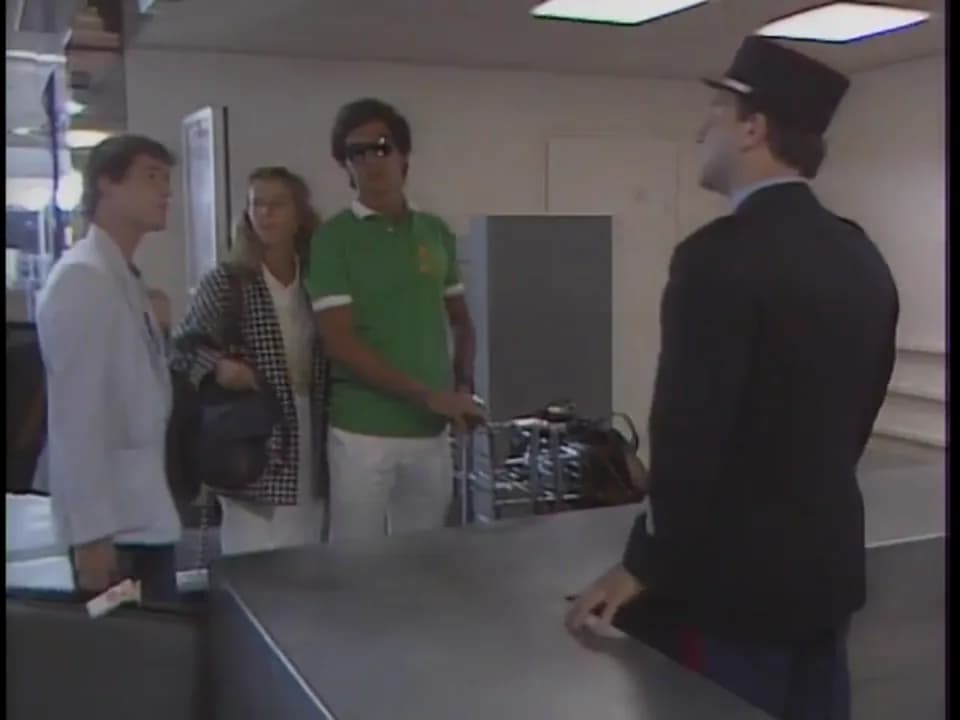
A scene from French in Action episode 4, Genèse III
minutes of video
29
CEFR level
A1
key words
35
grammar patterns
6

By the end you can

  • say what you love, like, hate and prefer: J'adore ça ! Je déteste ça ! Je préfère le cinéma.
  • agree the right way: Moi aussi / Moi non plus
  • answer firmly (Bien sûr ! Évidemment !) or hesitantly (Peut-être… ça dépend… on va voir)
  • get through a French airport: la police, la douane, rien à déclarer, vous pouvez passer
  • ask permission and say what's possible with pouvoir: Je peux ? — Mais oui, vous pouvez.
  • learn every noun with its gender: un roman, une maison, une victime
  • conjugate any regular -er verb and give nationalities in both genders: brésilien / brésilienne

Listen out for

Five things to notice the first time you watch. Spotting them is half the lesson.

  • Who likes what? One student only likes les romans policiers; another prefers le cinéma.
  • The airport steps: la police → la douane → un taxi.
  • How the travellers say vous to the officer but switch to tu with each other.
  • Around 21:10, listen for une maison indienne at the Cité Universitaire 🇮🇳

Scene by scene

The episode in 23 short scenes, with the time each one starts in the video.

  1. Starts at 0:00

    1.English intro & a preview

    The last English you'll hear: what kind of story should we invent? Then a sneak preview — our young American arriving in France.

  2. Starts at 1:06

    2.A real novel — written together

    Quick recap: to learn French we'll invent a story — a young French woman, a young American man, friends, adventures, trips. A real novel, written together.

  3. Starts at 1:56

    3.Do you like novels?

    The teacher asks students what they like. One hates romance and sci-fi and only likes detective novels. Another says no to every novel — she prefers the movies. The teacher loves crime stories 'with lots of victims'.

  4. Starts at 3:40

    4.The story begins: the airport

    Commençons par le jeune homme. He's American, he arrives in France, he's at the airport. First stop: passport control (la police).

  5. Starts at 4:45

    5.Customs: all three French?

    At customs, with an American girl and a Brazilian guy. 'Are all three of you French?' No — two Americans and one Brazilian. Nothing to declare, so they can go.

  6. Starts at 5:20

    6.Three travellers: where are you going?

    Outside, they switch to tu. The Brazilian is going to the Brazilian house at the Cité Universitaire, the girl to the American house. Our hero is going to the Latin Quarter — by taxi!

Show the other 17 scenes
  1. 7Romance, detective, sci-fi… and filmsBook covers flash up: roman d'amour, roman d'aventure, roman policier, science-fiction. Then films: an English comedy, an Italian comedy, an American musical, a Swedish film — plutôt une tragédie.Starts at 7:01
  2. 8Marie-Laure's lovesMarie-Laure loves chocolates, cream puffs, éclairs and Tonton Guillaume — but not learning her lessons. Mireille loves detective novels but hates being tickled.Starts at 9:24
  3. 9Street interviews: what do you prefer?Real people answer: romance or adventure? Pas beaucoup, pas du tout, pas tellement… entre les deux, les romans policiers.Starts at 10:36
  4. 10Your turn: be MireilleRobert asks Mireille if she likes novels. You repeat her answers: hesitant for novels, firm for romance novels. Then: Japanese films aren't very useful for learning French!Starts at 11:30
  5. 11A crime? We can! (pouvoir)In crime films there's always a crime. If you want, we can have one. Then: Je peux ? — Mais oui, vous pouvez. And the whole verb pouvoir.Starts at 12:22
  6. 12Maybe… we'll seeA little boy begs for a gumdrop: 'Maybe. We'll see. It depends. If you're good.' Candies that smell good… and 'Et moi, je peux ?'Starts at 14:02
  7. 13Who starts? Am stram gramLet's start the story! But who starts? Kids use a counting-out rhyme: Am stram gram… C'est toi qui commences.Starts at 15:00
  8. 14Un jeune homme → le jeune hommeAt the beginning of the story a young man arrives. Un jeune homme (new, indefinite) becomes le jeune homme de l'histoire (definite). Same for une/la jeune fille, des/les jeunes gens.Starts at 15:42
  9. 15Il arrive ou il part?Planes, trains, buses and people: arriving or leaving? Answer each time before the teacher. Arriver ↔ partir.Starts at 16:31
  10. 16Airport, police, passport, customsCharles de Gaulle airport at Roissy. The police: a police officer, a police car, a police dog… and a roman policier! The passport, then customs: Robert has nothing to declare.Starts at 17:44
  11. 17Passer: after you!Passer everywhere: 'Passez, je vous en prie' (after you, please), a crowd at a concert, 'Passons à table' (let's go to the table).Starts at 19:07
  12. 18La Cité U: a house for every countryThe Brazilian goes to the Cité Universitaire, where every country has a house: Japanese, Dutch, Lebanese, Swedish, Mexican… and an Indian house!Starts at 19:36
  13. 19Brésilien or brésilienne?The teacher slips — 'il est brésilienne' — and corrects himself: une jeune fille brésilienne, un jeune homme brésilien. Américaine/américain, française/français, suédoise/suédois.Starts at 21:22
  14. 20Masculine or feminine?Rapid-fire quiz: people, then things. Une maison, un passeport, un roman, une histoire… Careful: une victime is feminine even for a man, un professeur is masculine even for a woman.Starts at 22:01
  15. 21Taxi to the Latin QuarterTo get to Paris you can take a train, a bus, a taxi. The young American goes to the Latin Quarter — the students' district.Starts at 24:09
  16. 22Recap & infinitivesRecap of the plan, then a list of infinitives by family: apprendre, prendre, être… inventer, aimer, détester… choisir, partir, voir, pouvoir.Starts at 24:36
  17. 23The story so farWhat have you learned? The story of two young people. The young American arrives at the airport, passes the police and customs, and takes a taxi to Paris. Au revoir! Then the credits.Starts at 25:31

Key phrases, with Hindi and Punjabi pronunciation

Real lines from this episode, written the way they sound in Latin letters, Devanagari and Gurmukhi.

  • Vous aimez les romans ?Do you like novels? (polite)
    voo-zay-MAY lay ro-MA(N)?वू-ज़े-मे ले ग़ो-माँ?ਵੂ-ਜ਼ੇ-ਮੇ ਲੇ ਗ਼ੋ-ਮਾਂ?
  • Oui, enfin… ça dépend.Yes… well, it depends.
    wee, a(n)-FA(N)… sa day-PA(N)वी, आँ-फ़ैं… सा दे-पाँਵੀ, ਆਂ-ਫ਼ੈਂ… ਸਾ ਦੇ-ਪਾਂ
  • Je déteste ça !I hate that!
    zhuh day-TEST saझ़अ दे-तैस्त साਝ਼ਅ ਦੇ-ਤੈਸਤ ਸਾ
  • Moi aussi, je préfère le cinéma.Me too, I prefer the movies.
    mwa oh-SEE, zhuh pray-FER luh see-nay-MAमुआ ओ-सी, झ़अ प्ग़े-फ़ैग़ लअ सी-ने-माਮੁਆ ਓ-ਸੀ, ਝ਼ਅ ਪ੍ਗ਼ੇ-ਫ਼ੈਗ਼ ਲਅ ਸੀ-ਨੇ-ਮਾ
  • Vous pouvez passer.You may go through.
    voo poo-VAY pa-SAYवू पू-वे पा-सेਵੂ ਪੂ-ਵੇ ਪਾ-ਸੇ

Sounds to master in this episode

French sounds explained through the Hindi and Punjabi sounds you already make, with real lines from the episode to copy.

  • The nasal an of France/ɑ̃/

    आँ (माँ वाला)ਆਂ (ਮਾਂ ਵਾਲਾ)

    an / en — mouth open, like माँ: roman, comment, gens, dépend, enfin, évidemment. The n is only a spelling signal: never pronounce it!

    • Oui, enfin ça dépendYes... well, it depends.
    • Ça, c'est un roman d'amour.That's a romance novel.
  • The nasal on of bon/ɔ̃/

    ओं (हों वाला)ਓਂ (ਹੋਂ ਵਾਲਾ)

    on — lips round and pushed forward, like गोंद: bon, non, allons, maison, pouvons. an ≠ on changes words: lent (slow) ≠ long (long).

    • Nous allons apprendre le français.We are going to learn French.
    • Une maison.A house.
  • The nasal in of vin/ɛ̃/

    ऐंਐਂ

    in / ain / ien — like मैं: américain, brésilien, bien, rien, latin, inventer. Now hear the feminine: américaine, brésilienne — the nose sound disappears and a real n appears.

    • Elle est américaine, il est américain.She's American, he's American.
    • Écoutez, une jeune fille brésilienne, un jeune homme brésilien.Listen: a young Brazilian woman, a young Brazilian man.
  • Liaison & linking‿

    शब्द जोड़ोਸ਼ਬਦ ਜੋੜੋ

    Two ways French avoids two vowels crashing. Elision: le aéroport → l'aéroport, je adore → j'adore, ne aime → n'aime. Liaison: a sleeping letter wakes up — les‿z‿Américains, un‿n‿Américain, vous‿z‿aimez, comment‿t‿allez-vous. Never link after et.

    • Vous aimez les romans ?Do you like novels?
    • Une maison américaine pour les Américains.An American house for the Americans.
  • Silent final letters∅

    मत बोलोਨਾ ਬੋਲੋ

    Final consonants sleep: les, nous, très, beaucoup, allez, policier, français. And the -ent of ils peuvent, ils arrivent is silent too.

    • Nous pouvons. Vous pouvez. Ils peuvent. Elles peuvent.We can. You can. They can. They (women) can.
    • Un policier. Un chien policier.A policeman. A police dog.

Grammar patterns in this episode

Each pattern comes from real lines in the episode. Here is the short version; in the course you notice it in the video first, then drill it.

  1. 1Love, like, hate, prefer — + le / la / les

    Talk about tastes with adorer, aimer, préférer, détester + le / la / les + noun. French always uses the for things in general: J'aime les romans. Je préfère le cinéma. Use ça to point at the whole category: Je déteste ça ! Agree with moi aussi (after a yes) or moi non plus (after a ne… pas).

    From the episode

    Ah non, je n'aime pas les romans d'amour, je déteste ça

    Oh no, I don't like romance novels, I hate that.

    Hindi and Punjabi link

    moi aussi / moi non plus = मुझे भी / मुझे भी नहीं · ਮੈਨੂੰ ਵੀ / ਮੈਨੂੰ ਵੀ ਨਹੀਂ. Same logic, same trap.

  2. 2Every noun has a gender

    Every French noun — people and things — is masculine (un, le) or feminine (une, la). The gender belongs to the word, not to the person or thing. Before a vowel sound, le and la both become l' (l'aéroport, l'histoire), so learn those with un / une. Plural: des / les for both.

    From the episode

    Un jeune homme. Indéfini. Le jeune homme. Défini.

    A young man: indefinite. The young man: definite.

    Hindi and Punjabi link

    You already do this: किताब is feminine, घर masculine. But genders don't transfer — une maison is feminine, un livre masculine. Treat every French gender as new.

  3. 3Nationalities: il est brésilien, elle est brésilienne

    The describing word agrees with its noun: feminine adds -e (and -ne for -ien). In sound, the feminine ends in a consonant you can hear — z (française, suédoise) or n (américaine, brésilienne); the masculine ends in a vowel or a nose sound. Even things agree: une comédie italienne, un film italien.

    From the episode

    Écoutez, une jeune fille brésilienne, un jeune homme brésilien.

    Listen: a young Brazilian woman, a young Brazilian man.

    Hindi and Punjabi link

    Like अच्छा / अच्छी · ਚੰਗਾ / ਚੰਗੀ: the describing word follows the noun's gender — un film italien, une comédie italienne.

  4. 4-er verbs: the master pattern

    More than 3 verbs out of 4 end in -er, and (except aller) they all work the same: take the stem (arriv-) and add -e, -es, -e, -ons, -ez, -ent. je, tu, il and ils forms all sound the same (a-REEV) — the -s and -ent are silent. Only nous (-ons) and vous (-ez) sound different.

    From the episode

    Il arrive ou il part ? Il arrive.

    Is he arriving or leaving? He's arriving.

    Hindi and Punjabi link

    Simpler than Hindi: वह आता है / वह आती है / वे आते हैं — French il arrive = elle arrive, and ils arrivent sounds the same too.

  5. 5être — nationality, place, and puisque

    être (to be): je suis, tu es, il/elle est, nous sommes, vous êtes, ils/elles sont. Use it for nationality (Il est brésilien), place (Il est à l'aéroport), state (Elle est fatiguée) and job (Il est douanier) — with no un/une after il/elle est. puisque = 'since (obviously)': Je parle anglais, puisque je suis américain !

    From the episode

    Vous êtes français tous les trois ?

    Are all three of you French?

    Hindi and Punjabi link

    puisque is the अरे, जब मैं अमेरिकन हूँ, तो… feeling — the reason is obvious! Bien sûr, puisque nous sommes américains.

  6. 6pouvoir — can, may

    pouvoir: je peux, tu peux, il/elle/on peut, nous pouvons, vous pouvez, ils/elles peuvent. Follow it with an infinitive: Vous pouvez passer. It means may (permission: Je peux ?) or can (ability). Negative: the ne… pas sandwich goes around pouvoir: Vous ne pouvez pas passer.

    From the episode

    Je peux ? — Mais oui, vous pouvez.

    May I? — Why, yes, you may.

    Hindi and Punjabi link

    pouvoir = सकना / ਸਕਣਾ: मैं जा सकता हूँ = je peux passer. And Je peux ? is your polite क्या मैं…?

Words you will meet

Each word is written the way it sounds in Devanagari and Gurmukhi.

  • aimerto like; to love (a person)ए-मेਏ-ਮੇ
  • adorerto love, to adoreआ-दो-ग़ेਆ-ਦੋ-ਗ਼ੇ
  • détesterto hateदे-तैस-तेਦੇ-ਤੈਸ-ਤੇ
  • préférerto preferप्ग़े-फ़े-ग़ेਪ੍ਗ਼ੇ-ਫ਼ੇ-ਗ਼ੇ
  • ça dépendit dependsसा दे-पाँਸਾ ਦੇ-ਪਾਂ
  • enfin…well… (hesitating)आँ-फ़ैंਆਂ-ਫ਼ੈਂ
  • moi aussime tooमुआ ओ-सीਮੁਆ ਓ-ਸੀ
  • moi non plusme neitherमुआ नोँ plüਮੁਆ ਨੋਂ plü
  • pas du toutnot at allपा dü तूਪਾ dü ਤੂ
  • peut-êtremaybeपö-तैत्ग़ਪö-ਤੈਤ੍ਗ਼
  • on va voir / il faut voirwe'll see / we'll have to seeओँ वा वुआग़ਓਂ ਵਾ ਵੁਆਗ਼
  • bien sûrof courseब्यैं süग़ਬ੍ਯੈਂ süਗ਼

Plus 23 more words in the lesson, each with its pronunciation.

Practice in all four skills

Listening, speaking, reading and writing: the four skills TEF Canada and TCF Canada score. Every task is built from this episode's own lines.

  • Listening

    8 dictation lines cut from the video: hear it, type it, check every accent. Plus 10 textbook audio drills.

    A line you will write down

    Il est américain

    He is American.

  • Speaking

    Shadow 8 lines after the actors, answer 6 questions aloud, then a short role-play with Le douanier.

    How the role-play opens

    Bonjour. Vous êtes français ?

    Hello. Are you French?

  • Reading

    A short story, “Our hero lands in Paris”, retold with this episode's words, then 5 questions on it.

    The story starts

    Le professeur et les étudiants vont inventer une histoire.

  • Writing

    8 fill-in sentences, 6 sentences to build and 2 short writing tasks with feedback.

    A writing task

    You're new in the class and the teacher asks what you like. Write 4–5 sentences: what you love, like, hate and prefer (books, films, food…).

Then a self-test of 8 questions to finish the episode, and new words go into your review deck.

Culture notes

Landing at Roissy

Paris has two big airports: Charles de Gaulle at Roissy (international) and Orly. Arriving from abroad: la police (passport check) → la douane (customs — rien à déclarer ?) → into Paris by bus, train (the RER) or taxi. The officers say vous; the travellers switch to tu the moment they're outside.

Hindi and Punjabi linkExactly the Delhi or Amritsar routine: immigration, the customs green channel, then a cab or the metro.


La Cité Universitaire

Not a city: a big leafy student campus on the southern edge of Paris, with a house for each country — each in its own style. The Swiss house is by the famous architect Le Corbusier. Students from abroad (and French students too) live there.

Hindi and Punjabi linkIndia has one: la Maison de l'Inde. Indian students in Paris can live there — listen for une maison indienne in the video!

Le Quartier latin — by taxi!

Our hero skips the Cité and goes to the Latin Quarter, the old student district around the Sorbonne (named after the Latin the medieval scholars spoke). Living there costs more — and he takes a taxi while the others take the bus. So… he must have money. Remember that!

Hindi and Punjabi linkLike choosing a hotel in Connaught Place over the college hostel — and an auto over the bus.

Who is in it

  • Robertthe young American — our hero
  • Mireilleloves detective novels, hates being tickled
  • Marie-LaureMireille's little sister — chocolate fan
  • Le Brésilien & l'Américainefellow travellers at customs
  • Le douaniercustoms officer — very much vous
  • Le professeurruns the class; loves crime stories 'with lots of victims'

Watch this episode in your free trial

Start with Episode 1 free in two taps. Add your email when you are ready and every episode, this one included, opens for 7 days. No card needed.

Start free with Episode 1

What you get

  • Warm-up, tap-to-translate captions, words & patterns, practice
  • Hindi and Punjabi pronunciation help
  • Printable watch guide, master guide, transcript, textbook, and workbook
  • New words saved to your spaced review deck

Coming up next

Episode 5 — Familles. The class builds the heroine's family: her parents, sisters, uncles and aunts… and finally her name. Get ready for père, mère, frère, sœur!