French

Part 1 · Foundations

Episode 6: Portraits I

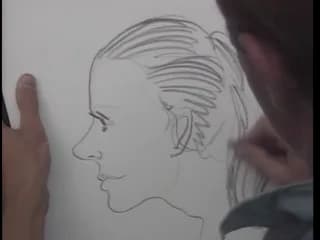
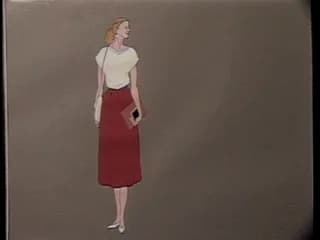
Portraits I — painting Mireille

  • 29 min video
  • About 116 min with practice
  • A1

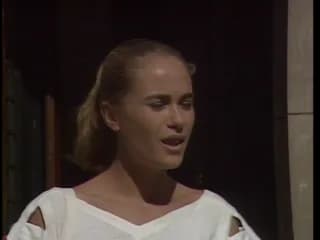
The class invents Mireille head to toe: small but strong, blonde, blue-eyed, super sporty — and a bit of a tease. You'll learn to describe anyone, and to say what someone looks like vs what they are.

Start with Episode 1 free in two taps. Add your email when you are ready and every episode, this one included, opens for 7 days. No card needed.

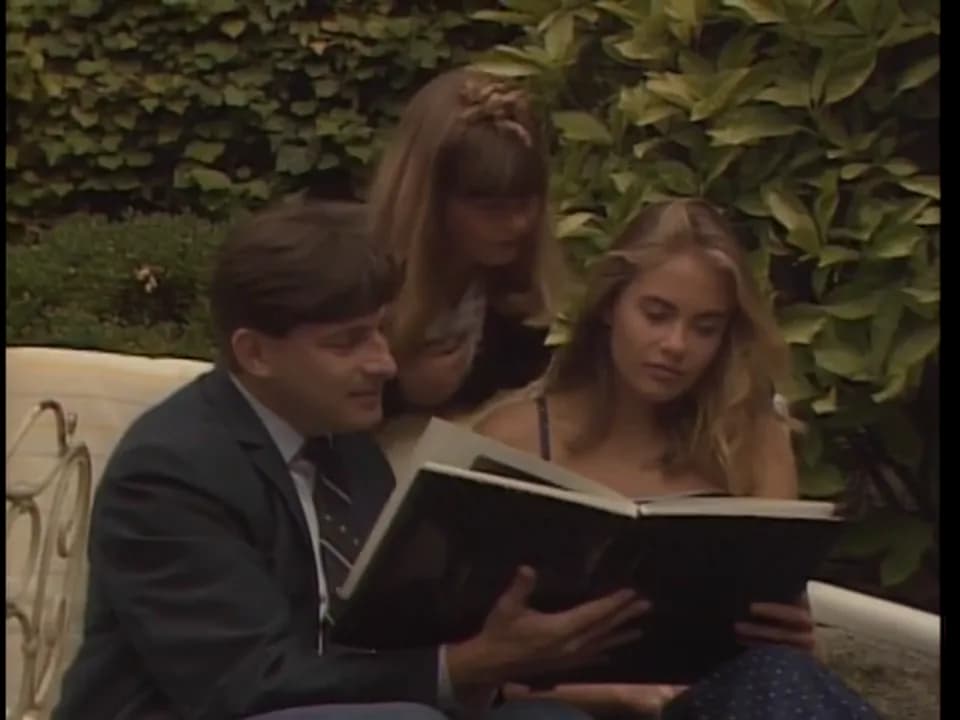
A scene from French in Action episode 6, Portraits I
minutes of video
29
CEFR level
A1
key words
35
grammar patterns
6

By the end you can

  • say what someone looks like vs what they really are: Elle a l'air fragile, mais elle n'est pas fragile.
  • describe a person head to toe: Elle a les cheveux blonds et les yeux bleus.
  • make adjectives agree — and hear it: petit → petite, long → longue, épais → épaisse
  • say which sports you like and do: J'aime le ski. Je fais du ski.
  • describe character: vif, moqueur, gentil, raisonnable, bon / mauvais caractère
  • ask yes/no questions with est-ce que
  • count from 20 to 69

Listen out for

Five things to notice the first time you watch. Spotting them is half the lesson.

  • Elle a l'air… (she looks…) vs Elle est… (she is…) — looks can be deceiving!
  • Adjectives that change: petit → petite, long → longue, épais → épaisse — listen for the extra consonant
  • Elle fait du ski / de la voile / de l'escrime — the sports list
  • Marie-Laure's protest: Ça, non, alors ! 😈

Scene by scene

The episode in 23 short scenes, with the time each one starts in the video.

  1. Starts at 0:00

    1.A preview in English

    The usual English intro, then a quick preview: Mireille will be petite but strong, blonde, blue-eyed, quick-minded and fond of teasing.

  2. Starts at 1:08

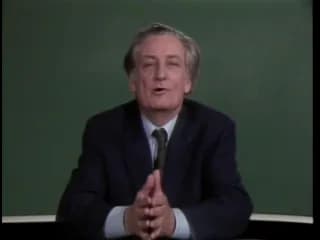
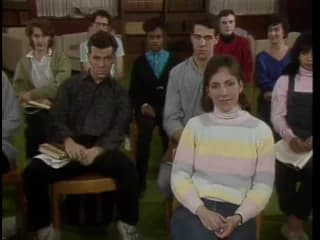
    2.Let's paint the girl in the story

    The teacher proposes a portrait of the story's girl. A student says 'You're the teacher, you decide!' She'll be a jeune fille — not Indian, but French — and her name will be Mireille.

  3. Starts at 2:30

    3.Small, fragile-looking… and super sporty

    Tall or short? Rather short. She looks fragile but isn't at all — her mother works at the Ministry of Health! Then a long list of her sports: karate, skiing, sailing, fencing…

  4. Starts at 4:08

    4.Neck, waist, fingers, face

    Slim, of course. A long slender neck, a slim waist, long slender fingers and legs. Face: oval, long, round or square?

  5. Starts at 5:25

    5.Blonde, blue-eyed — tant pis!

    She'll be blonde. A student sulks — he prefers brunettes. 'Tough luck for you!' Long blond hair, blue eyes (both of them). Then a full recap of her physical portrait.

  6. Starts at 6:58

    6.Her character: the family's opinion

    Lively, quick-minded. Dad: the most intelligent of the three. Mum: sensible, sociable, a bit of a tease, but not mean, good-natured. Marie-Laure: 'Her? No way!'

Show the other 17 scenes
  1. 7What's a portrait? Small or big?Portraits by Fragonard, of Diderot, street artists in Paris. Then petit / grand with birds, houses and a bottle.Starts at 7:40
  2. 8Looks fragile… is it really?Fragile like a glass, a flower, a vase. A glass that looks fragile but is very strong; a dog that looks mean but is very nice. Marie-Laure: 'He doesn't look very sporty.' Mireille: 'But he is!'Starts at 8:47
  3. 9Healthy or sick?En bonne santé or malade? Pictures of people who are well — and some who clearly aren't.Starts at 10:14
  4. 10Slim or stout? épais, épaisseMince or un peu forte? Your turn to answer. Then a slender or thick neck, a slim or thick waist — and why it's épais for le cou but épaisse for la taille.Starts at 10:51
  5. 11Long or short? longs, longuesLong or short neck? Answer the pictures! Fingers (un doigt, masculine) and legs (une jambe, feminine): longs et fins vs longues et fines.Starts at 12:07
  6. 12Face shapesRound, square, oval or long faces — and even round or almond-shaped eyes. Then long hair, short hair, long legs.Starts at 13:44
  7. 13One eye, two eyes, a thousand eyesHow many eyes? One like a pirate, a thousand like a fly… Two, 'a nice average'. Then the colour: black as coal, green as meadows, grey as the North Sea, blue as the sky — blue it is.Starts at 14:49
  8. 14Brune, châtain, rousse, blondeBlack hair = brune, light brown = châtain, red = rousse, blond = blonde. Elle a les cheveux blonds (avoir) = elle est blonde (être). Then a quick quiz.Starts at 17:30
  9. 15She likes it, she does itMireille likes all sports. Elle aime la voile → elle fait de la voile. Du ski, de la natation, de l'escrime. Then real people in the street say what sports they do.Starts at 18:21
  10. 16Counting 20 to 69Vingt, trente, quarante, cinquante, soixante — and all the numbers in between. Count along!Starts at 20:08
  11. 17A quick, sharp mindA recap: long blond hair, blue eyes. She's lively, quick as lightning, the most intelligent of the three — and she loves to tease her little sister.Starts at 21:17
  12. 18Teasing and meannessSoldiers mock Robert (a flash-forward!), children mock their father. Mireille is a tease but not mean. Attention, chien méchant!Starts at 22:04
  13. 19Sensible? Not Marie-Laure!Mireille is sensible. Marie-Laure eats too many sweets: 'You're going to be sick.' — 'Too bad!' Then a man loses his watch: tant pis.Starts at 23:05
  14. 20Good-natured or bad-tempered?Tonton Guillaume stays good-natured even when Marie-Laure soaks him. Others are bad-tempered. Mum says Mireille is good-natured; Marie-Laure: 'She's nasty!'Starts at 23:50
  15. 21Vous vous rappelez ?Do you remember? Marie-Laure finds an old photo — 'Who's that?' Mireille doesn't remember (or pretends not to).Starts at 25:01
  16. 22Your turn: finish the portraitThe teacher starts each line and YOU finish it: le visage… ovale; elle est… blonde; les jambes… longues et fines.Starts at 25:43
  17. 23Puppet fight!Two puppets argue: good-natured or bad-tempered? 'You're the one who's bad-tempered!' — 'Me? I'm good-natured!' Aïe, ouille! Then the credits.Starts at 26:12

Key phrases, with Hindi and Punjabi pronunciation

Real lines from this episode, written the way they sound in Latin letters, Devanagari and Gurmukhi.

  • Elle a l'air fragile.She looks fragile.
    el a LEHR fra-ZHEELऐल आ लैग़ फ़्ग़ा-झ़ीलਐਲ ਆ ਲੈਗ਼ ਫ਼੍ਗ਼ਾ-ਝ਼ੀਲ
  • Mais en réalité, elle n'est pas fragile du tout.But in reality, she's not fragile at all.
    meh a(n) ray-a-lee-TAY, el neh pa fra-ZHEEL dü TOOमै आँ ग़े-आ-ली-ते, ऐल नै पा फ़्ग़ा-झ़ील dü तूਮੈ ਆਂ ਗ਼ੇ-ਆ-ਲੀ-ਤੇ, ਐਲ ਨੈ ਪਾ ਫ਼੍ਗ਼ਾ-ਝ਼ੀਲ dü ਤੂ
  • Elle est plutôt petite.She's rather short.
    el eh plü-TOH puh-TEETऐल ऐ प्लü-तो पअ-तीतਐਲ ਐ ਪ੍ਲü-ਤੋ ਪਅ-ਤੀਤ
  • Les cheveux blonds et les yeux bleus.Blond hair and blue eyes.
    lay shuh-VÖ BLO(N) ay lay-ZYÖ BLÖले शअ-वö ब्लोँ ए ले-ज़्यö ब्लöਲੇ ਸ਼ਅ-ਵö ਬ੍ਲੋਂ ਏ ਲੇ-ਜ਼੍ਯö ਬ੍ਲö
  • Elle fait du ski.She skis.
    el feh dü SKEEऐल फ़ै dü स्कीਐਲ ਫ਼ੈ dü ਸਕੀ

Sounds to master in this episode

French sounds explained through the Hindi and Punjabi sounds you already make, with real lines from the episode to copy.

  • The ü of tu/y/

    ई + ऊ के होंठਈ + ਊ ਦੇ ਬੁੱਲ੍ਹ

    The French u: say ई, freeze your tongue, then round your lips like a kiss. You need it in plutôt, du ski, du tout, bien sûr. Don't let du turn into doo (that's doux, soft).

    • Plutôt petite.Rather short.
    • Elle fait du ski.She skis.
  • The eu of deux/ø/

    ए + ओ के होंठਏ + ਓ ਦੇ ਬੁੱਲ੍ਹ

    The round eu (ö) is everywhere today: cheveux, yeux, bleus, deux, moqueuse. Say ए and round your lips — never oo.

    • Les cheveux blonds et les yeux bleus.Blond hair and blue eyes.
    • Deux yeux.Two eyes.
  • Silent final letters∅

    मत बोलोਨਾ ਬੋਲੋ

    The masculine hides its last consonant; the feminine reveals it: petit / petite, grand / grande, long / longue, épais / épaisse. That consonant is how you hear he vs she.

    • Il est petit.It's small.
    • Elle est petite.It's small.
  • Liaison & linking‿

    शब्द जोड़ोਸ਼ਬਦ ਜੋੜੋ

    yeux starts with a vowel sound, so the silent letter before it wakes up: les‿z‿yeux, deux‿z‿yeux, un‿n‿œil. You'll almost never hear yeux without a z in front!

    • Un œil, deux yeux.One eye, two eyes.
    • Les yeux bleus.Blue eyes.

Grammar patterns in this episode

Each pattern comes from real lines in the episode. Here is the short version; in the course you notice it in the video first, then drill it.

  1. 1Looks vs is: avoir l'air / être

    avoir l'air + adjective = to look / seem (an appearance). être + adjective = to be (the reality). With être, the adjective agrees with the person: elle est gentille. With avoir l'air, it usually stays masculine (it agrees with l'air): elle a l'air gentil — though you'll also hear elle a l'air gentille.

    From the episode

    Elle a l'air fragile.

    She looks fragile.

    Hindi and Punjabi link

    avoir l'air = लगना · ਲੱਗਣਾ, être = होना · ਹੋਣਾ. वो थका लगता है = Il a l'air fatigué. वो थका है = Il est fatigué.

  2. 2He vs she: petit → petite, long → longue

    In speech, the feminine adds a consonant sound that is silent in the masculine: peti(t) → petite, gran(d) → grande, épai(s) → épaisse, lon(g) → longue. In writing, the feminine ends in -e. A few change more: vif → vive, sportif → sportive, moqueur → moqueuse, gentil → gentille, roux → rousse. Adjectives already ending in -e don't change: mince, fragile, malade, raisonnable, sympathique. Plural adds a silent -s (unless it already ends in -s or -x).

    From the episode

    Il est petit.

    It's small.

    Hindi and Punjabi link

    You change लंबा → लंबी · ਲੰਮਾ → ਲੰਮੀ without thinking. French: long → longue. And just as सुंदर or लाल never change, mince and fragile stay the same.

  3. 3Head to toe: avoir + les + body part + adjective

    To describe a feature, use avoir + le / la / les + body part + adjective: Elle a les cheveux blonds (not 'her hair'). The adjective comes after the noun and agrees with the body part: le cou (m) → long; la taille (f) → fine; les doigts (m pl) → longs; les jambes (f pl) → longues. Exceptions: marron never changes: les yeux marron; châtain has no feminine (elle est châtain) but does take a plural -s: les cheveux châtains.

    From the episode

    Elle a la taille fine.

    She has a slim waist.

    Hindi and Punjabi link

    Hindi: उसके बाल लंबे हैं ('her hair is long'). French builds it like उसके लंबे बाल हैं → Elle a les cheveux longs. Use les, never ses, here.

  4. 4faire + du / de la / de l' (and pas de)

    After aimer, adorer, préférer, détester → le / la / l' (J'aime le ski). After faire → du (de + le), de la, de l' (Je fais du ski, de la voile, de l'escrime). In the negative all three become de / d': Je ne fais pas de ski, pas d'escrime. faire is irregular: je fais, tu fais, il/elle fait, nous faisons, vous faites, ils/elles font.

    From the episode

    Elle aime la voile et elle fait de la voile.

    She likes sailing and she sails.

    Hindi and Punjabi link

    faire = करना · ਕਰਨਾ: कराटे करना → faire du karaté, तैराकी करना → faire de la natation. And notice the four super-verbs all end in -ont for 'they': ils sont, ils ont, ils vont, ils font.

  5. 5Yes/no questions with est-ce que

    Put est-ce que (ESS-kuh) in front of any statement and raise your voice at the end → a yes/no question. Before a vowel it becomes est-ce qu': Est-ce qu'elle est blonde ? It also works after question words: Où est-ce que sa mère travaille ? Three ways to ask: Elle est blonde ? ↗ · Est-ce qu'elle est blonde ? · Est-elle blonde ?

    From the episode

    D'abord, est-ce qu'elle va être grande ou petite ?

    First, is she going to be tall or short?

    Hindi and Punjabi link

    est-ce que = क्या · ਕੀ at the start of a question: क्या वो सुनहरी है? = Est-ce qu'elle est blonde ? Nothing else changes.

  6. 6Numbers 20 to 69

    Tens: vingt, trente, quarante, cinquante, soixante. Add et un for 21, 31, 41, 51, 61; add a hyphen for 2–9: vingt-deux, cinquante-neuf. The t of vingt is silent alone (va(n)) but heard in 21–29 (va(n)-tay-UH(N), va(n)t-DÖ). soixante = swa-SA(N)T.

    From the episode

    Vingt et un, vingt-sept, vingt-deux, trente et un, quarante-trois.

    Twenty-one, twenty-seven, twenty-two, thirty-one, forty-three.

    Hindi and Punjabi link

    Easier than Hindi! No इक्कीस-बाईस-तेईस to memorise one by one: French 21–69 is tens + units. Maths aloud: Trois et quatre, sept (3 + 4 = 7), Deux fois six, douze (2 × 6 = 12).

Words you will meet

Each word is written the way it sounds in Devanagari and Gurmukhi.

  • une jeune fillef.a girl, a young woman (teens–20s, unmarried)झ़अन फ़ी-यਝ਼ਅਨ ਫ਼ੀ-ਯ
  • le portraitm.portrait, descriptionलअ पोग़-त्ग़ैਲਅ ਪੋਗ਼-ਤ੍ਗ਼ੈ
  • grand / grandetall, bigग्ग़ाँ / ग्ग़ाँदਗ੍ਗ਼ਾਂ / ਗ੍ਗ਼ਾਂਦ
  • petit / petitesmall, shortपअ-ती / पअ-तीतਪਅ-ਤੀ / ਪਅ-ਤੀਤ
  • plutôtrather, fairlyप्लü-तोਪ੍ਲü-ਤੋ
  • avoir l'airto look, to seemआ-वुआग़ लैग़ਆ-ਵੁਆਗ਼ ਲੈਗ਼
  • fragilefragile, delicateफ़्ग़ा-झ़ीलਫ਼੍ਗ਼ਾ-ਝ਼ੀਲ
  • pas du toutnot at allपा dü तूਪਾ dü ਤੂ
  • en bonne santéhealthy, in good healthआँ बॉन साँ-तेਆਂ ਬੌਨ ਸਾਂ-ਤੇ
  • sportif / sportivesporty, athleticस्पोग़-तीफ़ / स्पोग़-तीवਸਪੋਗ਼-ਤੀਫ਼ / ਸਪੋਗ਼-ਤੀਵ
  • faire du sportto do sportफ़ैग़ dü स्पोग़ਫ਼ੈਗ਼ dü ਸਪੋਗ਼
  • minceslim, slenderमैंसਮੈਂਸ

Plus 23 more words in the lesson, each with its pronunciation.

Practice in all four skills

Listening, speaking, reading and writing: the four skills TEF Canada and TCF Canada score. Every task is built from this episode's own lines.

  • Listening

    8 dictation lines cut from the video: hear it, type it, check every accent. Plus 15 textbook audio drills.

    A line you will write down

    Elle a l'air fragile.

    She looks fragile.

  • Speaking

    Shadow 8 lines after the actors, answer 6 questions aloud, then a short role-play with Sophie, journaliste.

    How the role-play opens

    Allô ! Bonjour ! Est-ce que vous pouvez faire votre portrait pour mon journal ? D'abord, est-ce que vous êtes grand ou petit ?

    Hello! Good morning! Could you describe yourself for my magazine? First, are you tall or short?

  • Reading

    A short story, “Le portrait de Mireille”, retold with this episode's words, then 5 questions on it.

    The story starts

    Aujourd'hui, le professeur et les étudiants font le portrait de la jeune fille de l'histoire.

  • Writing

    8 fill-in sentences, 6 sentences to build and 2 short writing tasks with feedback.

    A writing task

    Describe someone you know well — a sister, a friend, a cousin — head to toe, then their character. Use Il/Elle est… and Il/Elle a les… .

Then a self-test of 8 questions to finish the episode, and new words go into your review deck.

Culture notes

Le sport en France

The most practised sport in France is le vélo (cycling) — and every July the whole country follows the Tour de France. Football is the national passion: France won the 1998 World Cup with a very diverse team, and fans turned Bleu-Blanc-Rouge into Black-Blanc-Beur. Many women choose gym, yoga, dance, swimming and hiking (la randonnée).

Hindi and Punjabi linkFootball in France is like cricket for us — everyone has an opinion. In French you'd faire du vélo but jouer au cricket 🏏.


Attention, chien méchant !

The classic French gate sign: Attention, chien méchant = Beware of the dog. Méchant means mean or nasty — for dogs, people, even children (enfant méchant). But as the video shows, a dog can look mean and still be très gentil.

Hindi and Punjabi linkThe French version of कुत्ते से सावधान · ਕੁੱਤੇ ਤੋਂ ਸਾਵਧਾਨ.

Portraits: from Fragonard to the sidewalk

The teacher shows a portrait by Fragonard (18th-century painter) and a portrait of the philosopher Diderot. À Paris, on trouve des portraits sur les trottoirs — street artists still sketch tourists in Montmartre, on the Place du Tertre. The textbook's oval face is drawn 'after Leonardo' — the Mona Lisa!

Hindi and Punjabi linkLike the sketch artists outside monuments in India — sit for ten minutes and walk away with your portrait.

Who is in it

  • Mireilleour heroine — small, blonde, sporty, sharp… and a bit of a tease
  • Le professeurruns the class — he proposes… and then decides
  • Marie-LaureMireille's little sister — she does NOT agree Mireille is good-natured
  • Mme BelleauMireille's mother — works at the Ministry of Health
  • M. BelleauMireille's father — proud of his clever daughter
  • Tonton Guillaumean uncle who stays good-natured even when soaked

Watch this episode in your free trial

Start with Episode 1 free in two taps. Add your email when you are ready and every episode, this one included, opens for 7 days. No card needed.

Start free with Episode 1

What you get

  • Warm-up, tap-to-translate captions, words & patterns, practice
  • Hindi and Punjabi pronunciation help
  • Printable watch guide, master guide, textbook, and workbook
  • New words saved to your spaced review deck

Coming up next

Episode 7 — Portraits II. Now it's the young man's turn: the class builds Robert's portrait — his looks, his character… and his complicated family. Get ready for masculine adjectives and more est-ce que!