


French

Part 3 · Lifestyle

Episode 20: Attention : Écoles II

Education II

  • 29 min video
  • About 80 min with practice
  • A2

Splash — Robert spills his kir on Mireille's skirt. Then the talk turns to school: the lycée was forced labor, the fac is freedom, and Robert has taken a year off 'to find himself'. Learn to say sorry and answer it, react with Sans blague !, deny with Jamais de la vie !, and say never, nothing, nobody.

Start with Episode 1 free in two taps. Add your email when you are ready and every episode, this one included, opens for 7 days. No card needed.

A scene from French in Action episode 20, Attention : Écoles II
minutes of video
29
CEFR level
A2
key words
33
grammar patterns
5

By the end you can

  • apologize and answer an apology: Je suis désolé(e). — Ce n'est pas grave, c'est rien.
  • turn down help politely: Ne vous dérangez pas.
  • react to something hard to believe: Sans blague ! Pas possible !
  • deny it: Moi ? Pas du tout ! Jamais de la vie !
  • say never, nothing, nobody: ne… jamais, ne… rien, ne… personne, aucun
  • talk about school: bon élève, de bonnes notes, réussir / rater un examen
  • say you've heard of something: J'en ai entendu parler.

Listen out for

Five things to notice the first time you watch. Spotting them is half the lesson.

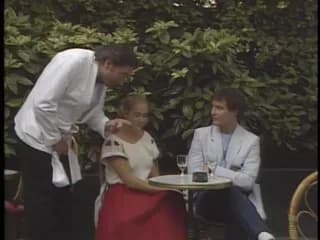
  • Robert (white jacket) and Mireille (red skirt) at a café table — and the waiter with the bow tie.
  • The moment the drink goes over — and how calmly Mireille answers.
  • Robert's T-shirt at the end of the story: C'est dur d'être modeste — it's hard to be modest!
  • The little words jamais (never), rien (nothing), personne (nobody).

Scene by scene

The episode in 22 short scenes, with the time each one starts in the video.

  1. Starts at 0:00

    1.Back at the café

    The short English intro: Robert and Mireille are talking about school. Robert criticizes the whole education system — he's taken a year off to find himself. 'Poor thing,' says Mireille, 'were you lost?'

  2. Starts at 0:57

    2.Splash! Kir on the skirt

    Mireille raves about her handsome Greek art teacher. Robert, annoyed, knocks his kir onto her skirt. The waiter rushes over; Mireille says it's nothing — an old skirt she almost never wears.

  3. Starts at 1:51

    3.Lycée = forced labor, fac = freedom

    At the lycée you never have a minute to yourself — it's forced labor. At the fac you work if you want. Now Mireille finally has time to read for pleasure: lately, Hemingway.

  4. Starts at 2:21

    4.Hemingway sat right here!

    The waiter: Hemingway always sat at this very table! Did he know him? No, he's too young. Did he read him? No time — work, family, the garden. But he's heard of him. Robert orders the same drink.

  5. Starts at 3:18

    5.A year off — to find himself

    Is Robert a student? Yes… no… well, he was. He's just left university after two years and taken a year off. Why? 'To find myself.' 'Poor little thing — were you lost?'

  6. Starts at 4:01

    6.Robert the genius

    Robert wants to think, take stock, see where he stands. School teaches useless things, it's too authoritarian, not suited to modern life. Was he a good student? The best! Never failed an exam, learned to read by himself… 'And you won the prize for modesty too?'

Show the other 16 scenes
  1. 7I swear! — and the spill againThe teacher replays the story: Mireille swears her teacher looks like Michelangelo's Moses. People swear in court. Robert doesn't like it at all — so, paf, he knocks his glass over.Starts at 5:30
  2. 8Sorry! — It's nothingLots of ways to apologize: excusez-moi, je suis désolé, je m'excuse. And to answer: ce n'est pas grave, c'est rien. Mireille says she never wears that skirt — what a liar! Marie-Laure wants her pink dress.Starts at 6:53
  3. 9mettre — and 'it'll come out'The verb mettre (to put, put on). A little water and the stain will come out — ça va partir. Mireille: don't trouble yourself. Then it's your turn to answer as Mireille.Starts at 8:13
  4. 10Forced or free?At the lycée you're always forced to work. Mireille forces Marie-Laure to eat — then lets her choose: 'do as you like, you don't have to.' Now Mireille can read for her own pleasure.Starts at 9:18
  5. 11Writers, genius — and 'heard of'Hemingway was a writer, a writer of genius. The waiter hasn't read his work, but he's heard of him. And Lacan? Marie-Laure has never heard of him.Starts at 10:28
  6. 12attendre or entendre?Two verbs that sound almost the same: attendre (to wait) and entendre (to hear). Robert waits, Mireille hears something, Marie-Laure hears her mother.Starts at 11:57
  7. 13Who drinks what?Apparently Hemingway drank a lot. Mireille and Robert drink kirs; Marie-Laure drinks Orangina. The verb boire — and Robert orders a second kir.Starts at 12:50
  8. 14Leaving, time off, handyRobert has left university and taken time off — not sick leave, just time off. Monsieur Belleau took a day off. Mireille: how convenient! And a tray is more convenient for Marie-Laure.Starts at 14:06
  9. 15Where do I sit?mettre and se mettre: Marie-Laure sets the table but doesn't know where to sit. Robert prefers to sit in the back. He 'put himself' on leave.Starts at 16:04
  10. 16Lost and found — and teasingWas Robert lost? Marie-Laure lost her Astérix, someone loses their glasses — and finds them. Mireille says she never makes fun of anyone. Not true: she's a tease!Starts at 17:09
  11. 17Taking stock — and fed upRobert wants to think, take stock, see where he stands. Tante Georgette and Marie-Laure lose track. Sailors take a bearing. Mireille thinks Robert just had enough — like her with Marie-Laure: j'en ai marre!Starts at 18:21
  12. 18Not suited to modern life — Rien que ça ?Robert's four complaints: useless things, too authoritarian, too controlling, not suited to modern life. Mireille: 'Is that all?' — just like when Marie-Laure asks for a Walkman, a camera and a bike.Starts at 20:08
  13. 19Good student, passed, failedRobert always got good grades and never failed an exam. Real French people say what kind of students they were. Catherine passed her Italian exam; Mireille failed. Aucun livre, aucune idée.Starts at 21:36
  14. 20No kidding! The prize for modestyRobert learned to read all by himself. 'No kidding!' Schools give prizes to the best students — but Robert surely never won the prize for modesty.Starts at 23:30
  15. 21Never in my life!Mireille protests that she's not making fun of him — jamais de la vie! Two quick examples, then 'did you know him? did you read him?'Starts at 24:50
  16. 22Your turn — then a puppet napAnswer out loud: someone spills a drink on you, the waiter rushes over, Hemingway sat here, did you know Napoleon? Then a Guignol puppet refuses to take stock — he's off for a nap. Credits from 26:46.Starts at 25:21

Key phrases, with Hindi and Punjabi pronunciation

Real lines from this episode, written the way they sound in Latin letters, Devanagari and Gurmukhi.

  • Excusez-moi, je suis désolé.Excuse me, I'm so sorry.
    ex-kü-ZAY MWA, zhuh swee day-zo-LAYऐक्स-कü-ज़े मुआ, झ़अ स्वी दे-ज़ो-लेਐਕਸ-ਕü-ਜ਼ੇ ਮੁਆ, ਝ਼ਅ ਸ੍ਵੀ ਦੇ-ਜ਼ੋ-ਲੇ
  • Ce n'est pas grave, c'est rien.It's no big deal, it's nothing.
    suh nay pa GRAV, say RYA(N)सअ नै पा ग्ग़ाव, से ग़्यैंਸਅ ਨੈ ਪਾ ਗ੍ਗ਼ਾਵ, ਸੇ ਗ਼੍ਯੈਂ
  • Ne vous dérangez pas.Don't trouble yourself.
    nuh voo day-ra(n)-ZHAY PAनअ वू दे-ग़ाँ-झ़े पाਨਅ ਵੂ ਦੇ-ਗ਼ਾਂ-ਝ਼ੇ ਪਾ
  • Sans blague.No kidding.
    sa(n) BLAGसाँ ब्लागਸਾਂ ਬ੍ਲਾਗ
  • Moi ? Pas du tout ! Jamais de la vie !Me? Not at all! Never in my life!
    pa dü TOO. zha-MAY duh la VEEपा दü तू। झ़ा-मै दअ ला वीਪਾ ਦü ਤੂ। ਝ਼ਾ-ਮੈ ਦਅ ਲਾ ਵੀ

Sounds to master in this episode

French sounds explained through the Hindi and Punjabi sounds you already make, with real lines from the episode to copy.

  • The a of ça/a/

    आ (छोटा)ਆ (ਛੋਟਾ)

    French a is always the open आ of papa — never the a of cat or late, and said a little further forward in the mouth than English. Workbook 20.5: dollar, par hasard, ça va partir, talent, Sans blague !, facile.

    • Sans blague.No kidding.
    • Ça y est, c'est parti.There we go, it's gone.
  • The nasal an of France/ɑ̃/

    आँ (माँ वाला)ਆਂ (ਮਾਂ ਵਾਲਾ)

    an / en is a nasal आँ — air through the nose, no n at the end: entendre, sans, temps, enseignement. attendre starts with a plain a, entendre with the nasal en: that first sound is the only way to tell them apart (Workbook 20.7).

    • Entendre, attendre.Entendre (to hear), attendre (to wait).
    • Attendre : j'attends.Attendre (to wait): I wait.

Grammar patterns in this episode

Each pattern comes from real lines in the episode. Here is the short version; in the course you notice it in the video first, then drill it.

  1. 1Sorry! — It's nothing

    Say sorry with Excusez-moi ! or Je suis désolé(e) ! Answer with Ce n'est pas grave, Ce n'est rien, Ça n'a pas d'importance. If someone rushes to help: Laissez ! / Ne vous dérangez pas. Surprised? Sans blague ! Pas possible ! Accused of something? Moi ? Pas du tout ! Jamais de la vie !

    From the episode

    Ah, excusez-moi, je suis désolé.

    Oh, excuse me, I'm so sorry.

    Hindi and Punjabi link

    Ce n'est pas grave is your कोई बात नहीं / ਕੋਈ ਗੱਲ ਨਹੀਂ. Sans blague ? is सच में? / ਸੱਚੀਂ? And Jamais de la vie ! is a loud कभी नहीं! / ਕਦੇ ਨਹੀਂ!

  2. 2Recap + new: jamais, rien, personne — and aucun

    Recap: you met ne… rien and ne… personne in lesson 15, ne… plus in 17 and ne… jamais in 18 — each one sits in the pas spot: ne… jamais = never (↔ toujours), ne… rien = nothing (↔ quelque chose), ne… personne = nobody (↔ tout le monde). New today: ne… aucun(e) + noun = not a single (it matches the noun: aucun examen, aucune idée). And they can team up with just one ne: Je ne me moque jamais de personne. Il n'a jamais raté aucun examen.

    From the episode

    On n'est jamais tranquilles. On n'est pas libres.

    You're never left in peace. You're not free.

    Hindi and Punjabi link

    Hindi works the same way — a word plus नहीं: कभी नहीं (jamais), कुछ नहीं (rien), कोई नहीं (personne). Punjabi: ਕਦੇ ਨਹੀਂ, ਕੁਝ ਨਹੀਂ, ਕੋਈ ਨਹੀਂ.

  3. 3Recap + new: attendre (wait) & its twin entendre (hear)

    You met attendre (to wait for) in lesson 13. New: entendre (to hear) is its twin — same endings, same past: j'attends / j'entends, nous attendons / nous entendons, ils attendent / ils entendent. Past: j'ai attendu, j'ai entendu. The only difference is the first sound: plain a (attendre) vs nasal en (entendre).

    From the episode

    Robert attend.

    Robert is waiting.

  4. 4mettre & boire

    mettre = to put, to put on (clothes): je mets ma jupe rouge. se mettre = to put yourself somewhere: to sit (Où est-ce que je me mets ?) or se mettre en congé (take time off). boire = to drink; nous and vous switch to buv-, and so does the imperfect: Hemingway buvait beaucoup. Past: j'ai mis, j'ai bu.

    From the episode

    C'est une vieille jupe. Je ne la mets presque jamais.

    It's an old skirt. I almost never wear it.

  5. 5Vous l'avez lu ? — pronouns in the past

    You built the passé composé in lesson 19 (j'ai lu, il a connu). Now add a pronoun. In the passé composé, the pronoun (le, la, l', les, lui, en) goes before the helper verb avoir: Vous l'avez lu ? · J'en ai entendu parler. With a negative, ne… pas wraps the pronoun + helper: Je ne l'ai pas connu.

    From the episode

    Vous l'avez connu ? Vous l'avez lu ?

    Did you know him? Have you read him?

Words you will meet

Each word is written the way it sounds in Devanagari and Gurmukhi.

  • un(e) élèvem./f.a pupil, a school studentअँ-ने-लैवਅੰ-ਨੇ-ਲੈਵ
  • de bonnes notesgood gradesदअ बोन नोतਦਅ ਬੋਨ ਨੋਤ
  • réussir (à) un examento pass an examग़े-ü-सीग़ अँ-नैग-ज़ा-मैंਗ਼ੇ-ü-ਸੀਗ਼ ਅੰ-ਨੈਗ-ਜ਼ਾ-ਮੈਂ
  • rater un examento fail an examग़ा-ते अँ-नैग-ज़ा-मैंਗ਼ਾ-ਤੇ ਅੰ-ਨੈਗ-ਜ਼ਾ-ਮੈਂ
  • doué(e)gifted, talentedदू-एਦੂ-ਏ
  • se mettre en congéto take time offसअ मैत्ग़-आँ कोँ-झ़ेਸਅ ਮੈਤ੍ਗ਼-ਆਂ ਕੋਂ-ਝ਼ੇ
  • quitterto leave (a place, people)की-तेਕੀ-ਤੇ
  • commodeconvenient, handyको-मोदਕੋ-ਮੋਦ
  • se moquer deto make fun ofसअ मो-के दअਸਅ ਮੋ-ਕੇ ਦਅ
  • réfléchirto think it overग़े-फ़्ले-शीग़ਗ਼ੇ-ਫ਼ਲੇ-ਸ਼ੀਗ਼
  • faire le pointto take stockफ़ैग़ लअ पुऐँਫ਼ੈਗ਼ ਲਅ ਪੁਐਂ
  • en avoir assezto be fed upआँ-ना-वुआग़ आ-सेਆਂ-ਨਾ-ਵੁਆਗ਼ ਆ-ਸੇ

Plus 21 more words in the lesson, each with its pronunciation.

Practice in all four skills

Listening, speaking, reading and writing: the four skills TEF Canada and TCF Canada score. Every task is built from this episode's own lines.

  • Listening

    8 dictation lines cut from the video: hear it, type it, check every accent. Plus 10 textbook audio drills.

    A line you will write down

    Ce n'est pas grave, c'est rien.

    It's not serious, it's nothing.

  • Speaking

    Shadow 8 lines after the actors, answer 6 questions aloud, then a short role-play with Robert.

    How the role-play opens

    Oh ! Excusez-moi, je suis désolé ! Votre jupe…

    Oh! Excuse me, I'm so sorry! Your skirt…

  • Reading

    A short story, “A spilled kir and a big speech”, retold with this episode's words, then 6 questions on it.

    The story starts

    Mireille et Robert sont à la terrasse de la Closerie des Lilas.

  • Writing

    8 fill-in sentences, 6 sentences to build and 2 short writing tasks with feedback.

    A writing task

    At a café, someone knocks a drink onto your clothes. Write the little scene: their apology, your answer, the waiter rushing over, and your reply to the waiter.

Then a self-test of 8 questions to finish the episode, and new words go into your review deck.

Culture notes

La Closerie des Lilas

A café-restaurant on the Left Bank, in Montparnasse, near the Luxembourg Garden. In the 1920s it was a favourite of the American writers of the Lost Generation — F. Scott Fitzgerald, Gertrude Stein and Ernest Hemingway, who wrote there. Little brass plaques on the bar still carry famous names. So the waiter's story isn't impossible… he just wasn't there.

Hindi and Punjabi linkThink of Kolkata's Indian Coffee House on College Street — where poets and writers argued over cups of coffee for decades.


Lycée and fac

French teenagers go to the lycée from about 15 to 18. Long days, lots of homework, grades out of 20, and at the end the national exam, le bac. Then la fac (university): big lectures, fewer hours, and nobody checks whether you work. No wonder Mireille calls the lycée les travaux forcés and the fac plus relax.

Hindi and Punjabi linkBoard exams, tuition after school, no minute to yourself — Mireille's travaux forcés will sound very familiar.

A year off 'to find yourself'?

The Study Guide explains Mireille's sarcasm: in France you choose a career early and stick to it, and taking a year off can look like goofing off. 'Finding yourself' sounds a bit ridiculous to her — Pauvre petit, vous étiez perdu ? Robert is hurt… and starts a speech about everything that's wrong with education.

Hindi and Punjabi linkIn many Indian families a gap year raises eyebrows too — the first question is usually 'and then what?'

Who is in it

  • Mireillea student at the Sorbonne — loves the fac, loves teasing Robert
  • Robertthe young American — spills his drink, then lectures about education
  • Le garçonthe waiter at the Closerie des Lilas
  • Marie-LaureMireille's little sister, in the examples
  • Le professeurPierre Capretz, who explains the new words

Watch this episode in your free trial

Start with Episode 1 free in two taps. Add your email when you are ready and every episode, this one included, opens for 7 days. No card needed.

Start free with Episode 1

What you get

  • Warm-up, tap-to-translate captions, words & patterns, practice
  • Hindi and Punjabi pronunciation help
  • Printable watch guide, master guide, transcript, textbook, and workbook
  • New words saved to your spaced review deck

Coming up next

Episode 21 — Attention : Écoles III. The conversation at the Closerie goes on — more about school.