



French

Part 3 · Lifestyle

Episode 26: Manger et boire III

Food and Drink III

  • 29 min video
  • About 80 min with practice
  • A2

Sunday in Paris: a religieuse at the pastry shop, then lunch next to a blonde who might be Mireille. Cassoulet is too heavy, the steak is bleu, the dessert is full of calories — and every dish is named after the chef's dead girlfriend. Learn to order a whole meal, say heavy / light, only (ne… que) and bring / take away.

Start with Episode 1 free in two taps. Add your email when you are ready and every episode, this one included, opens for 7 days. No card needed.

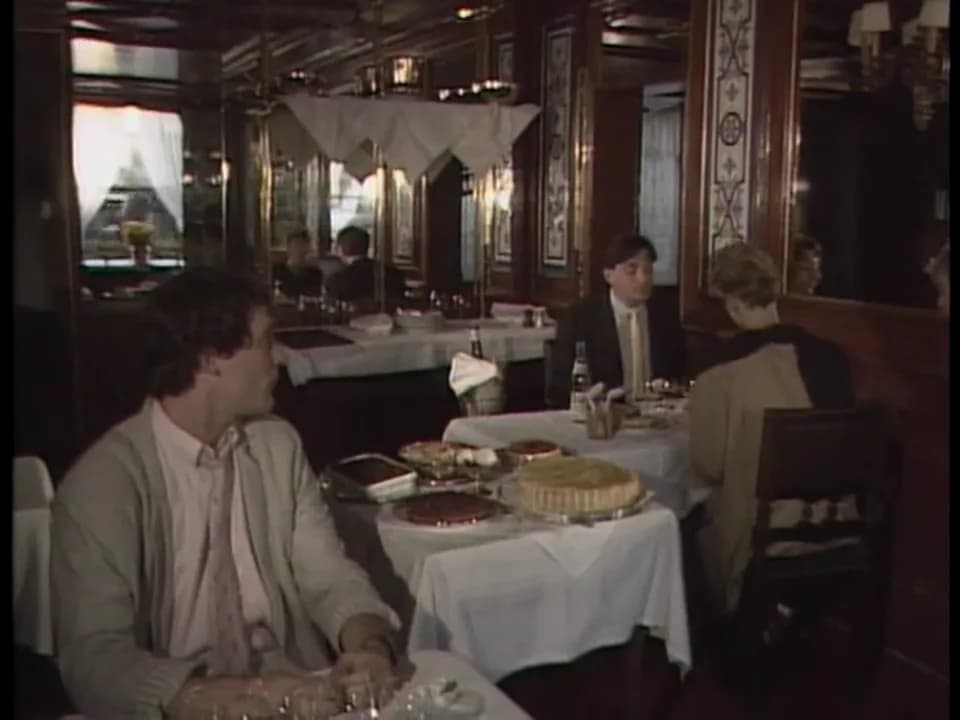
A scene from French in Action episode 26, Manger et boire III
minutes of video
29
CEFR level
A2
key words
35
grammar patterns
4

By the end you can

  • buy a cake: Vous désirez ? — Je vais prendre une religieuse. — C'est pour emporter ? — Non, c'est pour manger tout de suite.
  • order a meal politely: Pour moi, ce sera… Je prendrai… Vous nous apporterez…
  • say how you want your meat: bleu, saignant, à point, bien cuit
  • say food is lourd (heavy) or léger (light), and that you're not hungry: Je n'ai plus faim.
  • say only: Je ne veux qu'une petite omelette.
  • tell porter, apporter, emporter apart
  • tease a friend: Je te connais ! Heureusement que tu n'avais pas faim !

Listen out for

Five things to notice the first time you watch. Spotting them is half the lesson.

  • The pastry shop: Vous désirez ? and C'est pour emporter ? — every French bakery asks them.
  • Robert only sees the blonde from behind. Is it Mireille? Watch the very end of the meal…
  • lourd (heavy) and léger (light): she refuses everything heavy — until the dessert!
  • How they order: Pour moi, ce sera…, Je vais prendre…, Vous nous porterez…
  • The sad story of the chef and his Mireille — and every dish named after her.

Scene by scene

The episode in 21 short scenes, with the time each one starts in the video.

  1. Starts at 0:00

    1.Back at the restaurant

    The English intro: Robert notices a young couple in a good restaurant. The woman is blonde — could it be Mireille? And the chef names his dishes after an old girlfriend, another Mireille, who died of indigestion.

  2. Starts at 1:06

    2.Sunday: the pastry shop

    Sunday. Robert has nothing to do. Some people go to church — everyone buys cakes. Robert goes into a pastry shop: cream puffs, éclairs, lemon tarts, religieuses… He takes a coffee religieuse and eats it on the spot. Ten francs.

  3. Starts at 2:25

    3.A blonde at the next table

    Robert walks on and goes into a restaurant: a table for one. At the next table the waiter serves a Martini and a Pernod. A young blonde woman is having lunch with a young man. Mireille?

  4. Starts at 3:34

    4.What tempts you?

    The couple read the menu. Cassoulet? Too heavy. Choucroute? Hard to digest. Look at all the ducks! In the end she wants just a little herb omelette. 'I know you,' he says — 'in two hours you'll be starving.' Then she spots eggs Mireille on the menu.

  5. Starts at 4:49

    5.Why is everything called Mireille?

    The waiter explains eggs Mireille (stuffed hard-boiled eggs). Why so many Mireille dishes? The chef's girlfriend Mireille died of a pink-shrimp indigestion; he names all his best creations after her. Chicken Mireille: sautéed with eggplants and tomatoes.

  6. Starts at 5:45

    6.Ordering the meal

    She orders a rib steak, medium; he orders a pepper steak, very rare. To start: raw salmon for her; no snails, so a dozen oysters for him. With a bottle of Muscadet, a half of Moulin-à-Vent and a half-bottle of Badoit.

Show the other 15 scenes
  1. 7Salmon, oysters, steak, cheeseThe starters arrive. 'No, Robert, it isn't Mireille — she talks through her nose as if she had a cold.' The steaks: hers is medium, his — for once — really rare. Then the cheese board: she takes Brie, he takes goat cheese.Starts at 6:40
  2. 8Not hungry… a coupe Privas!'No dessert for me, I'm not hungry any more.' But when she hears what the coupe Privas is — candied chestnuts, cognac, vanilla ice cream, cream — she takes it. 'Here come the calories! Good thing you weren't hungry.' Two espressos and the bill.Starts at 8:16
  3. 9Sunday, church and cakesThe teacher starts again: on Sundays Catholics go to church, Protestants to the temple, and everyone to the pastry shop. All the cakes and tarts. Then the verb acheter: Robert buys a religieuse, Mireille a newspaper, a family buys an afternoon snack.Starts at 9:12
  4. 10Who is she? Eggs MireilleThe blonde is Cécile, Mireille's sister, with her husband Jean-Denis. They have aperitifs and read the menu. The starters — and the recipe for eggs Mireille: hard-boiled eggs, tuna, tomato purée, anchovy, black olive.Starts at 10:37
  5. 11Snails, ducks, cassoulet, choucrouteNo snails, but oysters and raw salmon. Then all kinds of duck, the cassoulet from Toulouse (white beans, sausage, duck confit), the choucroute garnie (sauerkraut, bacon, ham, sausages), and how to make chicken Mireille.Starts at 11:59
  6. 12Heavy or light?Cécile wants nothing heavy — lourd — because it's hard to digest. She wants something léger, like a little omelette. Last year she was on a diet: she ate little and drank mineral water to stay slim.Starts at 14:01
  7. 13Grilled: rare, medium, very rareIn the end they both take grilled meat. How cooked? à point, saignant ou bleu. For once, Jean-Denis's steak is really rare — usually it's overcooked. 'For once' — like Marie-Laure, who for once is right about eight times eight.Starts at 14:57
  8. 14Your turn: you are CécileNow you speak French. You're Cécile at the restaurant: order a grill — medium — and raw salmon to start. Answer each question before Cécile does.Starts at 16:10
  9. 15Cheeses and dessertsThe cheese board: cow's cheeses (camembert, cantal, brie), goat cheeses, and roquefort from ewe's milk. Then the desserts, the sorbets — and the recipe for the coupe Privas. 'Here come the calories!' Marie-Laure doesn't 'really like' chocolate mousse… but eats it all.Starts at 17:06
  10. 16A sad storyWhy all those dishes called Mireille? A sad story — triste, not gaie. The chef's girlfriend ate too many pink shrimps and died. He never got over it: he's inconsolable, and he names every new dish after her. Very touching.Starts at 19:33
  11. 17Porter, apporter, emporterMarie-Laure carries her boat (porter), brings it to her father (apporter), takes it away (emporter). The waiter brings a fork to Tante Georgette and takes away a glass. 'Is it to take away?'Starts at 21:33
  12. 18Le fromage, du fromage — je te connaisRobert takes the cheese… then some cheese. Jean-Denis teases Cécile: Je te connais ! And Marie-Laure says it to Mireille, who'll 'only take one sweet'. At the end of the meal: two espressos and the bill.Starts at 22:46
  13. 19Oh, the wines!We forgot the wine! Jean-Denis ordered a bottle of Muscadet, a half-bottle of Moulin-à-Vent and a half-bottle of mineral water. The French drink lots of mineral water — 'to flush out', says a Contrex ad.Starts at 23:39
  14. 20Listen, watch, answerQuick questions: cakes or bread? Shrimps or foie gras? Duck or goose? Oysters or snails? Heavy or light? A course or a diet? Sad or cheerful? The cheese or some cheese?Starts at 24:20
  15. 21Guignol orders everythingGuignol orders the whole menu: shrimps, eggs Mireille, snails, salmon, chicken, a rare steak with fries, choucroute and cassoulet. 'I can't eat any more!' No cheese, no dessert, no coffee… and no bill!Starts at 25:41

Key phrases, with Hindi and Punjabi pronunciation

Real lines from this episode, written the way they sound in Latin letters, Devanagari and Gurmukhi.

  • Non, c'est pour manger tout de suite.No, it's to eat right away.
    pour ma(n)-ZHAY too-tuh SWEETपूग़ माँ-झ़े तूत स्वीतਪੂਗ਼ ਮਾਂ-ਝ਼ੇ ਤੂਤ ਸ੍ਵੀਤ
  • Quelque chose de léger. Je n'ai pas très faim.Something light. I'm not very hungry.
    kel-kuh SHOZ duh lay-ZHAYकैल-कअ शोज़ दअ ले-झ़ेਕੈਲ-ਕਅ ਸ਼ੋਜ਼ ਦਅ ਲੇ-ਝ਼ੇ
  • Oh non, alors ! C'est trop lourd.Oh no! It's too heavy.
    say TRO LOORसे त्ग़ो लूग़ਸੇ ਤ੍ਗ਼ੋ ਲੂਗ਼
  • Et pour moi, ce sera un steak au poivre.And for me, it'll be a pepper steak.
    ay poor MWA, suh-ruh SRA a(n) stek oh PWAVRए पूग़ मुआ, सअ स्ग़ा अँ स्तैक ओ प्वाव्ग़ਏ ਪੂਗ਼ ਮੁਆ, ਸਅ ਸ੍ਗ਼ਾ ਅਂ ਸ੍ਤੈਕ ਓ ਪ੍ਵਾਵ੍ਗ਼
  • Pour moi, à point, s'il vous plaît.Medium for me, please.
    poor MWA, a PWA(N), seel voo PLEHपूग़ मुआ, आ पुआँ, सील वू प्लैਪੂਗ਼ ਮੁਆ, ਆ ਪੁਆਂ, ਸੀਲ ਵੂ ਪ੍ਲੈ

Sounds to master in this episode

French sounds explained through the Hindi and Punjabi sounds you already make, with real lines from the episode to copy.

  • Soft P T K (no puff)/p t k/

    प त क (फ थ ख नहीं)ਪ ਤ ਕ (ਫ ਥ ਖ ਨਹੀਂ)

    French p, t, k have no puff of air after them — like the p of spit, not of pit. Hold a hand in front of your mouth: it should stay still. Workbook 26.4–26.5: Paris, pâtisserie, carte, coup, temple, thon, tomate, pas de poulet, Je te connais, toi ! Hindi and Punjabi already have this unaspirated प, त, क — use them, not फ, थ, ख.

    • Alors, chérie, qu'est-ce qui te tente ?So, darling, what tempts you?
    • Qu'est-ce que tu vas prendre, toi ?What are you going to have?
  • The open è of père/ɛ/

    ऐ (है वाला)ਐ (ਹੈ ਵਾਲਾ)

    acheter has a silent-ish e (ash-TAY), but j'achète, il achète has an open è (ऐ). The rule (Workbook 26.26): è when the next syllable has a silent e: il achète, il achètera; plain e when a sounded vowel follows: acheter, achetez, nous achetons. Same as se promener / il se promène.

    • Et tout le monde achète des gâteaux dans les pâtisseries.And everyone buys cakes in the pastry shops.
    • C'est le verbe acheter.That's the verb acheter (to buy).

Grammar patterns in this episode

Each pattern comes from real lines in the episode. Here is the short version; in the course you notice it in the video first, then drill it.

  1. 1Ordering: pour moi, ce sera…

    To order politely, French uses je vais prendre… (I'm going to have), pour moi, ce sera… (for me, it'll be), or the future: je prendrai…, vous nous apporterez… The future is the infinitive + -ai, -as, -a, -ons, -ez, -ont: apporter → vous apporterez; prendre drops its e: je prendrai. A few are irregular: être → ce sera. It's softer than a command like Apportez-moi ! (Tante Georgette's style).

    From the episode

    Je vais prendre une religieuse.

    I'll take a religieuse.

    Hindi and Punjabi link

    Jean-Denis's Vous nous apporterez… is like a polite ले आइएगा / ਲੈ ਆਇਓ — future-sounding, softer than a plain लाओ!

  2. 2Only: ne… que

    ne… que = only. It looks negative, but it isn't 'not': Je n'en prendrai qu'un = I'll take only one. ne goes before the verb (like ne… pas), que goes right before the thing you limit: Je ne veux qu'une omelette. No pas! Before a vowel: n' and qu'.

    From the episode

    Allez, donne, je n'en prendrai qu'un, je te promets.

    Come on, give it, I'll only take one, I promise.

    Hindi and Punjabi link

    ne… que works like सिर्फ़ / ਸਿਰਫ਼: Je ne veux qu'une omelette = मुझे सिर्फ़ एक ऑमलेट चाहिए / ਮੈਨੂੰ ਸਿਰਫ਼ ਇੱਕ ਆਮਲੇਟ ਚਾਹੀਦਾ. The que sits where सिर्फ़ points.

  3. 3Porter, apporter, emporter

    porter = to carry (no direction). apporter = to bring (towards someone: Apporte-moi ton bateau). emporter = to take away (C'est pour emporter ?). Add r(e)- for 'again / back': rapporter = bring back, remporter = take back. In restaurants you'll also hear porter for bring: Vous nous porterez deux express.

    From the episode

    Elle le porte.

    She's carrying it.

  4. 4Canard à l'orange, magret de canard

    de + noun says what it's made of / comes from: magret de canard (duck breast), foie gras d'oie, purée de thon. à + the says how it's prepared or flavoured: canard à l'orange, steak au poivre, omelette aux fines herbes, glace à la vanille. Remember à + le = au, à + les = aux.

    From the episode

    Alors, canard aux olives, canard à l'orange,

    Duck with olives, duck with orange,

    Hindi and Punjabi link

    Like आलू का पराठा / ਆਲੂ ਦਾ ਪਰੌਂਠਾ (made of) vs मक्खन के साथ (served with): French de = what it is, à la = how it's done.

Words you will meet

Each word is written the way it sounds in Devanagari and Gurmukhi.

  • une pâtisserief.a pastry shopपा-तीस-ग़ीਪਾ-ਤੀਸ-ਗ਼ੀ
  • un gâteaum.a cakeगा-तोਗਾ-ਤੋ
  • une tartef.a tart, a pieताग़्तਤਾਗ਼੍ਤ
  • Vous désirez ?What would you like?वू दे-ज़ी-ग़ेਵੂ ਦੇ-ਜ਼ੀ-ਗ਼ੇ
  • emporterto take awayआँ-पोग़-तेਆਂ-ਪੋਗ਼-ਤੇ
  • tout de suiteright awayतूत स्वीतਤੂਤ ਸ੍ਵੀਤ
  • la cartef.the menuला काग़्तਲਾ ਕਾਗ਼੍ਤ
  • le plat du jourm.today's specialलअ प्ला दü झ़ूग़ਲਅ ਪ੍ਲਾ ਦü ਝ਼ੂਗ਼
  • tenterto temptताँ-तेਤਾਂ-ਤੇ
  • léger (légère)light (not heavy)ले-झ़ेਲੇ-ਝ਼ੇ
  • lourd(e)heavyलूग़ਲੂਗ਼
  • digérerto digestदी-झ़े-ग़ेਦੀ-ਝ਼ੇ-ਗ਼ੇ

Plus 23 more words in the lesson, each with its pronunciation.

Practice in all four skills

Listening, speaking, reading and writing: the four skills TEF Canada and TCF Canada score. Every task is built from this episode's own lines.

  • Listening

    8 dictation lines cut from the video: hear it, type it, check every accent. Plus 6 textbook audio drills.

    A line you will write down

    C'est pour emporter ?

    Is it to take away?

  • Speaking

    Shadow 8 lines after the actors, answer 6 questions aloud, then a short role-play with Le garçon.

    How the role-play opens

    Bonjour, monsieur-dame. Vous avez choisi ?

    Hello. Have you decided?

  • Reading

    A short story, “A Sunday lunch”, retold with this episode's words, then 5 questions on it.

    The story starts

    C'est dimanche.

  • Writing

    8 fill-in sentences, 5 sentences to build and 2 short writing tasks with feedback.

    A writing task

    You're at a French restaurant with a friend. Write your order to the waiter: a starter, a main course with how you want it cooked, something to drink — and at the end, coffee and the bill.

Then a self-test of 8 questions to finish the episode, and new words go into your review deck.

Culture notes

Sunday: church, temple… and cake

Sunday is the big family day in France. Some people go to mass (l'église) or to the Protestant temple; on the way home almost everyone stops at the pâtisserie for the Sunday dessert. Shops close in the afternoon and Paris gets quiet — a lonely day for Robert, alone in a big city.

Hindi and Punjabi linkLike picking up मिठाई / ਮਠਿਆਈ on the way home from the gurdwara or the mandir on a holiday.


A French meal, step by step

Watch the order: l'apéritif (Martini, Pernod) → les hors-d'œuvre (salmon, oysters) → le plat (grills) → le fromage → le dessert → le café (an express, small and strong) → l'addition. Wine comes with the food — white Muscadet with the seafood, red Moulin-à-Vent with the meat — plus a bottle of mineral water. Cheese comes before dessert!

Hindi and Punjabi linkCheese before the sweet, and coffee only at the very end — no chai with the meal.

Bleu, saignant, à point

The French like red meat barely cooked: bleu (seared outside, cold inside), saignant (rare), à point (medium), bien cuit (well done — rarely ordered). The Study Guide says meat that arrives carbonisé goes straight back to the kitchen. Raw food is loved too: oysters, raw salmon, steak tartare.

Hindi and Punjabi linkIf you want your meat cooked right through, the Indian way, ask clearly for bien cuit — otherwise expect pink.

Who is in it

  • Robertthe young American — a lonely Sunday in Paris
  • CécileMireille's older sister — 'not very hungry'
  • Jean-DenisCécile's husband — orders the wine, teases his wife
  • Le garçonthe waiter — knows every recipe and the chef's sad story
  • La vendeusethe shop assistant in the pastry shop
  • Marie-LaureMireille's little sister, in the examples
  • Le professeurPierre Capretz, who explains the new words

Watch this episode in your free trial

Start with Episode 1 free in two taps. Add your email when you are ready and every episode, this one included, opens for 7 days. No card needed.

Start free with Episode 1

What you get

  • Warm-up, tap-to-translate captions, words & patterns, practice
  • Hindi and Punjabi pronunciation help
  • Printable watch guide, master guide, transcript, textbook, and workbook
  • New words saved to your spaced review deck

Coming up next

Episode 27 — Tous les moyens de transport I. Part 4 begins: Robert sets off on the move — trains, cars, planes… and maybe Mireille.