




French

Part 4 · Travel

Episode 27: Tous les moyens de transport I

Transportation I

  • 29 min video
  • About 80 min with practice
  • A2

A wrong number, then Robert at last: can he come to Chartres? Car, coach, plane, horse, motorbike, hovercraft… no — the train, of course. Robert nearly gets lost in the metro, buys the wrong ticket, and on the train Mireille suggests tu… then keeps saying vous. Learn to say you've got the wrong number, all you have to do is…, if you insist, and how to get around: en train, à pied.

Start with Episode 1 free in two taps. Add your email when you are ready and every episode, this one included, opens for 7 days. No card needed.

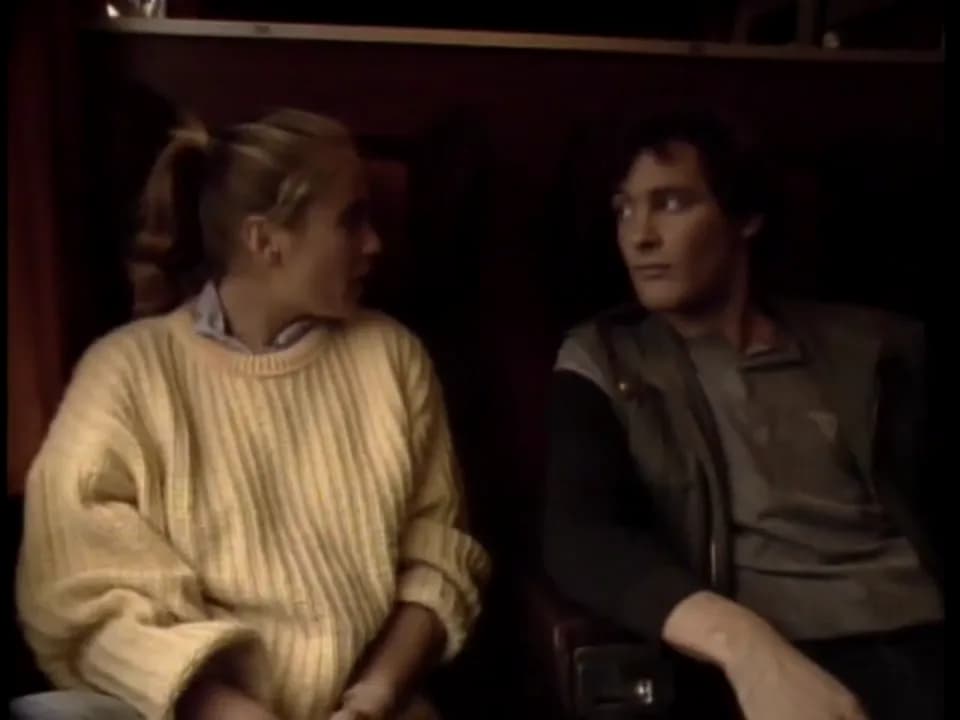
A scene from French in Action episode 27, Tous les moyens de transport I
minutes of video
29
CEFR level
A2
key words
35
grammar patterns
5

By the end you can

  • handle a wrong number: Vous vous êtes trompé(e) de numéro. — Ne quittez pas.
  • say someone made a mistake: se tromper de porte, train, numéro
  • give an easy solution: Vous n'avez qu'à prendre le métro.
  • say you're keen, or let someone come: Si vous y tenez. — J'y tiens !
  • say what you're afraid of: J'aurais peur de tomber en panne.
  • talk about transport: en train, en voiture, à pied, à vélo
  • buy a train ticket: Un aller-retour de seconde pour Chartres, s'il vous plaît.
  • imagine with the conditional: Je pourrais… La vie serait facile…

Listen out for

Five things to notice the first time you watch. Spotting them is half the lesson.

  • Mireille in her blue patterned jacket by the phone — and Robert, nervous, on the other end.
  • Mireille's eyes when she invents an answer for the lady: C'est la caserne des pompiers !
  • Every means of transport Robert suggests — and the one word that kills each idea.
  • The little orange machine at the station: composter.
  • On the train: count how many times Mireille says vous right after proposing tu!

Scene by scene

The episode in 18 short scenes, with the time each one starts in the video.

  1. Starts at 0:00

    1.Going to Chartres

    The short English intro: Mireille is going to Chartres and Robert invites himself along. He nearly gets lost in the metro, they catch the train, and Mireille suggests they say tu.

  2. Starts at 1:06

    2.Wrong number!

    Monday, 9:01. The phone rings at the Belleaus'. A lady wants the Salvation Army. Mireille teases her (this is the fire station!), then kindly finds her the right number.

  3. Starts at 2:18

    3.Robert calls at 9:03

    Mireille answers as 'Major Barbara of the Salvation Army' — it's Robert. He asks when he can see her again. Not today: she has to go to Chartres.

  4. Starts at 3:06

    4.Car? Coach? Plane?

    Robert wants to come — si vous y tenez. Mireille is going to the museum, not the cathedral. How to get there? A rental car is too expensive (and might break down), the coach is slow, Chartres is too close for a plane, too far to walk, horseback takes too long, and a motorbike needs a helmet.

  5. Starts at 4:37

    5.Hovercraft? No — the train!

    Boat, helicopter, hovercraft — none go to Chartres. The train is the best there is. Not the TGV, though: too fast for such a short trip. Robert would gladly come.

  6. Starts at 5:21

    6.Just take the metro

    Meet at 11 at Montparnasse station, suburban side. How to get there? 'Just take the metro.' Robert got lost last time — Mireille gives exact directions: Odéon, the Porte d'Orléans direction, get off at Montparnasse-Bienvenüe. Buy a book of tickets.

Show the other 12 scenes
  1. 7The man who gets lost everywhereFour turnstiles, two corridors, a hundred kilometres of tunnels. Robert, the man who gets lost everywhere… almost everywhere.Starts at 6:20
  2. 8Tickets at MontparnasseMireille is waiting, reading a newspaper. Robert wants two first-class returns — but she already has her ticket, and she travels second. He buys a second-class return and they stamp their tickets.Starts at 6:44
  3. 9Versailles — and 'tu'The train passes Versailles; Robert recites the palace's wonders. Mireille suggests they stop saying vous — young people say tu. Then she invites him to dinner on Thursday… still saying vous! 'I thought we were saying tu!'Starts at 8:13
  4. 10Ringing — and chanceThe teacher: sonner — the phone or the door? And par hasard: Mireille just happens to be near the phone, Robert just happens to be passing by.Starts at 10:04
  5. 11Wrong number, wrong doorSe tromper de: the lady got the wrong number, Robert the wrong door, Joan of Arc the wrong war. Then the Salvation Army, the fire station, de rien, il n'y a pas de quoi.Starts at 11:30
  6. 12If you insist — life would be easySi vous y tenez = if you really want to. Marie-Laure insists on her pink dress. Then the conditional: s'il n'y avait que des difficultés comme ça, la vie serait facile.Starts at 13:10
  7. 13Afraid of breaking downBy road, by car — but Mireille has no car. She'd be afraid of breaking down: avoir peur, tomber en panne. Marie-Laure gives her a fright, and Mireille breaks down again and again.Starts at 15:04
  8. 14Every way to ChartresCoach, plane, on foot, bicycle, motorcycle (helmet compulsory!), boat, helicopter, hovercraft… The best? The train: fast, convenient, comfortable, always on time — and you meet people.Starts at 16:30
  9. 15Stations — and easy solutionsTrain stations in Paris, Montreal, Chartres. Montparnasse has a suburban side and a main-line side. And n'avoir qu'à: 'Tired? You just have to go to bed.' Repeat after Mireille.Starts at 19:17
  10. 16The metro networkHow the metro works: a station, a book of tickets, a line named after its two ends, the direction, changes. Then the maze of tunnels — and an ad for a Kelton watch that 'withstands anything'.Starts at 21:13
  11. 17Tickets, return, à proposLe guichet, le billet, un aller-retour or un aller simple, first or second class, composter. Mireille lost in her thoughts — then à propos…Starts at 23:51
  12. 18Your turn — and GuignolQuestions for you: what did Robert do? How can you get to Chartres? What happened to Mireille? Then Guignol fixes a broken-down car — the least he can do.Starts at 25:39

Key phrases, with Hindi and Punjabi pronunciation

Real lines from this episode, written the way they sound in Latin letters, Devanagari and Gurmukhi.

  • Oui, vous vous êtes trompée de numéro, madame.Yes, you've got the wrong number, madam.
    voo voo zet tro(n)-PAY duh nü-may-ROवू वूज़ै त्ग़ोँ-पे दअ नü-मे-ग़ोਵੂ ਵੂਜ਼ੈ ਤ੍ਗ਼ੋਂ-ਪੇ ਦਅ ਨü-ਮੇ-ਗ਼ੋ
  • Attendez, je vais vérifier le numéro. Ne quittez pas.Wait, I'll check the number. Hold the line.
    a-ta(n)-DAY… nuh kee-TAY PAआ-ताँ-दे… नअ की-ते पाਆ-ਤਾਂ-ਦੇ… ਨਅ ਕੀ-ਤੇ ਪਾ
  • Oh, si vous y tenez.Oh, if you insist.
    see voo zee tuh-NAYसी वू ज़ी तअ-नेਸੀ ਵੂ ਜ਼ੀ ਤਅ-ਨੇ
  • Et puis avec une voiture de location, j'aurais trop peur de tomber en panne.With a rental car, I'd be too afraid of breaking down.
    zho-RAY tro PUHR duh to(n)-BAY a(n) PANझ़ो-ग़े त्ग़ो पअग़ दअ तोँ-बे आँ पानਝ਼ੋ-ਗ਼ੇ ਤ੍ਗ਼ੋ ਪਅਗ਼ ਦਅ ਤੋਂ-ਬੇ ਆਂ ਪਾਨ
  • Bah c'est facile, vous n'avez qu'à prendre le métro.Well, it's easy, you just have to take the metro.
    voo na-VAY KA pra(n)dr luh may-TROवू ना-वे का प्ग़ाँद्ग़ लअ मे-त्ग़ोਵੂ ਨਾ-ਵੇ ਕਾ ਪ੍ਗ਼ਾਂਦ੍ਗ਼ ਲਅ ਮੇ-ਤ੍ਗ਼ੋ

Sounds to master in this episode

French sounds explained through the Hindi and Punjabi sounds you already make, with real lines from the episode to copy.

  • The pure o of au/o/

    ओ (शुद्ध)ਓ (ਸ਼ੁੱਧ)

    Workbook 27.5: the closed o of faux, métro, moto, hôpital, à propos, château — round your lips tight and don't slide into oh-oo. Compare the open o of téléphone, sonne, Orléans, commode: mouth more open.

    • C'est la caserne des pompiers, ici. Vous avez un faux numéro.This is the fire station here. You've dialed a wrong number.
    • Vroum, vroum ! J'adore la moto. Pas vous ?Vroom vroom! I love motorbikes. Don't you?
  • The ü of tu/y/

    ई + ऊ के होंठਈ + ਊ ਦੇ ਬੁੱਲ੍ਹ

    se tutoyer vs se vouvoyer: tu has the ü (say ee with rounded lips), vous has oo. Mix them up and you say the wrong thing!

    • Vous savez, les jeunes se tutoient très vite.You know, young people switch to "tu" very quickly.
    • Oui, se vouvoyer, se dire vous.Yes, say "vous", call each other "vous".

Grammar patterns in this episode

Each pattern comes from real lines in the episode. Here is the short version; in the course you notice it in the video first, then drill it.

  1. 1Wrong number, wrong door: se tromper de

    se tromper de + noun (no article) = to get the wrong one: se tromper de numéro, de porte, de train, de jour. It's a reflexive verb, so the passé composé uses être: je me suis trompé(e), vous vous êtes trompé(e), il s'est trompé.

    From the episode

    Oui, vous vous êtes trompée de numéro, madame.

    Yes, you've got the wrong number, madam.

    Hindi and Punjabi link

    Hindi does it with a noun too: ग़लत नंबर लग गया / ਗ਼ਲਤ ਨੰਬਰ ਲੱਗ ਗਿਆ — French puts the 'wrong' in the verb: Je me suis trompé de numéro.

  2. 2All you have to do is…: n'avoir qu'à

    ne + avoir + qu'à + infinitive = all you have to do is…, just… It offers an easy solution. Only avoir changes: tu n'as qu'à, vous n'avez qu'à, il n'a qu'à. General version: Il n'y a qu'à prendre le métro.

    From the episode

    Bah c'est facile, vous n'avez qu'à prendre le métro.

    Well, it's easy, you just have to take the metro.

    Hindi and Punjabi link

    It's the French बस … कर लो / ਬੱਸ … ਕਰ ਲਓ: Tu n'as qu'à prendre le métro = बस मेट्रो ले लो.

  3. 3If you insist: tenir à, y tenir

    tenir à + infinitive = to really want to, to insist on: Il tient à aller à Chartres. Replace à + the thing with y: Il y tient. Si vous y tenez = if you insist. Forms: je tiens, tu tiens, il tient, nous tenons, vous tenez, ils tiennent.

    From the episode

    Oh, si vous y tenez.

    Oh, if you insist.

  4. 4En train, à pied: getting around

    Sit inside it → en: en voiture, en auto, en train, en avion, en bateau, en autocar, en hélicoptère. Sit on top of it (or use your feet) → à: à pied, à cheval, à bicyclette, à vélo, à moto, à ski. The way you travel: par la route.

    From the episode

    En auto?

    By car?

    Hindi and Punjabi link

    Hindi uses one word for all: से — ट्रेन से, पैदल. French makes you pick: inside → en, on top → à.

  5. 5Life would be easy: the conditional

    The conditional says what would happen: la vie serait facile (but it isn't). Build it = future stem + imperfect endings: pourr-ais, ser-ait, aur-ais, ir-ais, aimer-aient, devr-ions. It's also the polite way to ask: Je pourrais parler à Mireille ?

    From the episode

    Je pourrais visiter la cathédrale pendant que vous verriez ce monsieur.

    I could visit the cathedral while you saw this gentleman.

    Hindi and Punjabi link

    Same feeling as होता / ਹੁੰਦਾ: ज़िंदगी आसान होती… = la vie serait facile…

Words you will meet

Each word is written the way it sounds in Devanagari and Gurmukhi.

  • décrocherto pick up (the phone)दे-क्ग़ो-शेਦੇ-ਕ੍ਗ਼ੋ-ਸ਼ੇ
  • raccrocherto hang upग़ा-क्ग़ो-शेਗ਼ਾ-ਕ੍ਗ਼ੋ-ਸ਼ੇ
  • se tromper deto get the wrong (…)सअ त्ग़ोँ-पे दअਸਅ ਤ੍ਗ਼ੋਂ-ਪੇ ਦਅ
  • un faux numérom.a wrong numberअँ फ़ो नü-मे-ग़ोਅੰ ਫ਼ੋ ਨü-ਮੇ-ਗ਼ੋ
  • Ne quittez pas.Hold the line.नअ की-ते पाਨਅ ਕੀ-ਤੇ ਪਾ
  • Il n'y a pas de quoi.Don't mention it.ईल न्या पाद कुआਈਲ ਨ੍ਯਾ ਪਾਦ ਕੁਆ
  • si vous y tenezif you insistसी वू ज़ी तअ-नेਸੀ ਵੂ ਜ਼ੀ ਤਅ-ਨੇ
  • le conservateurm.the museum curatorलअ कोँ-सैग़-वा-तअग़ਲਅ ਕੋਂ-ਸੈਗ਼-ਵਾ-ਤਅਗ਼
  • louerto rentलू-एਲੂ-ਏ
  • tomber en panneto break downतोँ-बे आँ पानਤੋਂ-ਬੇ ਆਂ ਪਾਨ
  • avoir peur (de)to be afraid (of)आ-वुआग़ पअग़ਆ-ਵੁਆਗ਼ ਪਅਗ਼
  • l'autocarm.the coach (long-distance bus)लो-तो-काग़ਲੋ-ਤੋ-ਕਾਗ਼

Plus 23 more words in the lesson, each with its pronunciation.

Practice in all four skills

Listening, speaking, reading and writing: the four skills TEF Canada and TCF Canada score. Every task is built from this episode's own lines.

  • Listening

    8 dictation lines cut from the video: hear it, type it, check every accent. Plus 7 textbook audio drills.

    A line you will write down

    Non, je n'ai pas de voiture.

    No, I don't have a car.

  • Speaking

    Shadow 8 lines after the actors, answer 6 questions aloud, then a short role-play with Mireille.

    How the role-play opens

    Allô, ici l'Armée du Salut, le major Barbara à l'appareil !

    Hello, Salvation Army here, Major Barbara speaking!

  • Reading

    A short story, “Monday, 9 a.m.: Chartres by train”, retold with this episode's words, then 5 questions on it.

    The story starts

    Lundi matin, à neuf heures une, le téléphone sonne chez les Belleau.

  • Writing

    8 fill-in sentences, 6 sentences to build and 2 short writing tasks with feedback.

    A writing task

    A friend wants to go from Paris to a nearby town with you. Write a short dialogue: they suggest two ways to travel, you turn both down with a reason, and you propose the train.

Then a self-test of 7 questions to finish the episode, and new words go into your review deck.

Culture notes

The Paris metro

Each line is named after its two ends — Porte de Clignancourt – Porte d'Orléans — and you follow the sign for the end you're heading to: direction Porte d'Orléans. Les portes are the old gates of Paris. A carnet of 10 tickets used to be cheaper; today most people tap a card or phone. Changing lines = la correspondance (un changement).

Hindi and Punjabi linkDelhi Metro works the same way: the Yellow Line 'towards Samaypur Badli' or 'towards Millennium City Centre' — you pick the terminus.


Trains: SNCF, TGV and composter

French trains are run by the SNCF. The TGV (train à grande vitesse) goes over 300 km/h — far too fast for Chartres, 90 km away! Paris has several big stations, each for one region: Montparnasse for the west, Saint-Lazare for Normandy, la gare de Lyon for the south-east. Paper tickets had to be compostés (stamped) in an orange machine before boarding.

Hindi and Punjabi linkLike checking your PNR and platform at a big junction — Montparnasse even has a suburban side (banlieue) like Mumbai's local trains and a main-line side (grandes lignes) like the long-distance trains.

Tu or vous?

Vous is for strangers, elders and formal situations; tu for family, friends, children — and students among themselves. Switching from vous to tu is a little milestone: someone usually asks, On peut se tutoyer ? Old habits are hard to drop — which is exactly why Mireille keeps saying vous.

Hindi and Punjabi linkआप → तुम → तू / ਤੁਸੀਂ → ਤੂੰ: you know exactly how delicate that switch can be.

Who is in it

  • Mireillehas to go to Chartres today — and lets Robert come along
  • Robertthe young American — calls at 9:03 sharp
  • Marie-LaureMireille's little sister, in the examples
  • Guignolthe puppet who fixes everything
  • Le professeurPierre Capretz, who explains the new words

Watch this episode in your free trial

Start with Episode 1 free in two taps. Add your email when you are ready and every episode, this one included, opens for 7 days. No card needed.

Start free with Episode 1

What you get

  • Warm-up, tap-to-translate captions, words & patterns, practice
  • Hindi and Punjabi pronunciation help
  • Printable watch guide, master guide, transcript, textbook, and workbook
  • New words saved to your spaced review deck

Coming up next

Episode 28 — Tous les moyens de transport II. The train to Chartres — and someone else on board…