


French

Part 3 · Lifestyle

Episode 21: Attention : Écoles III

Education III

  • 29 min video
  • About 80 min with practice
  • A2

Third kir at the Closerie. Robert attacks every school subject — maths, chemistry, Latin, literature, history — as useless; Mireille defends culture. Then he invites her to lunch… and she dashes home. Learn À quoi ça sert ? — Ça ne sert à rien, Vous me faites rire !, j'ai faim, vous avez raison, tu as tort, and être en train de.

Start with Episode 1 free in two taps. Add your email when you are ready and every episode, this one included, opens for 7 days. No card needed.

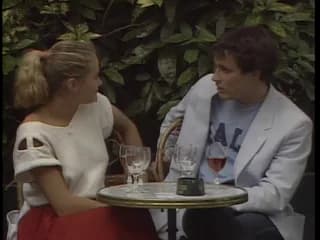
A scene from French in Action episode 21, Attention : Écoles III
minutes of video
29
CEFR level
A2
key words
33
grammar patterns
5

By the end you can

  • ask what something is for and answer: À quoi ça sert ? — Ça sert à couper. / Ça ne sert à rien.
  • say how something smells: Ça sent bon. Ça sent mauvais.
  • say what you hate: J'ai horreur de la chimie.
  • give your opinion: À mon avis… Si vous voulez mon avis…
  • say someone makes you laugh: Vous me faites rire ! Ça la fait rire.
  • say who's right or wrong — and that you're hungry: Vous avez raison. Tu as tort. J'ai faim.
  • say what someone is busy doing: Ils sont en train de boire leur troisième kir.
  • ask the time politely: Vous avez l'heure ? — Il est midi moins cinq.

Listen out for

Five things to notice the first time you watch. Spotting them is half the lesson.

  • Robert (light jacket) and Mireille (white top, red skirt) still at their café table — three kirs in.
  • Every À quoi ça sert ? (what's it for?) — and every Ça ne sert à rien (it's no use).
  • The teacher doing sums at the blackboard — just enjoy the numbers.
  • Marie-Laure caught with the cookies: C'est pas vrai ! C'est un mensonge !
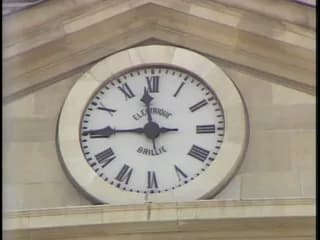
  • The clock: midi moins cinq — and Mireille has somewhere to be.

Scene by scene

The episode in 27 short scenes, with the time each one starts in the video.

  1. Starts at 0:00

    1.Third kir

    English intro: over their third aperitif, Robert and Mireille are discussing education. Robert says school learning is useless; Mireille defends culture. And a strange man in black is listening…

  2. Starts at 1:07

    2.Maths? Useless!

    11:45 by the Observatory clock. Robert says they teach almost everything useless: geometry, calculus… Once you can add, subtract, multiply and divide, that's all you need — and calculators do even that. Mireille: computers still need programming!

  3. Starts at 1:56

    3.Chemistry — the devil's cooking

    Chemistry? Good for a distiller, a pharmacist… or refining heroin. Mireille adds explosives — she always had bad marks in chemistry and hates it: acids smoke and stink.

  4. Starts at 2:39

    4.Physics, a balcony — and Latin

    What use is the law of falling bodies when you fall off a balcony? (Robert did, at ten, in New Orleans.) Mireille did six years of Latin… but can't speak it. Nobody does — not even at the Home Latin hotel.

  5. Starts at 3:25

    5.Intellectual discipline? Ha!

    Mireille: you learn Latin to know French better and for intellectual discipline. Robert laughs — crosswords or bridge are better mental exercise. And literature? Fiction, lies, mermaids, people talking in verse!

  6. Starts at 4:26

    6.History and languages

    History talks about real people? It's arranged so your country is always right. Modern languages? Four years of grammar rules and he can't ask what time the train arrives.

Show the other 21 scenes
  1. 7Lunch? No — I'm late!Mireille: you exaggerate; culture is what's left when you've forgotten everything. 'How preachy you are!' Robert invites her to lunch — lots of good reasons — but she goes home for lunch every day. It's five to twelve: she dashes off.Starts at 5:12
  2. 8Busy doing: en train deThe teacher replays the story. They're on the terrace, drinking their third kir: ils sont en train de boire. Marie-Laure is busy learning her lesson, M. Belleau reading the paper, the Belleaus eating.Starts at 6:20
  3. 9Almost: presqueHas Marie-Laure finished her homework? Presque. Did she eat all the chocolates? Non, pas tous — well, almost all of them.Starts at 7:25
  4. 10What's it for? Ça sert à…A pencil is for writing, a corkscrew for opening bottles, a knife for cutting, a watch for telling the time. But a tie? Ça ne sert à rien. Robert says maths is like the tie — but not everyone agrees.Starts at 7:55
  5. 11Sums on the blackboardThe teacher does an addition, a subtraction, a multiplication and a division out loud — je pose deux et je retiens un. That's all you need. With calculators it's not even worth learning to count: ce n'est pas la peine.Starts at 9:04
  6. 12What chemistry is forChemistry is used for medicines, dyes, plastics — and explosives. At Citroën they make cars. And that's Mireille making explosives! She always hated chemistry: elle a horreur de ça.Starts at 11:16
  7. 13Smells good, smells badAcids smoke and stink. Perfume and Soupline smell good, mustard smells strong. C'est le verbe sentir. And: C'est toi qui sens comme ça ?Starts at 12:38
  8. 14The fallKnowing the law of falling bodies is no use when you fall off a balcony. At ten, Robert fell off one in New Orleans: three weeks in hospital. Une chute — and a waterfall is une chute d'eau.Starts at 13:40
  9. 15Right in the Latin QuarterNobody speaks Latin any more — not even at the Home Latin hotel, though it's en plein Quartier latin, right in the middle of the Latin Quarter. En plein dans le mille !Starts at 14:22
  10. 16Mental exercise — and faire rirePriests once said Mass in Latin; now in French. You learn Latin as mental exercise — ça fait travailler les méninges. Vous me faites rire : Astérix makes Mme Belleau laugh; Uncle Guillaume skipping makes Marie-Laure laugh.Starts at 15:31
  11. 17Your turn: be RobertListen to the dialogue, then say Robert's lines yourself: Ah oui ? Et pourquoi, dites-moi ? and Vous me faites rire avec votre discipline intellectuelle.Starts at 16:41
  12. 18In my opinionFor Robert, crosswords are a better mental exercise than Latin: à son avis. Then short scenes: À mon avis, tu devrais l'épouser. — Je ne te demande pas ton avis !Starts at 17:43
  13. 19Lies! Marie-Laure and the cookiesTo Robert, Latin literature is nothing but lies. Marie-Laure ate all the cookies? C'est pas vrai, c'est un mensonge ! And she wasn't eating chocolates — she was working. Mensonge !Starts at 18:28
  14. 20Verse, fiction — and people who livedTragedies are in verse: artificial, says Robert. History talks about real people — Joan of Arc, Louis XIV, Napoleon — people who lived: ils ont vécu. Pantagruel is fiction.Starts at 19:10
  15. 21History and the truthHistory is arranged, manipulated. There's a French truth, a German truth, an American truth… In France, Truth is a naked young woman coming out of a well, holding a mirror.Starts at 20:18
  16. 22Against everythingLanguages are taught badly: conjugations, rules — and Robert can't ask when the train arrives. Can you? Robert is against everything; he's putting on a little act to impress Mireille.Starts at 21:14
  17. 23Received — and preachyEveryone is against the education they received: recevoir, like receiving a package, presents, letters. Then Mireille gets pompous: culture is what's left… Ce que vous êtes sentencieuse !Starts at 22:29
  18. 24Hungry — and lateRobert invites Mireille because he's hungry: il a faim. Marie-Laure n'a pas faim. But Mireille's parents expect her at noon — it's already five to twelve, she'll be late. She gets up and leaves.Starts at 23:24
  19. 25Il l'a invitéeOn blue cards: Robert a invité Mireille → Robert l'a invitée. Il a invité Mireille et Colette → Il les a invitées.Starts at 24:22
  20. 26Look, think and speakQuestions about pictures: Citroën makes cars, a smell that stinks, a man who fell off a balcony, the Home Latin, crosswords, people who lived, the train question, and Marie-Laure — hungry or toothache?Starts at 24:41
  21. 27Puppets: what's a tie for?A puppet show: why does the teacher always wear a tie? À quoi ça sert ? — and why does the other puppet always carry a stick? Ça ne sert à rien de discuter avec ces gens-là. Then the credits.Starts at 26:14

Key phrases, with Hindi and Punjabi pronunciation

Real lines from this episode, written the way they sound in Latin letters, Devanagari and Gurmukhi.

  • À quoi ça sert, tout ça ?What's the use of all that?
    a KWA sa SEHR, too SAआ कुआ सा सैग़, तू साਆ ਕੁਆ ਸਾ ਸੈਗ਼, ਤੂ ਸਾ
  • Ça ne sert à rien.It's no use at all.
    sa nuh SEHR a RYA(N)सा नअ सैग़ आ ग़्यैंਸਾ ਨਅ ਸੈਗ਼ ਆ ਗ਼੍ਯੈਂ
  • J'ai toujours eu horreur de la chimie.I've always hated chemistry.
    zhay too-zhoo-RÜ o-RÖR duh la shee-MEEझ़े तू-झ़ू-ग़ü ओ-ग़öग़ दअ ला शी-मीਝ਼ੇ ਤੂ-ਝ਼ੂ-ਗ਼ü ਓ-ਗ਼öਗ਼ ਦਅ ਲਾ ਸ਼ੀ-ਮੀ
  • Vous me faites rire.You make me laugh.
    voo muh fet REERवू मअ फ़ैत ग़ीग़ਵੂ ਮਅ ਫ਼ੈਤ ਗ਼ੀਗ਼
  • À mon avis, celle-là.In my opinion, that one.
    a mo(n)-na-VEE, sel-LAआ मोँ-ना-वी, सैल-लाਆ ਮੋਂ-ਨਾ-ਵੀ, ਸੈਲ-ਲਾ

Sounds to master in this episode

French sounds explained through the Hindi and Punjabi sounds you already make, with real lines from the episode to copy.

  • Equal beats♩♩♩

    तबला ठेकाਤਬਲਾ ਠੇਕਾ

    French loves open syllables — syllables that end on a vowel sound. A consonant jumps forward to start the next syllable: les · ma · thé · ma · tiques, c'est · /t/u · tile, on · /n/a · pprend · le · la · tin. Say each line slowly, beats equal, then speed up (Workbook 21.5–21.6). Devanagari already cuts words this way: मा · ते · मा · ति · क.

    • Prenez les mathématiques, par exemple.Take mathematics, for example.
    • Mais on apprend le latin pour d'autres raisons !But you learn Latin for other reasons!
  • The ü of tu/y/

    ई + ऊ के होंठਈ + ਊ ਦੇ ਬੁੱਲ੍ਹ

    utile, inutile, une chute, j'ai reçu, ils ont vécu — all with the ü of tu: lips round for oo, tongue says ee. Don't say 'yoo-teel': it's ü-tiil.

    • Un crayon, ça, c'est utile.A pencil, now that's useful.
    • Il a fait une chute.He had a fall.

Grammar patterns in this episode

Each pattern comes from real lines in the episode. Here is the short version; in the course you notice it in the video first, then drill it.

  1. 1À quoi ça sert ? — servir à

    Ask what something is for: À quoi ça sert ? (or Ça sert à quoi ?). Answer Ça sert à + infinitive: ça sert à écrire, à couper, à lire. Useless? Ça ne sert à rien. Plural things take servent: À quoi servent les maths ? sentir (to smell) works exactly like servir: ça sent bon, ça sent mauvais — short in the singular, a consonant wakes up in the plural.

    From the episode

    À quoi ça sert, tout ça ?

    What's the use of all that?

    Hindi and Punjabi link

    À quoi ça sert ? = ये किस काम का है? / ਇਹ ਕਿਸ ਕੰਮ ਦਾ ਹੈ? · Ça ne sert à rien = किसी काम का नहीं / ਕਿਸੇ ਕੰਮ ਦਾ ਨਹੀਂ. Same idea: 'for what work?'

  2. 2Vous me faites rire ! — faire + verb

    faire + infinitive = to make someone do something: faire rire (make laugh), faire travailler (make work), faire croire (make believe). The person who laughs is the object, and its pronoun goes before faire: Vous me faites rire. Ça la fait rire. Ça les fait rire. A noun goes after: Ça fait rire Marie-Laure.

    From the episode

    Vous me faites rire avec votre discipline intellectuelle !

    You make me laugh with your intellectual discipline!

    Hindi and Punjabi link

    Hindi and Punjabi change the verb itself: हँसना → हँसाना / ਹੱਸਣਾ → ਹਸਾਉਣਾ. French adds a helper instead: rire → faire rire. Same idea, different tool.

  3. 3J'ai faim, vous avez raison — avoir + noun

    Where English uses to be + adjective, French often uses avoir + noun, with no article: avoir faim (be hungry), avoir raison (be right), avoir tort (be wrong), avoir horreur de (hate). You know more already: avoir vingt ans, avoir le temps, avoir l'air fatigué. To disagree politely: Vous vous trompez.

    From the episode

    Non, c'est parce que j'ai faim, parce qu'il va être midi,

    No, it's because I'm hungry, because it's going to be noon,

    Hindi and Punjabi link

    Here French is closer to us than to English: मुझे भूख लगी है / ਮੈਨੂੰ ਭੁੱਖ ਲੱਗੀ ਹੈ — hunger is a noun. J'ai faim = 'I have hunger'.

  4. 4En train de — busy doing, right now

    être en train de + infinitive = to be busy doing something right now — the closest French gets to English -ing. Only être changes: je suis, tu es, il est, nous sommes, ils sont en train de… Two little helpers from the same scenes: presque = almost (Tu as fini ? — Presque.) and même = even (Même les curés disent la messe en français).

    From the episode

    Ils sont en train de boire leur troisième kir.

    They're drinking their third kir.

    Hindi and Punjabi link

    Ils sont en train de boire = वे पी रहे हैं / ਉਹ ਪੀ ਰਹੇ ਹਨ — your रहा है / ਰਿਹਾ ਹੈ. Presque = लगभग / ਲਗਭਗ.

  5. 5Il l'a invitée — the participle agrees

    With avoir, the past participle normally stays plain: Il a invité Mireille. But when the direct object comes before the verb (l', la, les, que, me, te, nous, vous), the participle agrees with it: Il l'a invitée, Il les a invitées, l'éducation qu'il a reçue. Usually you only see it — invité / invitée sound the same. But with mis → mise you hear it: Elle l'a mise.

    From the episode

    Robert a invité Mireille.

    Robert invited Mireille.

    Hindi and Punjabi link

    Hindi already does this! राम ने रोटी खाई but राम ने आम खाया — in the past, the verb agrees with the object. French does it too, but only when the object comes first.

Words you will meet

Each word is written the way it sounds in Devanagari and Gurmukhi.

  • utileusefulü-तीलü-ਤੀਲ
  • À quoi ça sert ?What's it for?आ कुआ सा सैग़ਆ ਕੁਆ ਸਾ ਸੈਗ਼
  • Ça ne sert à rien.It's no use at all.सा नअ सैग़ आ ग़्यैंਸਾ ਨਅ ਸੈਗ਼ ਆ ਗ਼੍ਯੈਂ
  • servir àto be used forसैग़-वीग़ आਸੈਗ਼-ਵੀਗ਼ ਆ
  • presquealmostप्ग़ैस्कਪ੍ਗ਼ੈਸਕ
  • être en train deto be busy (doing)ऐत्ग़ आँ त्ग़ैं दअਐਤ੍ਗ਼ ਆਂ ਤ੍ਗ਼ੈਂ ਦਅ
  • mêmeevenमैमਮੈਮ
  • les mathématiquesf.mathematicsले मा-ते-मा-तीकਲੇ ਮਾ-ਤੇ-ਮਾ-ਤੀਕ
  • la chimief.chemistryला शी-मीਲਾ ਸ਼ੀ-ਮੀ
  • la physiquef.physicsला फ़ी-ज़ीकਲਾ ਫ਼ੀ-ਜ਼ੀਕ
  • une calculatricef.a calculatorüन काल-कü-ला-त्ग़ीसüਨ ਕਾਲ-ਕü-ਲਾ-ਤ੍ਗ਼ੀਸ
  • un ordinateurm.a computerअँ-नोग़-दी-ना-तöग़ਅੰ-ਨੋਗ਼-ਦੀ-ਨਾ-ਤöਗ਼

Plus 21 more words in the lesson, each with its pronunciation.

Practice in all four skills

Listening, speaking, reading and writing: the four skills TEF Canada and TCF Canada score. Every task is built from this episode's own lines.

  • Listening

    8 dictation lines cut from the video: hear it, type it, check every accent. Plus 8 textbook audio drills.

    A line you will write down

    À quoi ça sert, tout ça ?

    What's the use of all that?

  • Speaking

    Shadow 8 lines after the actors, answer 6 questions aloud, then a short role-play with Robert.

    How the role-play opens

    Alors, vous aussi, vous avez fait du latin ? À quoi ça sert, tout ça ?

    So, you did Latin too? What's the use of all that?

  • Reading

    A short story, “Robert against school”, retold with this episode's words, then 5 questions on it.

    The story starts

    Il est onze heures quarante-cinq.

  • Writing

    8 fill-in sentences, 6 sentences to build and 2 short writing tasks with feedback.

    A writing task

    Write about your school subjects: which ones did you love or hate, and were they useful? Use at least one ça sert à / ça ne sert à rien and one avoir horreur de.

Then a self-test of 8 questions to finish the episode, and new words go into your review deck.

Culture notes

Le Quartier latin

Paris's student district on the Left Bank, around the Sorbonne. Since the Middle Ages students and teachers there spoke Latin — hence the name. Today: colleges, bookshops, cafés… and a hotel called the Home Latin, en plein Quartier latin, where nobody speaks Latin.

Hindi and Punjabi linkLatin is to French what Sanskrit is to Hindi: a classical language studied for grammar and 'discipline', used in rituals, almost never spoken at the bus stop.


Mass in French

For centuries Catholic Mass was said in Latin (Pater noster…). Since the 1960s (Vatican II) priests say it in French (Notre Père…). That's why Mireille admits: personne ne parle plus latin.

Tragedies in verse

17th-century playwrights like Racine and Corneille wrote tragedies in alexandrins — lines of 12 syllables. Robert's la la la, la la la… mocks that steady rhythm. French pupils still learn some lines by heart.

Who is in it

  • Mireillethe Sorbonne student — defends Latin, literature and culture
  • Robertthe young American — says nearly everything taught at school is useless
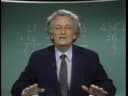
  • Le professeurthe course teacher — explains, does sums on the board
  • Marie-LaureMireille's little sister — homework, chocolates and fibs
  • Mme BelleauMireille's mother

Watch this episode in your free trial

Start with Episode 1 free in two taps. Add your email when you are ready and every episode, this one included, opens for 7 days. No card needed.

Start free with Episode 1

What you get

  • Warm-up, tap-to-translate captions, words & patterns, practice
  • Hindi and Punjabi pronunciation help
  • Printable watch guide, master guide, transcript, textbook, and workbook
  • New words saved to your spaced review deck

Coming up next

Episode 22 — Se déplacer I. Mireille has dashed home for lunch. Robert just wants to make one phone call… and get himself invited.