

French

Part 2 · Paris

Episode 11: Rencontres I

Encounters I — a chatterbox in the Luxembourg

  • 28 min video
  • About 80 min with practice
  • A1+

Robert arrives in Paris; Mireille rests in the Luxembourg Garden — and a very talkative stranger tries his luck. Learn weather and seasons, say how long with depuis, exclaim with Quel… !, say what you've just done (venir de), and meet the little words la, le, les and se.

Start with Episode 1 free in two taps. Add your email when you are ready and every episode, this one included, opens for 7 days. No card needed.

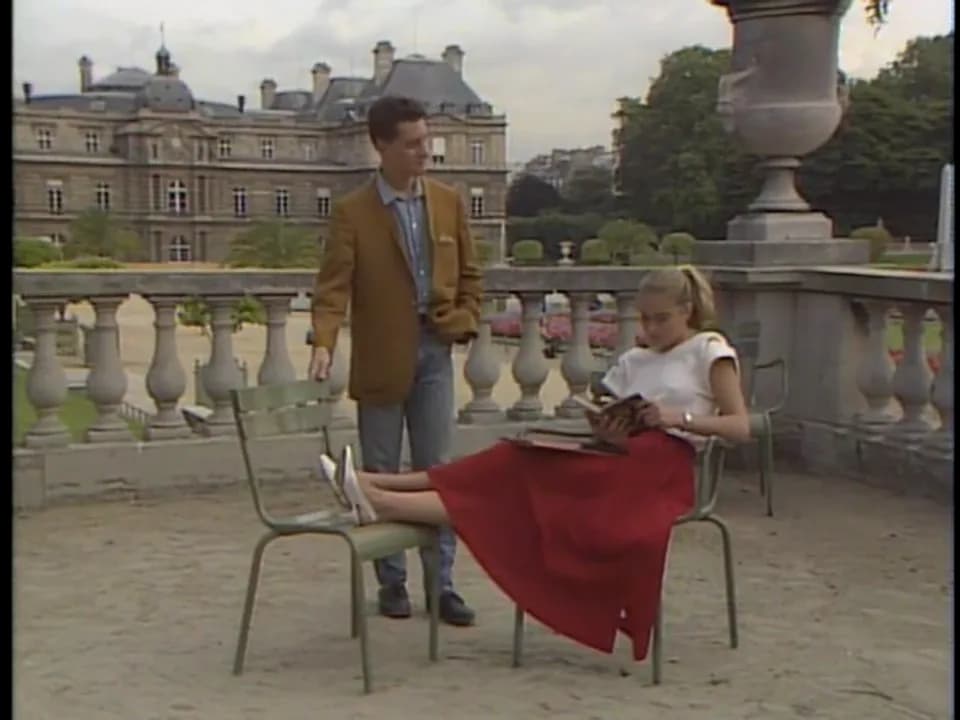
A scene from French in Action episode 11, Rencontres I
minutes of video
28
CEFR level
A1+
key words
34
grammar patterns
6

By the end you can

  • talk about temperature and seasons: il fait froid / chaud / frais / bon, en hiver, au printemps
  • say how long with the present: Il est à Paris depuis hier.
  • exclaim: Quel beau temps ! Quelle belle robe !
  • say what just happened: Elle vient de sortir.
  • replace a person with le / la / les: Il la remarque.
  • tell promener from se promener — and say je me trompe, je m'habille, je me lève
  • start (or refuse!) a conversation with a stranger: Vous venez souvent ici ?

Listen out for

Five things to notice the first time you watch. Spotting them is half the lesson.

  • The young man in the mustard jacket is not Robert! Robert wears a white jacket.
  • How many words does Mireille say to him? Count them.
  • Weather words: il fait chaud, froid, frais, bon — and the four seasons.
  • Little se words: il se promène, elle se repose, je me trompe.

Scene by scene

The episode in 23 short scenes, with the time each one starts in the video.

  1. Starts at 0:00

    1.Spring in Paris

    The short English intro, then the titles. Today our two heroes may meet — Robert explores the Latin Quarter, Mireille rests in the Luxembourg Garden.

  2. Starts at 1:06

    2.Robert arrives in Paris

    May 28th: a young man called Robert lands at Charles de Gaulle airport, takes a taxi into Paris and checks into a small hotel in the Latin Quarter.

  3. Starts at 2:11

    3.May 29th: a lovely spring morning

    Next day. Spring, a student strike — and Mireille, who has just left her art-history institute, rests on a chair in the Luxembourg Garden. Robert leaves his hotel to explore.

  4. Starts at 3:11

    4.A young man in the garden

    A bored young man strolls through the garden, notices a pretty red skirt on a green chair, and comes closer. Mireille pretends not to see him.

  5. Starts at 4:03

    5.Weather talk — and no answer

    The young man talks about the sky, the clouds, the seasons in the Luxembourg… Mireille says nothing at all. He decides he likes quiet girls.

  6. Starts at 5:23

    6.Dior? No — Prisunic!

    He guesses where her skirt comes from: Dior, Fath, Saint-Laurent, Cardin… Mireille finally speaks: she buys all her clothes at Prisunic. She leaves; he introduces himself anyway.

Show the other 17 scenes
  1. 7A fascinating storyThe teacher explains the story's words: fascinating, main characters (Mireille and Robert) and secondary characters — who may meet today.Starts at 6:41
  2. 8Yesterday, today, tomorrowToday in the story is May 29th. Yesterday was May 28th, tomorrow will be May 30th.Starts at 7:31
  3. 9The four seasonsSpring, summer, autumn, winter — chestnut trees in bloom, dead leaves, snow. And the first weather words: il fait froid, il fait bon.Starts at 8:05
  4. 10Hot in the sun, cool in the shadeHot, cool, cold, nice: il fait chaud, frais, froid, bon. Mireille likes the sun, Madame Belleau prefers the shade. Then a little quiz: which season is it?Starts at 9:09
  5. 11What's the weather like?Clouds, sun, wind, snow: il y a des nuages, du soleil, du vent, de la neige. In the story it's a beautiful spring day — not a single cloud.Starts at 10:44
  6. 12On strike — and art historyThe students are on strike (font la grève). Mireille studies art history: Egyptian, Greek, Renaissance, modern…Starts at 11:48
  7. 13Since when? For how long?Mireille has been a student for a year; Robert has been in Paris since May 28th — for 24 hours. Mireille has been resting for five minutes.Starts at 12:38
  8. 14She has just come outComing from home, going to the university. Then: she's going to come out, she comes out, she has just come out. Ten in the morning, ten at night.Starts at 13:48
  9. 15Strolling, bored, pretendingThe young man isn't going anywhere — he's strolling, bored. He notices Mireille and comes closer. She pretends not to see him; Marie-Laure pretends not to hear her mother.Starts at 14:48
  10. 16Lost in the blue skyShe looks up, raises her head, an arm, a leg… Her blue gaze gets lost in the blue sky. Things 'se perdent' everywhere: in crowds, vineyards, clouds.Starts at 16:04
  11. 17Quel beau temps ! Quelle belle robe !Exclamations with quel: what weather, what a dress, what eyes. And bavard: the young man talks a lot; Mireille says nothing.Starts at 17:22
  12. 18He notices her. She finds him boring.le, la, les replace people and things: Il la remarque. Elle le voit. Il les remarque. Mireille finds him boring — il l'ennuie.Starts at 18:13
  13. 19Pockets, buttons — and a little bratPockets, buttons, gumdrops. Marie-Laure eats sweets; Mireille calls her a little brat — but likes her all the same.Starts at 19:07
  14. 20Nine times ninePrisunic isn't chic. Marie-Laure says she's never wrong — Mireille tests her: 9 × 9? 72! Wrong: 81. Everybody makes mistakes… except the teacher.Starts at 20:18
  15. 21Walking the dog vs. going for a walkTante Georgette walks her dog; the young man goes for a walk. Marie-Laure looks at Mireille, then at herself. Mireille raises her arm, then gets up. Then everyone introduces themselves.Starts at 21:46
  16. 22Your turn: be Jean-PierreA Sempé drawing: a man lost in contemplating ants. Then you repeat Jean-Pierre's lines: Quel beau temps ! Quel ciel ! Pas un nuage !Starts at 23:38
  17. 23What can you do?A game: on peut faire du ski, de l'alpinisme, la sieste, semblant de dormir… and the weather can be nice, bad, hot or cold. Then the credits.Starts at 24:51

Key phrases, with Hindi and Punjabi pronunciation

Real lines from this episode, written the way they sound in Latin letters, Devanagari and Gurmukhi.

  • Quel beau temps ! Quel ciel !What beautiful weather! What a sky!
    kel boh TA(N), kel SYELकैल बो ताँ, कैल स्यैलਕੈਲ ਬੋ ਤਾਂ, ਕੈਲ ਸ੍ਯੈਲ
  • Vous venez souvent ici ?Do you come here often?
    voo vuh-NAY soo-VA(N) ee-SEEवू वअ-ने सू-वाँ ई-सीਵੂ ਵਅ-ਨੇ ਸੂ-ਵਾਂ ਈ-ਸੀ
  • Je m'habille toujours chez Prisunic.I always buy my clothes at Prisunic.
    pree-zü-NEEK ! zhuh ma-BEE tooZHOOR shay pree-zü-NEEKप्ग़ी-ज़ü-नीक ! झ़अ मा-बी तू-झ़ूग़ शे प्ग़ी-ज़ü-नीकਪ੍ਗ਼ੀ-ਜ਼ü-ਨੀਕ ! ਝ਼ਅ ਮਾ-ਬੀ ਤੂ-ਝ਼ੂਗ਼ ਸ਼ੇ ਪ੍ਗ਼ੀ-ਜ਼ü-ਨੀਕ
  • Elle vient de sortir de l'Institut.She has just come out of the Institute.
    el vya(n) duh sor-TEER duh la(n)-stee-TÜऐल व्यैं दअ सोग़-तीग़ दअ लैं-स्ती-तüਐਲ ਵ੍ਯੈਂ ਦਅ ਸੋਗ਼-ਤੀਗ਼ ਦਅ ਲੈਂ-ਸ੍ਤੀ-ਤü
  • Il est à Paris depuis le vingt-huit mai.He's been in Paris since May 28th.
    eel ay-ta pa-REE duh-PÜEE luh ve(n)-WEET MEHईल ए-ता पा-ग़ी दअ-पüई लअ वैं-ट्वीत मैਈਲ ਏ-ਤਾ ਪਾ-ਗ਼ੀ ਦਅ-ਪüਈ ਲਅ ਵੈਂ-ਟ੍ਵੀਤ ਮੈ

Sounds to master in this episode

French sounds explained through the Hindi and Punjabi sounds you already make, with real lines from the episode to copy.

  • The ü of tu/y/

    ई + ऊ के होंठਈ + ਊ ਦੇ ਬੁੱਲ੍ਹ

    The ü of tu is everywhere today: une jupe, un nuage, des études, un cumulus. And a new glide: ü + i said fast in one beat — huit, lui, depuis, je suis, ennuyeux. Keep your tongue behind the lower teeth; just spread the lips from ü to i.

    • Pas un nuage.Not a cloud.
    • Il est à Paris depuis le vingt-huit mai.He's been in Paris since May 28th.
  • The ou of vous/u/

    ऊਊ

    Compare: oui, Louis start from ou (lips round and forward) and glide to i — wee, lwee. lui, huit start from ü. Workbook 11.7: Louis or lui? Same i at the end; only the start changes.

    • Oui. Moi, je ne me trompe jamais.Yes. Me, I'm never wrong — oui = wee, moi = mwa: both glide from ou.

Grammar patterns in this episode

Each pattern comes from real lines in the episode. Here is the short version; in the course you notice it in the video first, then drill it.

  1. 1Seasons & weather: il fait chaud, il y a du soleil

    Temperature: il fait + froid / frais / bon / chaud. Things in the sky: il y a + du soleil, du vent, de la neige, des nuages. Seasons: en été, en automne, en hiver — but au printemps.

    From the episode

    En hiver, il fait froid.

    In winter, it's cold.

  2. 2depuis + present: 'has been … since / for'

    Still going on? French uses the present: Il est à Paris depuis hier = he has been in Paris since yesterday. depuis works with a length of time (depuis un an) and a point in time (depuis le 28 mai, depuis hier). Ça fait … que (ep. 9–10) only takes a length: Ça fait un jour qu'il est à Paris.

    From the episode

    Mireille étudie à la Sorbonne depuis un an.

    Mireille has been studying at the Sorbonne for a year.

    Hindi and Punjabi link

    Hindi does exactly this: एक साल से पढ़ रही है — present tense + से. Elle étudie depuis un an. Think depuis = से.

  3. 3Quel beau temps ! — exclaiming with quel

    Quel + noun! = What a…! It agrees with the noun: quel (m), quelle (f), quels (m pl), quelles (f pl). All four sound the same: kel. No article: Quel ciel ! (not quel un ciel).

    From the episode

    Quel beau temps ! Quel ciel !

    What beautiful weather! What a sky!

    Hindi and Punjabi link

    क्या मौसम है! = Quel temps ! — one little word turns a noun into a wow. Tone of voice decides if it's wow-good or wow-bad (Quel temps ! in the rain…).

  4. 4vient de sortir — the 'just did' past

    venir de + infinitive = to have just done: elle vient de sortir = she has just come out. It's the mirror of aller + infinitive: elle va sortir (future) → elle sort → elle vient de sortir (just past). Before a vowel: vient d'arriver.

    From the episode

    En ce moment, Mireille est dans l'Institut et elle va sortir.

    Right now, Mireille is in the Institute and she's going to come out.

    Hindi and Punjabi link

    Elle vient de sortir = वो अभी-अभी निकली है. Whenever you'd say अभी-अभी in Hindi, reach for venir de.

  5. 5Il la remarque — le, la, les, me, te, vous

    To avoid repeating a name, use le (him/it), la (her/it), les (them), l' before a vowel — and me, te, nous, vous for me/you/us/you. They go before the verb: Il la remarque. With ne… pas, they stay glued to the verb: Elle ne le trouve pas amusant.

    From the episode

    Il remarque Mireille. Il la remarque.

    He notices Mireille. He notices her.

  6. 6promener or se promener? — the little se

    When the action lands on yourself, add a reflexive pronoun: me, te, se, nous, vous, se. promener son chien (walk the dog) → se promener (go for a walk). lever le bras (raise your arm) → se lever (get up). You already know one: je m'appelle!

    From the episode

    Tante Georgette promène son chien.

    Aunt Georgette is walking her dog.

    Hindi and Punjabi link

    Elle se regarde = वो खुद को देखती है — here se does the job of खुद को, tucked in before the verb. Careful: Hindi often needs no खुद को (वो टहल रहा है = il se promène, वो उठती है = elle se lève), but French still needs its se.

Words you will meet

Each word is written the way it sounds in Devanagari and Gurmukhi.

  • il fait froidit's coldईल फ़ै फ़्ग़ुआਈਲ ਫ਼ੈ ਫ਼੍ਗ਼ੁਆ
  • il fait chaudit's hotईल फ़ै शोਈਲ ਫ਼ੈ ਸ਼ੋ
  • il fait fraisit's cool (fresh)ईल फ़ै फ़्ग़ैਈਲ ਫ਼ੈ ਫ਼੍ਗ਼ੈ
  • il fait bonit's pleasantly mildईल फ़ै बोँਈਲ ਫ਼ੈ ਬੋਂ
  • le printempsm.springलअ प्ग़ैं-ताँਲਅ ਪ੍ਗ਼ੈਂ-ਤਾਂ
  • l'étém.summerले-तेਲੇ-ਤੇ
  • l'automnem.autumnलो-तोनਲੋ-ਤੋਨ
  • l'hiverm.winterली-वैग़ਲੀ-ਵੈਗ਼
  • un nuagem.a cloudअँ नüआझ़ਅੰ ਨüਆਝ਼
  • le cielm.the skyलअ स्यैलਲਅ ਸ੍ਯੈਲ
  • la neigef.snowला नैझ़ਲਾ ਨੈਝ਼
  • le soleilm.the sunलअ सो-लैयਲਅ ਸੋ-ਲੈਯ

Plus 22 more words in the lesson, each with its pronunciation.

Practice in all four skills

Listening, speaking, reading and writing: the four skills TEF Canada and TCF Canada score. Every task is built from this episode's own lines.

  • Listening

    8 dictation lines cut from the video: hear it, type it, check every accent. Plus 13 textbook audio drills.

    A line you will write down

    Il fait froid.

    It's cold.

  • Speaking

    Shadow 8 lines after the actors, answer 6 questions aloud, then a short role-play with Jean-Pierre.

    How the role-play opens

    Quel beau temps ! Quel ciel ! Pas un nuage… Il fait vraiment beau, vous ne trouvez pas ?

    What beautiful weather! What a sky! Not a cloud… It's really nice out, don't you think?

  • Reading

    A short story, “A morning in the Luxembourg”, retold with this episode's words, then 6 questions on it.

    The story starts

    Le vingt-huit mai, un jeune homme arrive à l'aéroport Charles de Gaulle.

  • Writing

    7 fill-in sentences, 6 sentences to build and 2 short writing tasks with feedback.

    A writing task

    You're on a park bench. Start a conversation with the stranger next to you — but nicer than Jean-Pierre! Talk about the weather and the season, ask one question, and introduce yourself.

Then a self-test of 8 questions to finish the episode, and new words go into your review deck.

Culture notes

The Luxembourg Garden & the Latin Quarter

Le Jardin du Luxembourg is the big park of the Left Bank, next to the Senate. Parisians sit on its famous green metal chairs, read in the sun or the shade of the marronniers (chestnut trees), near the fontaine de Médicis. All around is the Quartier latin — the student district of the Sorbonne, where spring often brings a grève (strike).

Hindi and Punjabi linkThink of Lodhi Garden or a college lawn in spring: students between classes, couples on benches, someone always trying to start a conversation.


Haute couture vs. Prisunic

Dior, Fath, Saint-Laurent, Lanvin, Courrèges, Cardin, Givenchy — great fashion houses of haute couture, a French luxury industry. Prisunic (like Monoprix, Uniprix) was a cheap chain store for everyday clothes. So Je m'habille toujours chez Prisunic is Mireille's way of saying: your guessing game is silly.

Why Mireille says nothing

The Study Guide explains: in French culture, answering a stranger — even angrily — opens a conversation. Saying nothing is the strongest way to keep him away. That's why Jean-Pierre talks and talks, and Mireille just looks at the sky.

Hindi and Punjabi linkLike ignoring a roadside Romeo: one reply, and he'll follow you all the way to the bus stop.

Who is in it

  • Mireilleart-history student, resting in the Luxembourg Garden
  • Robertthe young American, just arrived in Paris
  • Jean-Pierre Bourdona vain young man who tries to chat Mireille up
  • Marie-LaureMireille's little sister — 'never wrong'
  • Le professeurPierre Capretz, who explains the new words

Watch this episode in your free trial

Start with Episode 1 free in two taps. Add your email when you are ready and every episode, this one included, opens for 7 days. No card needed.

Start free with Episode 1

What you get

  • Warm-up, tap-to-translate captions, words & patterns, practice
  • Hindi and Punjabi pronunciation help
  • Printable watch guide, master guide, transcript, textbook, and workbook
  • New words saved to your spaced review deck

Coming up next

Episode 12 — Rencontres II. Same morning: Robert helps an old lady and follows a student demo into the Sorbonne, Marie-Laure stays home with a sore throat, a postcard arrives from rainy England… and in the Sorbonne courtyard, a smile.