

French

Part 2 · Paris

Episode 17: Occupations III

Occupations III — Taylor, tailor & childhood dreams

  • 29 min video
  • About 80 min with practice
  • A2

On a bench in the Luxembourg Garden, Mireille decides Taylor means tailor — and lists every surname that's really a job. Then childhood dreams (nurse! actress! fireman!) and Marie-Laure splashes into the pond. Learn jobs for him and her, c'est vs il est, and quand j'étais petit(e), je voulais…

Start with Episode 1 free in two taps. Add your email when you are ready and every episode, this one included, opens for 7 days. No card needed.

A scene from French in Action episode 17, Occupations III
minutes of video
29
CEFR level
A2
key words
33
grammar patterns
5

By the end you can

  • say what someone does, for a man or a woman: il est boulanger, elle est boulangère
  • choose c'est un pharmacien or il est pharmacien
  • tell your childhood dream: Quand j'étais petit(e), je voulais être…
  • say something has changed: je ne veux plus…, ça ne se dit plus
  • follow a little accident story: Je me suis penchée, j'ai glissé, je suis tombée.

Listen out for

Five things to notice the first time you watch. Spotting them is half the lesson.

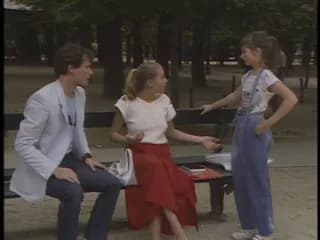
  • Robert (light jacket) and Mireille (white top, red skirt) on their bench — then little Marie-Laure, dripping wet.
  • Job words that are also surnames: Boucher, Boulanger, Charpentier, Berger, Bouvier.
  • Je voulais être… = I wanted to be… — everyone's childhood dream.
  • Jobs for him and her: pharmacien → pharmacienne, acteur → actrice.

Scene by scene

The episode in 16 short scenes, with the time each one starts in the video.

  1. Starts at 0:00

    1.Spring in the Luxembourg Garden

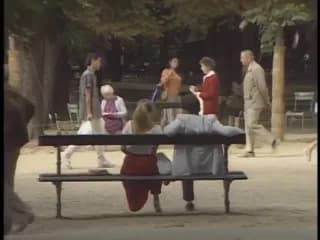
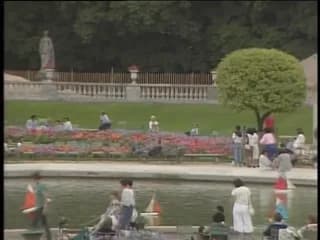
    The short English intro and the titles, then Paris in spring: flowers, a little girl with her boat, and two young people on a bench.

  2. Starts at 1:59

    2.Taylor = tailleur?

    Mireille decides that Robert's name, Taylor, means tailleur (tailor). Robert says it's spelled differently. Mireille: spelling doesn't mean a thing!

  3. Starts at 2:47

    3.Surnames that are jobs

    Mireille lists surnames that are also trades: Boucher (butcher), Boulanger (baker), Charpentier, Messager, Bouvier… Bouvier is Robert's mother's maiden name!

  4. Starts at 4:44

    4.Childhood dreams

    Robert wanted to be a sailor at 12 or 13 — and a fireman at 7 or 8. Mireille wanted to be a nurse by day and an actress at night.

  5. Starts at 5:26

    5.Marie-Laure falls in the pond

    Marie-Laure turns up soaking wet: she leaned over to catch her boat, slipped and fell in. Mireille sends her home to change. 'You never know how things will turn out.'

  6. Starts at 6:09

    6.What does a baker do?

    The teacher explains each job: the tailor, the couturier, the baker, the butcher, the pharmacist, the nurse, the sailor, the shepherd… Then a man in the street is asked about Boucher and Charpentier.

Show the other 10 scenes
  1. 7Your turn: say Mireille's linesA short exchange from the bench, then Mireille's lines are repeated with pauses for you.Starts at 9:02
  2. 8Lots of people · jobs for him and herDes tas de gens = lots of people (piles of oranges, cherries…). Then each job in the masculine and the feminine: pharmacien / pharmacienne, boulanger / boulangère, acteur / actrice.Starts at 10:07
  3. 9It used to be said…Aviateur was said around 1930 — not any more; today it's pilote. Past vs present: elle voulait / elle veut, elle avait / elle a.Starts at 11:53
  4. 10Past or present?A quick game: each sentence, then passé or présent. Il fait beau — present. Il faisait beau — past.Starts at 13:47
  5. 11Spelling and a dictationSort is spelled with a T you don't hear. Madame Belleau thinks spelling matters: she gives Marie-Laure a dictation — 'orthographe'.Starts at 15:13
  6. 12Letters you write but don't sayJ'écris, tu écris… Then silent endings: the T of elle écrit, elle sort, the D of elle attend, the -ent of ils arrivent.Starts at 16:34
  7. 13Why be a fireman?Back on the bench. A funny idea, a nurse by day and an actress at night! Then the perks of being a fireman: speed, noise, big ladders, diving through burning windows.Starts at 18:43
  8. 14Leaning, slipping, fallingMarie-Laure's fall again, with lots of examples of tomber, se pencher, glisser. Luckily she can swim — but she's soaked and must go and change.Starts at 21:20
  9. 15Let's see what you knowA recap: where to buy bread, meat, medicine; who looks after sheep; who painted the picture. Robert and Mireille are grown up now — and nobody knows how things will turn out.Starts at 23:56
  10. 16A puppet showPuppets of Robert and Mireille on their bench. An old puppet is shocked: 'That's not done any more!' Then the credits.Starts at 26:16

Key phrases, with Hindi and Punjabi pronunciation

Real lines from this episode, written the way they sound in Latin letters, Devanagari and Gurmukhi.

  • Mais si, Taylor, ça veut dire tailleur en anglais.Of course — Taylor means 'tailor' in English.
    may SEE, TAY-lor, sa vö deer ta-YÖR a(n) na(n)-GLEHमे सी, टेलर, सा वö दीग़ ता-यöग़ आँ नाँ-ग्लैਮੇ ਸੀ, ਟੇਲਰ, ਸਾ ਵö ਦੀਗ਼ ਤਾ-ਯöਗ਼ ਆਂ ਨਾਂ-ਗ੍ਲੈ
  • D'ailleurs, il y a des tas de gens qui ont un nom de métier.Besides, lots of people have a trade name.
    da-YÖR, eel ya day ta duh ZHA(N) kee o(n) a(n) no(n) duh may-TYAYदा-यöग़, ईल या दे ता दअ झ़ाँ की ओं ऐं नोँ दअ मे-त्येਦਾ-ਯöਗ਼, ਈਲ ਯਾ ਦੇ ਤਾ ਦਅ ਝ਼ਾਂ ਕੀ ਓਂ ਐਂ ਨੋਂ ਦਅ ਮੇ-ਤ੍ਯੇ
  • Je voulais être infirmière et actrice.I wanted to be a nurse and an actress.
    zhuh voo-LAY ETR a(n)-feer-MYER ay ak-TREESझ़अ वू-लै ऐत्ग़ ऐं-फ़ीग़-म्यैग़ ए आक-त्ग़ीसਝ਼ਅ ਵੂ-ਲੈ ਐਤ੍ਗ਼ ਐਂ-ਫ਼ੀਗ਼-ਮ੍ਯੈਗ਼ ਏ ਆਕ-ਤ੍ਗ਼ੀਸ
  • Heureusement qu'elle sait nager.Luckily she can swim.
    ö-röz-MA(N) kel seh na-ZHAYöग़öज़-माँ कैल से ना-झ़ेöਗ਼öਜ਼-ਮਾਂ ਕੈਲ ਸੇ ਨਾ-ਝ਼ੇ
  • Ça ne se dit plus aujourd'hui.People don't say that any more today.
    sa nuh suh dee PLÜ oh-zhoor-DWEEसा नअ सअ दी प्लü ओ-झ़ूग़-दुईਸਾ ਨਅ ਸਅ ਦੀ ਪ੍ਲü ਓ-ਝ਼ੂਗ਼-ਦੁਈ

Sounds to master in this episode

French sounds explained through the Hindi and Punjabi sounds you already make, with real lines from the episode to copy.

  • Silent final letters∅

    मत बोलोਨਾ ਬੋਲੋ

    French writes many final letters it doesn't say. Verbs: the -t of elle écri~~t~~, elle sor~~t~~, il veu~~t~~, the -d of elle atten~~d~~, and the -ent of ils arriv~~ent~~ — ils arrivent sounds exactly like il arrive. Hindi is written as it's spoken; French isn't — so trust your ears, not the spelling.

    • On ne prononce pas le T, mais ça s'écrit avec un T.You don't pronounce the T, but it's written with a T.
    • par E-N-T, qui s'écrit, mais qui ne se prononce pas.…in E-N-T, which is written but not pronounced.
  • The nasal in of vin/ɛ̃/

    ऐंਐਂ

    -ien is nasal: pharmac{{ien}} = far-ma-SYA(N) (ऐं, no n). Add -ne and the n comes back as a real n: pharmacienne = far-ma-SYEN. Same with informatic{{ien}} / informaticienne, technic{{ien}} / technicienne.

    • Un pharmacien, une pharmacienne.A pharmacist (m), a pharmacist (f).
    • Un informaticien, une informaticienne.A computer scientist (m), a computer scientist (f).
  • Equal beats♩♩♩

    तबला ठेकाਤਬਲਾ ਠੇਕਾ

    No stress inside French words — all syllables equal, with a slight push on the last one of each group: une pro-fes-SION, un ac-TEUR, une ac-TRICE. Tap the table as you say them: ta-ta-TA. (Workbook 17.5.)

    • Un acteur, une actrice.An actor, an actress.
    • Un fermier, une fermière.A farmer (m), a farmer (f).

Grammar patterns in this episode

Each pattern comes from real lines in the episode. Here is the short version; in the course you notice it in the video first, then drill it.

  1. 1Jobs for him and her

    Most jobs have a feminine form, made like adjectives: -er/-ier → -ère/-ière (boulanger → boulangère), -ien → -ienne (pharmacien → pharmacienne), -teur → -trice (acteur → actrice). A few jobs keep one form for both: elle est pompier, elle est médecin.

    From the episode

    Un boulanger, une boulangère.

    A baker (m), a baker (f).

    Hindi and Punjabi link

    Hindi does the same with many jobs: अध्यापक → अध्यापिका, लेखक → लेखिका. French just has more endings: acteur → actrice.

  2. 2C'est un pharmacien or il est pharmacien?

    C'est + un/une/ma/son… identifies someone: Qui est-ce ? — C'est un ingénieur. C'est ma sœur. Il est / elle est + bare word describes them — job, nationality, adjective — with no un/une: Il est ingénieur. Elle est sympathique.

    From the episode

    Ça, c'est un tailleur.

    That's a tailor.

  3. 3Making the imperfect: quand j'étais petit(e)…

    Builds on lesson 14, where you learned to recognise the imperfect. Now you make it, to say what used to be or was going on: Quand j'étais petit, je voulais être pompier. Take the nous form, drop -ons (nous voul~~ons~~) and add -ais, -ais, -ait, -ions, -iez, -aient. Only être is irregular: ét- (j'étais). The -ais/-ait/-aient endings all sound the same: -è.

    From the episode

    Quand j'étais petit, quand j'avais sept ou huit ans, je voulais être pompier.

    When I was little, when I was seven or eight, I wanted to be a fireman.

    Hindi and Punjabi link

    The imperfect is Hindi's था / करता था: जब मैं छोटा था, मैं पायलट बनना चाहता था = Quand j'étais petit, je voulais être pilote. था = étais, चाहता था = voulais.

  4. 4Autrefois… maintenant, ne… plus

    ne … plus = no longer — something has changed (you met it in il ne pleut plus). It often answers the imperfect: Autrefois + imperfect → maintenant + present + ne… plus. Plus sits where pas would.

    From the episode

    Elle ne veut plus être infirmière ou actrice.

    She doesn't want to be a nurse or an actress anymore.

  5. 5Ça se dit, ça se fait, ça s'écrit

    French often says ça se + verb where English says it is …ed / people …: on dit ça = ça se dit (it's said), on fait ça = ça se fait (it's done), on écrit ça avec un T = ça s'écrit avec un T (it's spelled with a T). Negative: ça ne se dit plus.

    From the episode

    Ça ne se dit plus aujourd'hui.

    It's not said anymore today.

    Hindi and Punjabi link

    Hindi uses जाना the same way: ऐसा अब नहीं कहा जाता = Ça ne se dit plus. ऐसे लिखा जाता है = Ça s'écrit comme ça.

Words you will meet

Each word is written the way it sounds in Devanagari and Gurmukhi.

  • un mineurm.a minerऐं मी-नöग़ਐਂ ਮੀ-ਨöਗ਼
  • un nom de famillem.a surnameऐं नोँ दअ फ़ा-मीयਐਂ ਨੋਂ ਦਅ ਫ਼ਾ-ਮੀਯ
  • un tailleurm.a tailorऐं ता-यöग़ਐਂ ਤਾ-ਯöਗ਼
  • un boucherm.a butcherऐं बू-शेਐਂ ਬੂ-ਸ਼ੇ
  • un boulangerm.a bakerऐं बू-लाँ-झ़ेਐਂ ਬੂ-ਲਾਂ-ਝ਼ੇ
  • un pharmacienm.a pharmacistऐं फ़ाग़-मा-स्यैंਐਂ ਫ਼ਾਗ਼-ਮਾ-ਸ੍ਯੈਂ
  • une infirmièref.a nurseüन ऐं-फ़ीग़-म्यैग़üਨ ਐਂ-ਫ਼ੀਗ਼-ਮ੍ਯੈਗ਼
  • une actricef.an actressüन आक-त्ग़ीसüਨ ਆਕ-ਤ੍ਗ਼ੀਸ
  • un pompierm.a firefighterऐं पोँ-प्येਐਂ ਪੋਂ-ਪ੍ਯੇ
  • un marinm.a sailorऐं मा-ग़ैंਐਂ ਮਾ-ਗ਼ੈਂ
  • un bergerm.a shepherdऐं बैग़-झ़ेਐਂ ਬੈਗ਼-ਝ਼ੇ
  • un informaticienm.a computer scientistऐं नैं-फ़ोग़-मा-ती-स्यैंਐਂ ਨੈਂ-ਫ਼ੋਗ਼-ਮਾ-ਤੀ-ਸ੍ਯੈਂ

Plus 21 more words in the lesson, each with its pronunciation.

Practice in all four skills

Listening, speaking, reading and writing: the four skills TEF Canada and TCF Canada score. Every task is built from this episode's own lines.

  • Listening

    8 dictation lines cut from the video: hear it, type it, check every accent. Plus 12 textbook audio drills.

    A line you will write down

    Mais ça, ça ne fait rien.

    Oh, that doesn't matter.

  • Speaking

    Shadow 7 lines after the actors, answer 6 questions aloud, then a short role-play with Mireille.

    How the role-play opens

    Vous savez ce que je voulais être, moi, quand j'étais petite ? Infirmière et actrice ! Et vous, qu'est-ce que vous vouliez être ?

    Do you know what I wanted to be when I was little? A nurse and an actress! And you, what did you want to be?

  • Reading

    A short story, “Taylor, tailleur — and a splash”, retold with this episode's words, then 5 questions on it.

    The story starts

    C'est le printemps à Paris.

  • Writing

    8 fill-in sentences, 6 sentences to build and 2 short writing tasks with feedback.

    A writing task

    What did you want to be when you were little? Write 4–5 sentences: your childhood dream, why, and what you do (or want to do) now.

Then a self-test of 8 questions to finish the episode, and new words go into your review deck.

Culture notes

Surnames that are jobs

Like English Baker, Butcher, Taylor, many French surnames were once trades: Boucher (butcher), Boulanger (baker), Charpentier (carpenter), Berger (shepherd), Bouvier (ox-driver), Messager (messenger). Today they're just names — François Boucher was an 18th-century painter, Hélène Boucher a 1930s aviator, Gustave Charpentier and André Messager composers.

Hindi and Punjabi linkSame in India: Darzi (tailor), Lohar (blacksmith), Sunar (goldsmith), Kumhar (potter) — and Parsi surnames like Engineer, Contractor, Doctor.


Le jardin du Luxembourg

The big park in the Latin Quarter, next to the Sorbonne. The palace houses the Sénat (the senators are debating at 10 a.m.!). Around the grand bassin, children push little sailing boats with sticks — Marie-Laure leaned too far. Students sit on the green benches to read and talk… and meet.

Cousteau and the sea

Jacques-Yves Cousteau was the famous French ocean explorer and film-maker, with his red cap and his ship Calypso. He co-invented the aqualung, and in 1992 the French voted him the most admired man in France. L'exploration sous-marine avec l'équipe Cousteau was every water-loving child's dream.

Who is in it

  • Mireilleart-history student — sure that every surname is a job
  • Robertthe American student — named Taylor, spelled with a Y
  • Marie-LaureMireille's little sister — falls into the pond
  • Madame BelleauMireille's mother — gives Marie-Laure a spelling test
  • Le professeurPierre Capretz's voice — explains the new words

Watch this episode in your free trial

Start with Episode 1 free in two taps. Add your email when you are ready and every episode, this one included, opens for 7 days. No card needed.

Start free with Episode 1

What you get

  • Warm-up, tap-to-translate captions, words & patterns, practice
  • Hindi and Punjabi pronunciation help
  • Printable watch guide, master guide, transcript, textbook, and workbook
  • New words saved to your spaced review deck

Coming up next

Next, in Occupations IV: a violinist who ends up making sausages, a papa who wanted to be a masseur — and Marie-Laure comes back to pester them.