French

Part 2 · Paris

Episode 9: Décrire les autres I

Describing Others I — a rainy day in Brittany

  • 29 min video
  • About 116 min with practice
  • A2

Two years ago, a rainy holiday in Brittany: five bored cousins invent the portrait game. Learn to say how long (ça fait trois jours qu'il pleut), ago (il y a deux ans), whose turn it is — and how many cookies are left.

Start with Episode 1 free in two taps. Add your email when you are ready and every episode, this one included, opens for 7 days. No card needed.

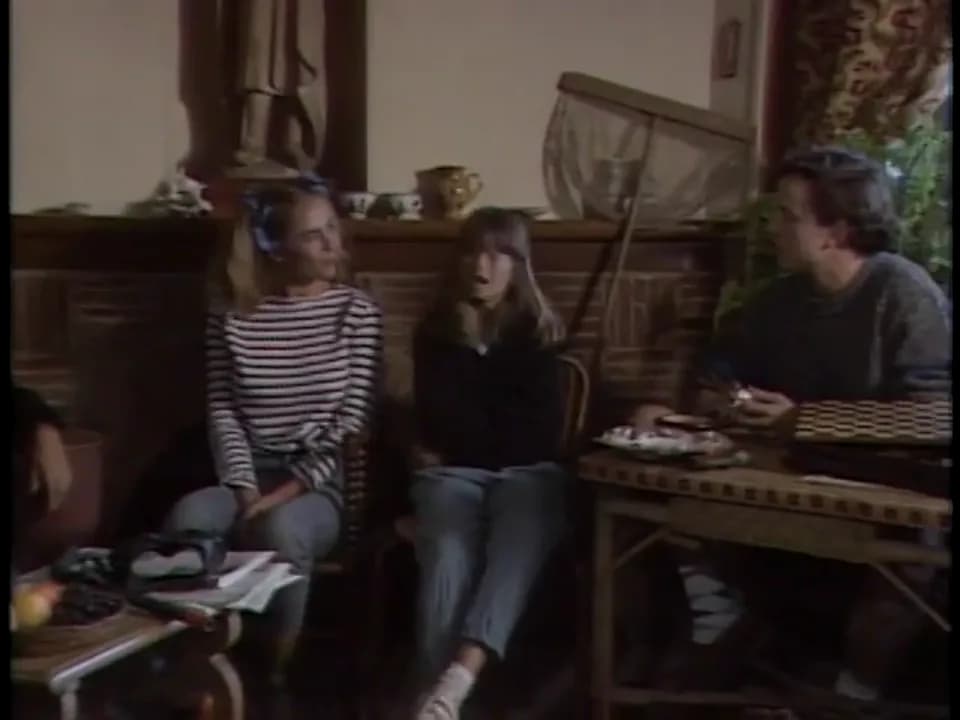
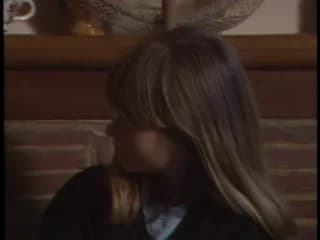
A scene from French in Action episode 9, Décrire les autres I
minutes of video
29
CEFR level
A2
key words
35
grammar patterns
6

By the end you can

  • say how long something has been going on: Ça fait trois jours qu'il pleut.
  • place things in the past: il y a deux ans, hier, avant-hier
  • talk about free time: jouer aux cartes vs faire de la natation
  • describe a person in 3–4 sentences: il est grand, il a les cheveux gris…
  • use notre / votre / leur and nos / vos / leurs
  • take turns with strong pronouns: Pas moi ! C'est à toi. C'est à lui.
  • say what's left: il en reste deux, il n'y en a plus — and il n'y a personne

Listen out for

Five things to notice the first time you watch. Spotting them is half the lesson.

  • Il y a deux ans — the story is a flashback, two years ago
  • Belote or pelote? Marie-Laure mishears — and gets called bécasse
  • Who is each portrait? Listen for the shouted guesses: Tonton Guillaume, Tante Georgette, papa…
  • Sarcasm: C'est bien notre chance, Elle est belle, votre Bretagne, C'est malin !
  • Count the cookies at the end: il en reste trois… il n'en reste plus

Scene by scene

The episode in 24 short scenes, with the time each one starts in the video.

  1. Starts at 0:00

    1.Back in time: a holiday in Brittany

    The English intro: lesson 9 goes back a few years, to a rainy summer holiday in Brittany. The young people play a game of portraits — until a small accident.

  2. Starts at 1:12

    2.Il pleut… et c'est mortel

    Two years ago, on the island of Belle-Île, five cousins are alone in a rented house. It's been raining for three days. Someone suggests belote — Marie-Laure hears 'pelote'.

  3. Starts at 2:18

    3.Let's play portraits!

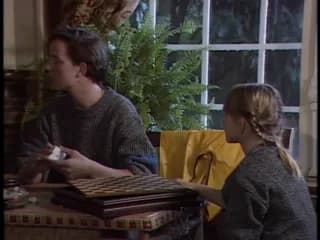
    Chess? Checkers? Too boring. Mireille has an idea: the portrait game. Someone describes a person, the others guess who it is. Marie-Laure doesn't get it.

  4. Starts at 3:21

    4.Yvonne's turn: Tonton Guillaume

    Shy Yvonne has no idea… then she describes a tall, tanned, generous uncle who always brings presents. Easy: Tonton Guillaume!

  5. Starts at 4:03

    5.Three more portraits

    Georges: a pointed nose and thin lips — Tante Georgette! Mireille mocks a 'great athlete' who watches sport on TV — Georges and Yvonne's dad. Then Georges gallantly describes a distinguished blonde lady…

  6. Starts at 5:09

    6.Who is it? First, the snack!

    Marie-Laure is desperate to know who the last portrait was. Mireille makes a deal: go and get the snack first. The others shout orders from the living room.

Show the other 18 scenes
  1. 7Patatras!Marie-Laure trips and drops the whole tray. 'That wasn't smart!' — 'It's not my fault!' She cries… and still asks who it was.Starts at 6:44
  2. 8Il y a deux ans: the pastThe teacher explains the flashback: il y a deux ans = two years ago. Mireille today, three years ago, ten years ago. Then: holidays — summer ones, winter ones, and ones in Brittany.Starts at 7:16
  3. 9Alone in a rented houseThe children are alone — no parents. The house isn't theirs: it's rented (louée). You can rent skis, a car… or a house for the holidays.Starts at 8:15
  4. 10Ça fait trois jours qu'il pleutJuly 6th: rain. July 5th: it rained. July 4th: it rained. So it's been raining for three days! Some people are lucky (il fait beau) — Mireille isn't.Starts at 9:23
  5. 11Belle Bretagne… when it's sunny'Lovely, your Brittany' is sarcasm. Brittany IS beautiful: beaches, stone crosses, fishing ports. But in the rain it's deadly boring — there's nothing to do. Except games!Starts at 10:41
  6. 12Belote, pelote, bécasseBelote is a card game; pelota is a Basque ball game. Georges calls Marie-Laure a 'bécasse' — a woodcock, i.e. a silly goose. Is she dumb, or just deaf?Starts at 12:02
  7. 13An idea: sports and gamesMireille has an idea (so did Newton!). On holiday you can DO sports — windsurfing, swimming, climbing — or PLAY games with rules: belote, Scrabble, tennis.Starts at 13:24
  8. 14The rules: quelqu'un, une personneThe portrait game has one rule: someone describes a person. A lady is 'quelqu'un' (masculine); a man is 'une personne' (feminine)! Then the others guess.Starts at 14:26
  9. 15Devine! … and personneGuessing games everywhere. Then Marie-Laure's 'c'est personne': une personne = a person, but personne alone = nobody. Is there anyone in the room?Starts at 15:51
  10. 16Prendre & chercherTake someone from the family, says Georges. Marie-Laure takes all the sweets. Then chercher: Yvonne 'searches' her mind, Marie-Laure looks for her Astérix.Starts at 17:13
  11. 17Round cheeks, pointed nosesBack to the portraits, word by word: round or hollow cheeks, a fresh complexion, a good mood, generous people, pointed noses, thick or thin lips.Starts at 18:29
  12. 18The armchair athleteMireille makes fun of Uncle Armand: proud of his past performances, but today he only watches sport on TV — every rugby and tennis match.Starts at 19:44
  13. 19Georges the gallantGeorges's portrait is Madame Belleau — and she looks like her second daughter, Mireille. A compliment! The French like to think they are gallant… almost all of them.Starts at 21:12
  14. 20Marie-Laure wants to knowA ten-year-old has to know lots of things: her times tables, La Fontaine's fables… and who that portrait was! But she's not Mireille's maid.Starts at 22:09
  15. 21Il en reste trois… il n'en reste plusFour galettes. Three left. Two. One. None left! Then Marie-Laure fetches the snack and — patatras — drops everything.Starts at 23:25
  16. 22C'est malin! It's not my fault'Oh, that was clever!' — sarcasm again. Mireille makes mistakes too. Marie-Laure: it's not my fault, I didn't do it on purpose. Il pleut… et elle pleure.Starts at 24:13
  17. 23Your turn: be MireilleThe video asks you to speak: you are Mireille. Answer Marie-Laure in the pauses: 'D'abord, tu vas chercher le goûter.'Starts at 24:55
  18. 24How many are left?A last quiz: count the galettes as they disappear — il en reste trois, deux, une… il n'en reste plus. C'est fini!Starts at 25:58

Key phrases, with Hindi and Punjabi pronunciation

Real lines from this episode, written the way they sound in Latin letters, Devanagari and Gurmukhi.

  • Il pleut.It's raining.
    eel PLÖईल प्लöਈਲ ਪ੍ਲö
  • Ça fait trois jours qu'il pleut.It's been raining for three days.
    sa fay trwa ZHOOR keel PLÖसा फ़े त्ग़ुआ झ़ूग़ कील प्लöਸਾ ਫ਼ੇ ਤ੍ਗ਼ੁਆ ਝ਼ੂਗ਼ ਕੀਲ ਪ੍ਲö
  • Il n'y a rien à faire.There's nothing to do.
    eel nya RYA(N) a FEHRईल न्या ग़्यैं आ फ़ैग़ਈਲ ਨ੍ਯਾ ਗ਼੍ਯੈਂ ਆ ਫ਼ੈਗ਼
  • Si on jouait à la belote ?What if we played belote? (a card game)
    see o(n) zhoo-AY a la buh-LOTसी ओँ झ़ू-ए आ ला बअ-लोतਸੀ ਓਂ ਝ਼ੂ-ਏ ਆ ਲਾ ਬਅ-ਲੋਤ
  • Devine qui c'est !Guess who it is!
    duh-VEEN kee SAYदअ-वीन की सेਦਅ-ਵੀਨ ਕੀ ਸੇ

Sounds to master in this episode

French sounds explained through the Hindi and Punjabi sounds you already make, with real lines from the episode to copy.

  • The eu of deux/ø/

    ए + ओ के होंठਏ + ਓ ਦੇ ਬੁੱਲ੍ਹ

    il pleut ends in a closed eu /ø/: say ए with round ओ-lips — plö. Same sound in deux, veux, cheveux, généreux.

    • Il pleut.It's raining.
    • Il y a deux ans.Two years ago.
  • The open eu of sœur/œ/

    ऐ + गोल होंठਐ + ਗੋਲ ਬੁੱਲ੍ਹ

    elle pleure has an open œ because of the r after it — mouth a bit wider: plœr. Same in heure, sœur, humeur. Il pleut ≠ elle pleure!

    • Elle pleure.She's crying.
    • Il est toujours de bonne humeur.He's always in a good mood.
  • The pure o of au/o/

    ओ (शुद्ध)ਓ (ਸ਼ੁੱਧ)

    nos, vos have a closed, pure ओ (lips tight and pushed forward). notre, votre have an open o — mouth rounder and more relaxed, a bit like the o in English not.

    • C'est bien notre chance.Just our luck.
    • nos cousins, notre cousinour cousins, our cousin
  • Liaison & linking‿

    शब्द जोड़ोਸ਼ਬਦ ਜੋੜੋ

    The silent x of deux and aux wakes up as z before a vowel: deux‿zans, aux‿zéchecs. It never sounds before a consonant: aux cartes = o kart.

    • On peut jouer aux échecs.You can play chess.
    • Il y a deux ans.Two years ago.

Grammar patterns in this episode

Each pattern comes from real lines in the episode. Here is the short version; in the course you notice it in the video first, then drill it.

  1. 1Time: il y a (ago) · ça fait … que (for)

    il y a + time = ago, for a moment in the past: il y a deux ans. ça fait + time + que + present = something that began in the past and is still happening: Ça fait trois jours qu'il pleut (it's been raining for three days — and it still is). English uses has been …-ing; French keeps the present.

    From the episode

    Il y a deux ans, les vacances d'été, à Belle-Île-en-Mer, en Bretagne.

    Two years ago, the summer holidays, at Belle-Île-en-Mer, in Brittany.

    Hindi and Punjabi link

    Ça fait trois jours qu'il pleut = तीन दिन से बारिश हो रही है / ਤਿੰਨ ਦਿਨਾਂ ਤੋਂ ਮੀਂਹ ਪੈ ਰਿਹਾ ਹੈ. Hindi and Punjabi also keep the present — English is the odd one out!

  2. 2notre, votre, leur · nos, vos, leurs

    When the owners are more than one person: notre / nos (our), votre / vos (your), leur / leurs (their). Only one vs. many things matters — not masculine vs. feminine: notre cousin, notre cousine → nos cousins. Votre is also the polite your.

    From the episode

    C'est bien notre chance. Ça fait trois jours qu'il pleut.

    Just our luck. It's been raining for three days.

    Hindi and Punjabi link

    Hindi changes for the thing's gender (हमारा भाई / हमारी बहन). French plural owners don't care: notre frère, notre sœur. Easier!

  3. 3faire du sport · jouer à un jeu

    jouer à + game: jouer à la belote, à l'écarté, au bridge, aux échecs. faire de + sport/activity: faire de la natation, de l'escalade, du ski, des sports. The little words fuse: à + le = au, à + les = aux, de + le = du, de + les = des. Tennis, football… are sports with rules: both work.

    From the episode

    À la belote, au bridge, au poker, aux cartes.

    Belote, bridge, poker, cards.

    Hindi and Punjabi link

    Hindi thinks the same way: तैराकी करना (faire de la natation) · ताश खेलना (jouer aux cartes).

  4. 4Strong pronouns: moi, toi, lui, elle, nous, vous, eux, elles

    Use the strong pronouns 1) alone, without a verb: Pas moi ! Moi aussi ! 2) for emphasis, before or after the sentence: Eux, ils ont de la chance. 3) after a preposition: à moi, à toi, avec lui, pour eux. C'est à moi = it's my turn.

    From the episode

    Non, pas moi, je n'ai pas d'idée.

    No, not me. I don't have any ideas.

    Hindi and Punjabi link

    Hindi just repeats the subject: मैं नहीं! French can't — Pas je — it switches to the strong form: Pas moi !

  5. 5quelqu'un · une personne · personne

    quelqu'un = someone (grammatically masculine, even for a woman). une personne / des personnes = a person / people (always feminine, even for a man). ne… personne = nobody: ne before the verb, personne after — just like ne… pas. Alone, as an answer: Personne !

    From the episode

    Quelqu'un décrit une personne.

    Someone describes a person.

    Hindi and Punjabi link

    quelqu'un = कोई, ne… personne = कोई नहीं. Il n'y a personne = कोई नहीं है / ਕੋਈ ਨਹੀਂ ਹੈ.

  6. 6il reste · il en reste · il n'en reste plus

    il reste + thing = there is/are … left (impersonal, like il pleut). To avoid repeating the thing, use en (= of it / of them) before the verb: il en reste (some left), il en reste deux (two left). Negative: il n'en reste plus / il n'y en a plus = none left. The number goes after the verb.

    From the episode

    Maintenant, il reste trois galettes.

    Now there are three cookies left.

    Hindi and Punjabi link

    Hindi simply drops the noun: कितने बचे? — दो बचे. French can't leave the gap empty — it plugs in en: Il en reste deux.

Words you will meet

Each word is written the way it sounds in Devanagari and Gurmukhi.

  • il pleutit's rainingईल प्लöਈਲ ਪ੍ਲö
  • pleurerto cryप्लö-ग़ेਪ੍ਲö-ਗ਼ੇ
  • il y a + time… agoईल याਈਲ ਯਾ
  • ça fait … queit's been … (and still is)सा फ़े … कअਸਾ ਫ਼ੇ … ਕਅ
  • les vacancesf.holidays, vacationले वा-काँसਲੇ ਵਾ-ਕਾਂਸ
  • seul(e)aloneसöलਸöਲ
  • louerto rentलू-एਲੂ-ਏ
  • la chancef.luckला शाँसਲਾ ਸ਼ਾਂਸ
  • s'ennuyerto be boredसाँ-nüई-येਸਾਂ-nüਈ-ਯੇ
  • mortel(casual) deadly boringमोग़-तैलਮੋਗ਼-ਤੈਲ
  • riennothingग़्यैंਗ਼੍ਯੈਂ
  • jouer àto play (a game)झ़ू-ए आਝ਼ੂ-ਏ ਆ

Plus 23 more words in the lesson, each with its pronunciation.

Practice in all four skills

Listening, speaking, reading and writing: the four skills TEF Canada and TCF Canada score. Every task is built from this episode's own lines.

  • Listening

    8 dictation lines cut from the video: hear it, type it, check every accent. Plus 10 textbook audio drills.

    A line you will write down

    Les enfants sont seuls.

    The children are alone.

  • Speaking

    Shadow 8 lines after the actors, answer 6 questions aloud, then a short role-play with Georges.

    How the role-play opens

    Ça fait trois jours qu'il pleut. C'est mortel ! Qu'est-ce qu'on fait ?

    It's been raining for three days. It's deadly boring! What shall we do?

  • Reading

    A short story, “A rainy afternoon in Belle-Île”, retold with this episode's words, then 5 questions on it.

    The story starts

    Il y a deux ans, pendant les vacances d'été, Mireille et ses sœurs, Cécile et Marie-Laure, sont en Bretagne, à Belle-Île-en-Mer.

  • Writing

    8 fill-in sentences, 6 sentences to build and 2 short writing tasks with feedback.

    A writing task

    You're on holiday and it has been raining for days. Write a short message to a friend: how long it's been raining, how you feel, and what you can (and can't) do.

Then a self-test of 8 questions to finish the episode, and new words go into your review deck.

Culture notes

La Bretagne

Brittany is France's wild western peninsula: Celtic roots, rocky coasts, fishing ports, stone roadside crosses (les calvaires) and a famously rainy climate. Belle-Île-en-Mer is an island off its south coast. Families rent a house there for the summer — une maison de location. Its treats: les galettes bretonnes (butter biscuits — and savoury buckwheat pancakes too).

Hindi and Punjabi linkThink of a hill station or Goa in the monsoon: stunning when the sun's out, but three days of rain and everyone is stuck inside with the cousins.


Le goûter

At about 4 pm French children have le goûter: bread and chocolate, a pain aux raisins, biscuits, with Orangina or lemonade. Adults usually skip it — but here even Cécile thinks it matters more than the game!

Hindi and Punjabi linkIt's the French version of 4 o'clock chai-biscuit time — for kids, without the chai.

Belote & pelote basque

La belote is France's favourite card game — 32 cards, played in pairs, in cafés and at family gatherings. La pelote basque is a fast ball game from the Basque Country (south-west), hit against a high wall, sometimes with a curved wicker basket. You can't play it in a living room — hence Georges's bécasse !

Hindi and Punjabi linkBelote is to French families what ताश — teen patti, seep, rang — is at Indian weddings and monsoon afternoons.

Who is in it

  • Mireillethe second Belleau daughter — full of ideas, a bit mean to her uncle
  • Marie-LaureMireille's little sister, 10 — curious, stubborn, clumsy
  • CécileMireille's elder sister — mostly cares about the goûter
  • Georgescousin — teasing, bossy, and surprisingly gallant
  • Yvonnecousin, Georges's shy little sister

Watch this episode in your free trial

Start with Episode 1 free in two taps. Add your email when you are ready and every episode, this one included, opens for 7 days. No card needed.

Start free with Episode 1

What you get

  • Warm-up, tap-to-translate captions, words & patterns, practice
  • Hindi and Punjabi pronunciation help
  • Printable watch guide, master guide, transcript, textbook, and workbook
  • New words saved to your spaced review deck

Coming up next

Episode 10 — Décrire les autres II. The rain goes on and so do the portraits — more ways to describe people (tall or short, plump or thin, eyes and hair) and more family teasing.