


French

Part 2 · Paris

Episode 12: Rencontres II

Encounters II — a smile at the Sorbonne

  • 29 min video
  • About 80 min with practice
  • A1+

Robert helps an old lady, Marie-Laure has a sore throat, Guylaine shivers in rainy Brighton — and in the Sorbonne courtyard, Robert smiles at Mireille. Learn to say where it hurts, talk weather and its opposite, ask quel… ?, and give commands like Lève-toi !

Start with Episode 1 free in two taps. Add your email when you are ready and every episode, this one included, opens for 7 days. No card needed.

A scene from French in Action episode 12, Rencontres II
minutes of video
29
CEFR level
A1+
key words
34
grammar patterns
5

By the end you can

  • offer help and thank politely: Je vais vous aider. — Vous êtes bien aimable. — Je vous en prie.
  • say where it hurts: J'ai mal à la gorge, au ventre, aux yeux.
  • answer bad weather with its opposite: un temps affreux → magnifique, le ciel est gris → bleu, il pleut → il fait du soleil
  • ask which / what with quel, quelle, quels, quelles
  • give commands with pronouns: Lève-toi ! Ne te lève pas !
  • ask what's going on: Qu'est-ce qui se passe ?
  • tell je suis (I am) from je suis (I follow)

Listen out for

Five things to notice the first time you watch. Spotting them is half the lesson.

  • Three people say Quel… ! or Quel… ? — Robert, the old lady, Jean-Pierre. Quel is everywhere today.
  • The phone call: everything Guylaine (pink blanket, Brighton) says, Mireille (red skirt, Paris) turns into its opposite.
  • Marie-Laure mishears: garçon → gazon. Even French kids do it!
  • The very last minute of the story: Robert and Mireille, same courtyard, one smile.

Scene by scene

The episode in 25 short scenes, with the time each one starts in the video.

  1. Starts at 0:00

    1.Today they meet?

    The short English intro, then the titles. Robert explores the Latin Quarter; Mireille is on her way to the university.

  2. Starts at 1:06

    2.May 29th: Robert helps an old lady

    A beautiful spring day, 10:30. Robert is exploring the little streets of the Latin Quarter. An old lady's shopping bag splits — he picks everything up and walks her home.

  3. Starts at 2:30

    3.Jean-Pierre tries again

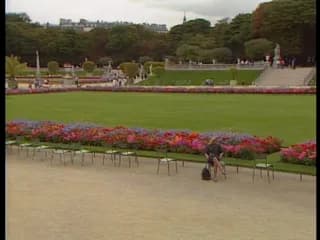
    In the Luxembourg Gardens, a bored young man — Jean-Pierre, the flirt from last time — tries his 'Quel beau temps ! Quel ciel !' on another girl. She walks off.

  4. Starts at 3:08

    4.Home: a sore throat and a postcard

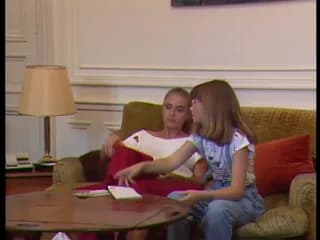
    Mireille comes home and finds Marie-Laure, who isn't at school: sore throat. There's mail — a postcard from Guylaine in Brighton: fog every morning, rain every afternoon… but a magnificent lawn.

  5. Starts at 4:19

    5.Brighton? Bruce? Gazon?

    Marie-Laure has questions: where's Brighton? Who's Bruce? She hears 'gazon' (lawn) instead of 'garçon' (boy). Bruce is Guylaine's English boyfriend. Mireille decides to call her.

  6. Starts at 5:12

    6.On the phone: rain there, sun here

    Mireille calls Guylaine. Everything Guylaine says about Brighton, Mireille answers with the opposite about Paris: grey sky / blue sky, cold / hot, colds / sunburns, aspirin / suntan oil.

Show the other 19 scenes
  1. 7Mind your own business!Mireille leaves for the university. Marie-Laure asks if she has English boyfriends there. 'Occupe-toi de tes affaires !'Starts at 6:17
  2. 810:40 — the Latin QuarterRobert keeps exploring. Elsewhere, Jean-Pierre tries a new trick on another girl: 'Tiens, c'est vous ? … Vous ne me reconnaissez pas ?' Robert discovers the Panthéon.Starts at 6:40
  3. 9A student demoDemonstrators come down the rue Soufflot, shouting slogans nobody understands. Robert asks a passer-by what's going on: 'Je ne sais pas, moi. C'est une manif.' Robert follows them into the Sorbonne courtyard.Starts at 7:45
  4. 10The courtyard: a smileMireille arrives by the rue des Écoles, crosses the hallway, stops at a bulletin board, and comes out into the courtyard — right next to Robert. He notices her, smiles… and she smiles back.Starts at 8:50
  5. 11Who's the main character?Robert or Mireille? Both! Two main characters, and secondary ones like Aunt Georgette, Hubert and Colette.Starts at 9:56
  6. 12Bags, help — and 'pas grave'A shopping bag, a handbag, a backpack. Robert helps the old lady; Mireille helps Marie-Laure. Ce n'est pas grave vs c'est grave (a little girl crying!). Then 'accompagner' and 'je vous en prie'.Starts at 10:30
  7. 13Going out, coming home — and where it hurtsSortir and rentrer. Marie-Laure normally goes to primary school, but today she has a sore throat. Then everyone hurts somewhere: head, neck, throat, eyes, fingers, leg, ear, tummy, teeth.Starts at 12:22
  8. 14Awful weather, foggy EnglandMail for the Belleaus. Awful weather, awful monsters. Fog every morning, rain every afternoon, an overcast sky. Why is the English lawn so magnificent? Rain — and lots of care. Or so the French say!Starts at 13:55
  9. 15Your turn: be MireilleListen to Guylaine and Mireille, then answer with Mireille's opposites: Le ciel est bleu. Il fait du soleil ici. Il fait chaud.Starts at 15:50
  10. 16Mind your business — get up!Bruce is magnificent too. 'Occupe-toi de tes affaires !' — Mireille hates nosy questions, and so does Marie-Laure. But she loves looking after her doll. Then: Lève-toi ! Tu te lèves ?Starts at 16:36
  11. 17Call, catch, go brokeAppeler: Mme Belleau calls Marie-Laure; j'appelle, nous appelons. Attraper: catch a ball, a cold, a sunburn. Then: je me ruine en huile solaire… en cartes postales!Starts at 18:17
  12. 18Going away, coming back, going outMireille s'en va, Mireille revient. She goes into the Sorbonne, comes out of the classroom, goes out of her house: je sors, tu sors, nous sortons…Starts at 19:46
  13. 19Streets, boulevards — and stoppingPrendre: elle prend la rue des Écoles, ils prennent le boulevard Saint-Michel. A rue, a boulevard, an avenue, a place. Robert stops a passer-by; Mireille stops.Starts at 21:00
  14. 20Shouting — word or sentence?The demonstrators shout. A man who's 'calm' shouts anyway! 'Crier' is a word, 'ils crient' is a sentence. Robert doesn't understand the slogans.Starts at 21:40
  15. 21Je suis Robert — I follow RobertA mime follows Robert: 'Et moi, je suis Robert.' 'No, I'm Robert!' Je suis = I am… and I follow. Suivez le guide, suivez les flèches.Starts at 22:30
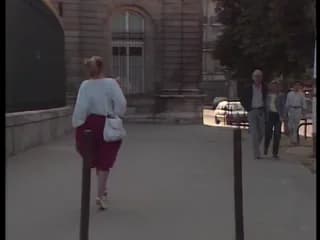
  16. 22Bulletin board, figure, red skirtMireille at the Sorbonne again: le couloir, la cour, un tableau d'affichage (and a tableau by Ingres!). An elegant figure, a tight white sweater, a red skirt. Porter = wear, and carry.Starts at 23:28
  17. 23Smile! — and give it backRobert smiles at Mireille. The Mona Lisa smiles; a man at the photographer's won't. Mireille returns the smile — rendre. Marie-Laure: 'Rends-moi mes boules de gomme !'Starts at 24:37
  18. 24What can you say?Quick questions: is Robert a secondary character? What's Mireille doing? Where does Marie-Laure hurt? What's this man doing? Answer before the teacher.Starts at 25:37
  19. 25Someone's following me…Marie-Laure's gumdrops — and Mireille thinks someone is following her. 'Pourquoi me suivez-vous ?' Then the credits.Starts at 26:26

Key phrases, with Hindi and Punjabi pronunciation

Real lines from this episode, written the way they sound in Latin letters, Devanagari and Gurmukhi.

  • Attendez, madame, je vais vous aider.Wait, ma'am, I'll help you.
    a-ta(n)-DAY ma-DAM, zhuh veh voo zeh-DAYआ-ताँ-दे मा-दाम, झ़अ वै वू ज़ै-देਆ-ਤਾਂ-ਦੇ ਮਾ-ਦਾਮ, ਝ਼ਅ ਵੈ ਵੂ ਜ਼ੈ-ਦੇ
  • Ce n'est pas grave.It's nothing serious.
    suh nay pa GRAHVसअ ने पा ग्ग़ावਸਅ ਨੇ ਪਾ ਗ੍ਗ਼ਾਵ
  • Non, j'ai mal à la gorge.No, I have a sore throat.
    no(n), zhay MAL a la GORZHनोँ, झ़े माल आ ला गोग़झ़ਨੋਂ, ਝ਼ੇ ਮਾਲ ਆ ਲਾ ਗੋਗ਼ਝ਼
  • Il fait un temps affreux.The weather is awful.
    eel feh uh(n) ta(n) za-FRÖईल फ़ै अँ ताँ ज़ा-फ़्ग़öਈਲ ਫ਼ੈ ਅੰ ਤਾਂ ਜ਼ਾ-ਫ਼੍ਗ਼ö
  • Occupe-toi de tes affaires !Mind your own business!
    o-KÜP twa duh tay za-FEHRओ-कüप तुआ दअ ते ज़ा-फ़ैग़ਓ-ਕüਪ ਤੁਆ ਦਅ ਤੇ ਜ਼ਾ-ਫ਼ੈਗ਼

Sounds to master in this episode

French sounds explained through the Hindi and Punjabi sounds you already make, with real lines from the episode to copy.

  • The open è of père/ɛ/

    ऐ (है वाला)ਐ (ਹੈ ਵਾਲਾ)

    The same verb can switch between a light e /ə/ and an open è /ɛ/ (ऐ). Light when the syllable ends on a vowel: nous prenons, nous appelons. Open when a consonant closes it: ils prennent, j'appelle, il se promène. Spelling clue: è or e + double consonant = open.

    • Elle prend, ils prennent, c'est le verbe prendre.She takes, they take: it's the verb prendre (to take).
    • Elle appelle, j'appelle, tu appelles, ils appellent.She calls, I call, you call, they call.
  • Silent final letters∅

    मत बोलोਨਾ ਬੋਲੋ

    je suis, tu suis, il suit — all just swee. je sors, tu sors, il sort — all sor. The final s / t are silent, so the three singular forms sound the same. The plural wakes up a hidden consonant: nous suivons, ils sortent, ils prennent.

    • Il sort de chez lui, je sors de chez moi.He goes out of his house, I go out of mine.
    • Ils sortent de chez eux.They go out of theirs.

Grammar patterns in this episode

Each pattern comes from real lines in the episode. Here is the short version; in the course you notice it in the video first, then drill it.

  1. 1Where does it hurt? avoir mal à…

    Say where it hurts with avoir mal à + the body part. à joins the article: à la gorge, à l'oreille, but à + le = au (ventre) and à + les = aux (yeux). No my: it's J'ai mal à la tête, not à ma tête.

    From the episode

    Non, j'ai mal à la gorge.

    No, I have a sore throat.

    Hindi and Punjabi link

    Hindi also points at the place, not 'my': गले में दर्द है — in the throat there's pain ≈ J'ai mal à la gorge. Punjabi: ਗਲ਼ੇ ਵਿੱਚ ਦਰਦ ਹੈ. The French à plays the role of में / ਵਿੱਚ.

  2. 2Recap + new: weather opposites

    Recap from ep. 11: il fait + chaud / froid / beau / mauvais, il y a + du soleil, des nuages. New today — the opposites game: un temps affreux ↔ un temps magnifique, le ciel est gris ↔ le ciel est bleu, le temps est couvert ↔ il n'y a pas un nuage, il pleut ↔ il fait du soleil. Plus a new sky word: il y a du brouillard (fog).

    From the episode

    Oh, il fait un temps affreux.

    Oh, the weather is awful.

  3. 3Recap + new: Quel temps ? Quelle saison ? — quel in questions

    Builds on ep. 11, where quel was a wow (Quel beau temps !). Same word, same four spellings — now it asks a question: quel = which / what, right before a noun. It agrees with that noun: quel côté (m), quelle saison (f), quels quartiers (m pl), quelles études (f pl). All four sound exactly the same: kel. Before être it stays on its own: Quel est le personnage principal ?

    From the episode

    Voilà. Vous allez de quel côté ?

    There. Which way are you going?

    Hindi and Punjabi link

    Exactly like कौन सा / कौन सी / कौन से — it changes with the noun: कौन सा दिन, कौन सी किताब. Punjabi: ਕਿਹੜਾ / ਕਿਹੜੀ / ਕਿਹੜੇ. French just does it in spelling, not in sound.

  4. 4Lève-toi ! Ne te lève pas ! — commands with pronouns

    In a yes command, the pronoun goes after the verb, with a hyphen, and me / te become moi / toi: Lève-toi ! Suivez-moi ! Rends-les-moi ! In a no command, everything goes back in front, like a normal sentence: *Ne te lève pas ! Ne me regarde pas !*

    From the episode

    Marie-Laure, lève-toi.

    Marie-Laure, get up.

  5. 5Je suis… I am, or I follow?

    suivre (to follow): je suis, tu suis, il suit — all sound swee. The plural wakes up a v: nous suivons, vous suivez, ils suivent. By pure coincidence, je suis is also I am (être) — context tells you which. Same trick in sortir (je sors, il sort / nous sortons) and prendre (il prend / ils prennent).

    From the episode

    Robert suit les manifestants.

    Robert follows the demonstrators.

Words you will meet

Each word is written the way it sounds in Devanagari and Gurmukhi.

  • aiderto helpऐ-देਐ-ਦੇ
  • Ce n'est pas grave.It's no big deal.सअ ने पा ग्ग़ावਸਅ ਨੇ ਪਾ ਗ੍ਗ਼ਾਵ
  • Vous êtes bien aimable.That's very kind of you.वू ज़ैत ब्यैं ऐ-माब्लਵੂ ਜ਼ੈਤ ਬ੍ਯੈਂ ਐ-ਮਾਬ੍ਲ
  • Je vous en prie.You're welcome (polite).झ़अ वू ज़ाँ प्ग़ीਝ਼ਅ ਵੂ ਜ਼ਾਂ ਪ੍ਗ਼ੀ
  • accompagnerto go along with (someone)आ-कोँ-पा-न्येਆ-ਕੋਂ-ਪਾ-ਨ੍ਯੇ
  • un sacm.a bagअँ साकਅੰ ਸਾਕ
  • avoir mal à…to have a pain in…आ-वुआग़ माल आਆ-ਵੁਆਗ਼ ਮਾਲ ਆ
  • la gorgef.the throatला गोग़झ़ਲਾ ਗੋਗ਼ਝ਼
  • le ventrem.the stomach, tummyलअ वाँत्ग़ਲਅ ਵਾਂਤ੍ਗ਼
  • le courrierm.the mailलअ कू-ग़्येਲਅ ਕੂ-ਗ਼੍ਯੇ
  • une carte postalef.a postcardüन काग़्त पोस-तालüਨ ਕਾਗ਼੍ਤ ਪੋਸ-ਤਾਲ
  • affreux / affreuseawful, horribleआ-फ़्ग़ö / आ-फ़्ग़öज़ਆ-ਫ਼੍ਗ਼ö / ਆ-ਫ਼੍ਗ਼öਜ਼

Plus 22 more words in the lesson, each with its pronunciation.

Practice in all four skills

Listening, speaking, reading and writing: the four skills TEF Canada and TCF Canada score. Every task is built from this episode's own lines.

  • Listening

    7 dictation lines cut from the video: hear it, type it, check every accent. Plus 12 textbook audio drills.

    A line you will write down

    Non, j'ai mal à la gorge.

    No, I have a sore throat.

  • Speaking

    Shadow 8 lines after the actors, answer 6 questions aloud, then a short role-play with Guylaine.

    How the role-play opens

    Allô ? C'est toi ? Oh, ici, il fait un temps affreux ! Et à Paris, quel temps fait-il ?

    Hello? Is that you? Oh, the weather here is awful! And in Paris, what's the weather like?

  • Reading

    A short story, “A beautiful day in May”, retold with this episode's words, then 5 questions on it.

    The story starts

    C'est le 29 mai, un beau jour de printemps.

  • Writing

    8 fill-in sentences, 6 sentences to build and 2 short writing tasks with feedback.

    A writing task

    Write a postcard to a French friend from a place with awful (or wonderful) weather, like Guylaine's. 4–5 sentences, then sign off.

Then a self-test of 7 questions to finish the episode, and new words go into your review deck.

Culture notes

La Sorbonne & the Latin Quarter

The Sorbonne, founded in 1227, is the oldest university in France, in the heart of the Quartier latin — named after the Latin that students spoke there for centuries. Around it: the boulevard Saint-Michel (le Boul' Mich'), the rue des Écoles, and the rue Soufflot with the domed Panthéon at its end. Bookshops, cafés, students everywhere.

Hindi and Punjabi linkThink Delhi University's North Campus: colleges, bookshops, chai stalls, and students on every corner.


Grèves, manifs — and the Gallic shrug

Student grèves (strikes) and manifs (demos) come back again and again in French university life — the biggest were in May 1968. Watch the passer-by Robert asks: Je ne sais pas, moi. Shoulders up, lips pushed out, mouth pulled down — the famous French shrug, all in half a second.

Hindi and Punjabi linkLike a college dharna: banners, slogans… and half the crowd not quite sure what it's about.

Postcards, bisous & English weather

To a friend, a French card or call ends with Je t'embrasse (lit. 'I kiss you') or Bisous ! (kisses) — it's just love. And the French love a cliché about England: rain, fog, and perfect lawns. C'est vrai ? — Oui, enfin, les Français le disent (well, that's what the French say).

Who is in it

  • Robertthe American — exploring the Latin Quarter
  • Mireillethe student — home, on the phone, then off to the Sorbonne
  • Marie-Laurethe little sister — home with a sore throat, full of questions
  • GuylaineMireille's friend — on holiday in rainy Brighton
  • La vieille damean old lady whose shopping bag breaks
  • Jean-Pierrethe flirt from last episode — still trying his lines
  • Le mimea mime in black who follows Robert

Watch this episode in your free trial

Start with Episode 1 free in two taps. Add your email when you are ready and every episode, this one included, opens for 7 days. No card needed.

Start free with Episode 1

What you get

  • Warm-up, tap-to-translate captions, words & patterns, practice
  • Hindi and Punjabi pronunciation help
  • Printable watch guide, master guide, transcript, textbook, and workbook
  • New words saved to your spaced review deck

Coming up next

Episode 13 — Rencontres III. Our two heroes have just caught each other's eye in the Sorbonne courtyard… will they finally speak? And Jean-Pierre is still around.