
French

Part 5 · Enjoyment

Episode 37: Divertissements II

Entertainment II

  • 29 min video
  • About 80 min with practice
  • A2

Friday afternoon at the movies. A strange man all in black winks at Mireille, Robert nearly gets run over crossing the boulevard, forgets to tip the usherette — and has to sit through the ads before L'Amour l'après-midi. Learn to buy cinema tickets, talk about tipping (le pourboire), say how do you expect me to know? with the irregular subjunctives aille, sache, aies, puisse, sois, and give someone's age à peu près: une quarantaine d'années.

Start with Episode 1 free in two taps. Add your email when you are ready and every episode, this one included, opens for 7 days. No card needed.

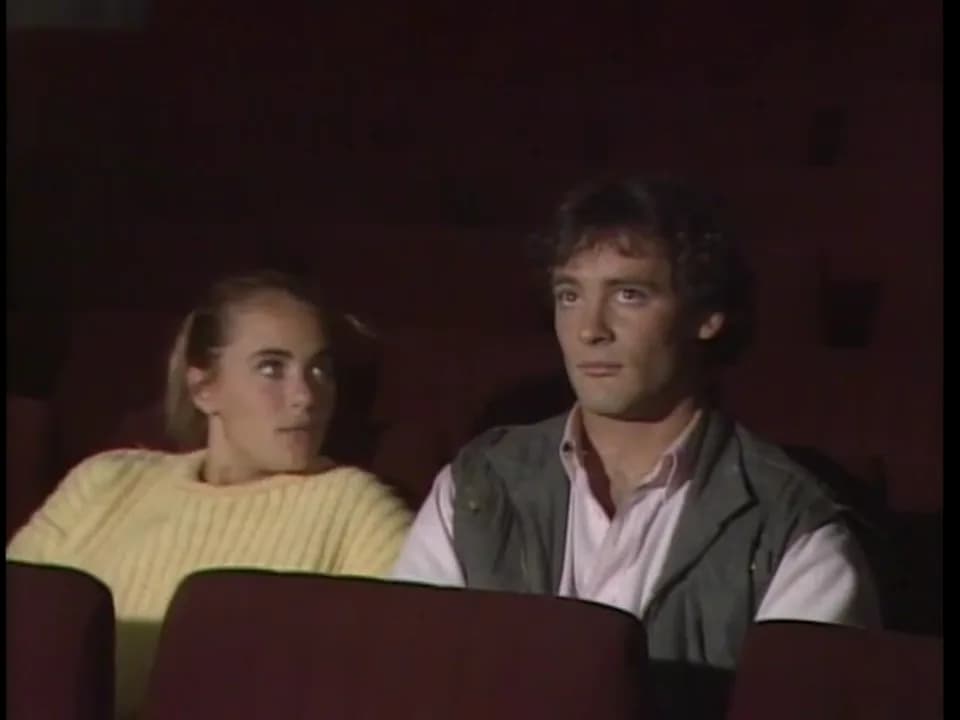
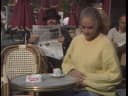
A scene from French in Action episode 37, Divertissements II
minutes of video
29
CEFR level
A2
key words
33
grammar patterns
5

By the end you can

  • buy cinema seats: Deux places, s'il vous plaît. — Une place étudiant.
  • ask about seats: Ici, ça ira ? Ce n'est pas un peu trop loin de l'écran ?
  • talk about tipping: Il faut donner un pourboire aux ouvreuses ? — Oui, c'est l'habitude.
  • protest that nobody told you: Tu aurais dû me le dire ! Je ne suis pas au courant, moi.
  • use the irregular subjunctives: Tu veux qu'on y aille ? Comment veux-tu que je sache ? Il faut que tu aies de la patience.
  • regret something in the past: C'est dommage que nous n'ayons pas pu venir lundi.
  • guess someone's age: un monsieur d'une quarantaine d'années — il doit avoir la cinquantaine
  • describe clothes and quick actions: tout habillé de noir; il se lève comme un ressort; un coup de frein

Listen out for

Five things to notice the first time you watch. Spotting them is half the lesson.

  • The man in black at the next table: count his black clothes — and look at his socks.
  • Robert's crossing of the boulevard: il se lève comme un ressort, bondit… and a coup de frein!
  • The usherette's merci — listen to her tone. What did she expect?
  • The real 1980s French ads: coffee, a toothpaste quarrel, razors, a typewriter, chocolate.
  • Je te ferai un petit dessin — Mireille teasing Robert, and an annoyed neighbour: Ils vont pas bientôt se taire ?
  • The subjunctives: qu'on y aille, que je sache, que tu aies.

Scene by scene

The episode in 17 short scenes, with the time each one starts in the video.

  1. Starts at 0:00

    1.Off to the movies

    The short English intro: Mireille waits near the cinema, notices a man in black, Robert is almost on time, and the ads before the film try his patience.

  2. Starts at 1:06

    2.The man in black

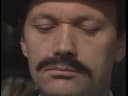
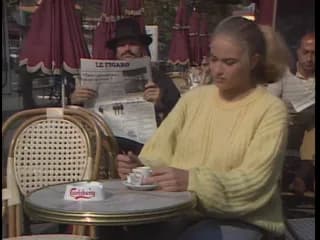
    Friday, a quarter to two. Mireille has waited fifteen minutes at the Rotonde. At the next table: a man of about forty, all in black — except one red sock. He winks. She's about to leave… when she sees Robert across the boulevard.

  3. Starts at 2:00

    3.Across the boulevard

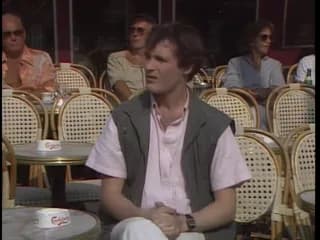
    Robert was at the wrong café! He jumps up, comes back to pay, dashes across without looking — brakes, a curse — and sits down next to Mireille: Je ne suis pas en retard, non ?

  4. Starts at 2:45

    4.Two seats, please

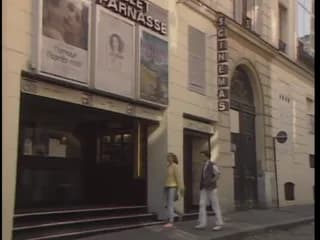
    In front of the cinema: two seats, one student price, 64 francs. It's not open yet. Mireille: what a pity they didn't come on Monday — it's cheaper.

  5. Starts at 3:25

    5.The usherette and the tip

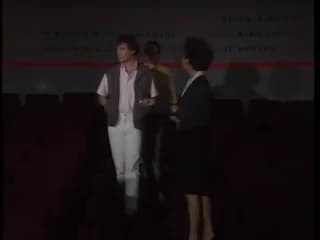
    An usherette shows them to their seats. Her merci is icy: she expected a tip. Robert didn't know — tu aurais dû me le dire ! — and Mireille: Comment veux-tu que je sache ?

  6. Starts at 4:36

    6.First, the ads

    The lights go out — and first come the ads: coffee, windsurfers, a toothpaste quarrel, razors, cognac, mineral water, a typewriter, chocolate sweets. Then the usherettes sell sweets and choc-ices.

Show the other 11 scenes
  1. 7L'Amour l'après-midiRobert is impatient: he came to see the film! At last it starts: a married young executive, a bohemian young woman, temptation… and he goes back to his wife. Tout est bien qui finit bien.Starts at 10:04
  2. 8About forty, all in blackThe professor replays the story: Robert is late. How old is the man? Une quarantaine, une cinquantaine? Hat, tie, suit, raincoat, shoes and socks — all black, but one sock is red.Starts at 11:32
  3. 9Nails, a tic and a springBlack nails (Robert cuts his, Mireille does hers), a black espresso, a nervous tic: il cligne des yeux. Robert realises his mistake and jumps up comme un ressort. Il bondit — like a panther.Starts at 13:50
  4. 10Throw, runRobert comes back to pay — an honest boy. Il jette un billet sur la table. Everyone throws things: a sweet, a stone, an old sock, poison, an old cheese. Then il court — the verb courir.Starts at 15:21
  5. 11Un coup de…Un coup de frein, un coup de volant, de poing, de pied, de téléphone, de sonnette… The driver swears. Is Robert dead? No — we still need him: the subjunctive has only just begun!Starts at 16:40
  6. 12Not in the knowShall we go? Two seats. Madame Belleau shows people to their seats. The usherette expects a tip — but Robert isn't au courant. Comment veux-tu que je le sache ? — sache is the subjunctive of savoir.Starts at 17:59
  7. 13Your turn: you are RobertListen to Mireille and Robert, then play Robert's part. After the ads the usherettes become saleswomen: Demandez dans la salle : bonbons, esquimaux !Starts at 20:04
  8. 14A little drawing — and be quiet!Robert asks Mireille to explain — je te ferai un petit dessin, she teases. A neighbour: Ils vont pas bientôt se taire ? Well-behaved people keep quiet at the cinema. And élever: children, dogs, oysters, chickens.Starts at 21:23
  9. 15A young executive, a bit bohemianThe film's hero is un jeune cadre dynamique. He meets a young woman un peu bohème who decides to seduce him. He's tempted — like Eve — but escapes. Tout cela est très moral.Starts at 23:20
  10. 16Your turn: what's in the picture?The professor asks you questions about the pictures: what is Mireille doing, how is the man dressed, shoes or socks, walking or running, usherette or saleswoman, well or badly behaved?Starts at 24:48
  11. 17Guignol wants to sleepPuppet Robert didn't understand a thing — je te ferai un petit dessin. Guignol wakes up: Ils vont pas bientôt se taire ? On ne peut plus dormir tranquille. Credits.Starts at 26:20

Key phrases, with Hindi and Punjabi pronunciation

Real lines from this episode, written the way they sound in Latin letters, Devanagari and Gurmukhi.

  • Deux places, s'il vous plaît.Two seats, please.
    duh PLASS, seel voo PLAYदअ प्लास, सील वू प्लेਦਅ ਪ੍ਲਾਸ, ਸੀਲ ਵੂ ਪ੍ਲੇ
  • C'est dommage que nous n'ayons pas pu venir lundi.It's a pity we couldn't come on Monday.
    say do-MAZH kuh noo nay-YO(N) pa pü vuh-NEER la(n)-DEEसे दो-माझ़ कअ नू ने-योँ पा pü वअ-नीग़ लँ-दीਸੇ ਦੋ-ਮਾਝ਼ ਕਅ ਨੂ ਨੇ-ਯੋਂ ਪਾ pü ਵਅ-ਨੀਗ਼ ਲੰ-ਦੀ
  • Elle s'attendait à ce que nous lui donnions un pourboire.She was expecting us to give her a tip.
    el sa-ta(n)-DAY a suh kuh noo lwee do-NYO(N) a(n) poor-BWARऐल सा-ताँ-दे आ सअ कअ नू ल्वी दो-न्योँ अँ पूग़-बुआग़ਐਲ ਸਾ-ਤਾਂ-ਦੇ ਆ ਸਅ ਕਅ ਨੂ ਲ੍ਵੀ ਦੋ-ਨ੍ਯੋਂ ਅੰ ਪੂਗ਼-ਬੁਆਗ਼
  • Ah bon, il faut donner un pourboire aux ouvreuses ?Oh really? You have to tip the usherettes?
    a BO(N), eel fo do-NAY a(n) poor-BWAR o zoo-VRUHZ?आ बोँ, ईल फ़ो दो-ने अँ पूग़-बुआग़ ओ ज़ू-व्ग़अज़?ਆ ਬੋਂ, ਈਲ ਫ਼ੋ ਦੋ-ਨੇ ਅੰ ਪੂਗ਼-ਬੁਆਗ਼ ਓ ਜ਼ੂ-ਵ੍ਗ਼ਅਜ਼?
  • Comment veux-tu que je sache ? Je ne suis pas au courant, moi.How do you expect me to know? I'm not in the know, me.
    ko-MA(N) vuh-TÜ kuh zhuh SASH? zhuh nuh swee pa zo koo-RA(N), MWAको-माँ वअ-tü कअ झ़अ साश? झ़अ नअ स्वी पा ज़ो कू-ग़ाँ, मुआਕੋ-ਮਾਂ ਵਅ-tü ਕਅ ਝ਼ਅ ਸਾਸ਼? ਝ਼ਅ ਨਅ ਸ੍ਵੀ ਪਾ ਜ਼ੋ ਕੂ-ਗ਼ਾਂ, ਮੁਆ

Sounds to master in this episode

French sounds explained through the Hindi and Punjabi sounds you already make, with real lines from the episode to copy.

  • Liaison & linking‿

    शब्द जोड़ोਸ਼ਬਦ ਜੋੜੋ

    Workbook 37.5–37.6: enchaînement (consonant linking). Inside a rhythmic group, a pronounced final consonant joins the next vowel, so syllables stay open: c'es-t u-ne ha-bi-tude → [sɛ-ty-na-bi-tyd]. Say it as one smooth word: Qu'il est mal élevé ! — il est mal-é-le-vé.

    • Ben oui, c'est l'habitude.Well, yes, it's the custom.
    • Robert est mal élevé parce qu'il parle au cinéma.Robert is rude because he talks at the cinema.
  • The ou of vous/u/

    ऊਊ

    This episode is full of ou: pourboire, ouvreuse, au courant, courir, un coup. Lips round and pushed forward, tongue back — never the ü of tu. Il court (runs) ≠ il cuit (cooks).

    • Ah bon, il faut donner un pourboire aux ouvreuses ?Oh really? You have to tip the usherettes?
    • Il n'est pas au courant.He isn't in the know.

Grammar patterns in this episode

Each pattern comes from real lines in the episode. Here is the short version; in the course you notice it in the video first, then drill it.

  1. 1Comment veux-tu que je sache ? — irregular subjunctives

    After que with il faut que, tu veux que, comment veux-tu que, j'ai peur que… French uses the subjunctive (Lesson 36). Five very common verbs have an irregular stem — learn them by heart: aller → que j'aille, pouvoir → que je puisse, savoir → que je sache, avoir → que j'aie, être → que je sois. The endings are the usual ones; avoir and être change in the nous/vous forms: ayons, ayez, soyons, soyez. And aller is regular there: allions, alliez.

    From the episode

    Tu veux qu'on y aille ?

    Shall we go?

    Hindi and Punjabi link

    Comment veux-tu que je sache ? works like Hindi मुझे क्या पता ? / Punjabi ਮੈਨੂੰ ਕੀ ਪਤਾ ? — 'how would I know?' Same shrug, same tone.

  2. 2C'est dommage que nous n'ayons pas pu… — the past subjunctive

    To say you're sorry / glad about something already done, use the past subjunctive: the subjunctive of avoir or être + the past participle. C'est dommage que nous n'ayons pas pu venir. — C'est bête que vous ayez raté votre train. — C'est dommage que vous ne soyez pas venus. Same choice of avoir/être and same agreement as in the passé composé.

    From the episode

    C'est dommage que nous n'ayons pas pu venir lundi.

    It's a pity we couldn't come on Monday.

  3. 3Elle te les a rendus ? — two pronouns together

    When a verb has two object pronouns, me, te, nous, vous come before le, la, les: Elle te les a rendus ? — Oui, elle me les a rendus. Je te la prête. Je vous le recommande. Both go before the verb (or before avoir/être in the passé composé). Remember: le/la become l' before a vowel: Pourquoi ne me l'as-tu pas dit ?

    From the episode

    Tu as les tickets ? Elle te les a rendus ? Oui.

    Have you got the tickets? Did she give them back to you? — Yes.

  4. 4Un coup de frein, un coup de fil — coups

    Un coup is a quick, sudden, sometimes violent movement. un coup de + noun says what with: un coup de frein (slam on the brakes), un coup de volant (swerve), un coup de pied (kick), un coup de poing (punch), un coup de téléphone (phone call), un coup de sonnette (ring at the door). The verb is usually donner: Robert donne un coup de téléphone aux Courtois.

    From the episode

    Un coup de frein.

    A slam of the brakes.

    Hindi and Punjabi link

    Like Hindi मारना in फ़ोन मारना, ब्रेक मारना (to 'hit' a call, 'hit' the brakes): one quick action word + a noun. French does it with un coup de…

  5. 5Une quarantaine d'années — about forty

    To give a round, approximate number, add -aine to the number (drop a final -e): trente → une trentaine, quarante → une quarantaine, cinquante → une cinquantaine, dix → une dizaine, vingt → une vingtaine. They're feminine nouns. For ages: un monsieur d'une quarantaine d'années, il doit avoir la cinquantaine, il n'est pas loin de la soixantaine.

    From the episode

    À la table à côté est assis un monsieur d'une quarantaine d'années.

    At the next table sits a man of about forty.

    Hindi and Punjabi link

    Same idea as Hindi चालीस के आसपास or चालीसेक साल का — 'forty-ish'. French packs it into one word: une quarantaine.

Words you will meet

Each word is written the way it sounds in Devanagari and Gurmukhi.

  • une ouvreusef.an usheretteün ऊ-व्ग़अज़ün ਊ-ਵ੍ਗ਼ਅਜ਼
  • un pourboirem.a tip (money)अँ पूग़-बुआग़ਅੰ ਪੂਗ਼-ਬੁਆਗ਼
  • l'écranm.the screenले-क्ग़ाँਲੇ-ਕ੍ਗ਼ਾਂ
  • une placef.a seat (cinema, train)ün प्लासün ਪ੍ਲਾਸ
  • une carte d'étudiantf.a student cardün काग़्त दे-tü-द्याँün ਕਾਗ਼੍ਤ ਦੇ-tü-ਦ੍ਯਾਂ
  • la publicitéf.advertising, adsला pü-ब्ली-सी-तेਲਾ pü-ਬ੍ਲੀ-ਸੀ-ਤੇ
  • le dentifricem.toothpasteलअ दाँ-ती-फ़्ग़ीसਲਅ ਦਾਂ-ਤੀ-ਫ਼੍ਗ਼ੀਸ
  • un esquimaum.a choc-iceअँ नैस-की-मोਅੰ ਨੈਸ-ਕੀ-ਮੋ
  • une vendeusef.a saleswomanün वाँ-दअज़ün ਵਾਂ-ਦਅਜ਼
  • un cadrem.an executive, a managerअँ काद्ग़ਅੰ ਕਾਦ੍ਗ਼
  • bohèmebohemian, unconventionalबो-ऐमਬੋ-ਐਮ
  • tentétemptedताँ-तेਤਾਂ-ਤੇ

Plus 21 more words in the lesson, each with its pronunciation.

Practice in all four skills

Listening, speaking, reading and writing: the four skills TEF Canada and TCF Canada score. Every task is built from this episode's own lines.

  • Listening

    8 dictation lines cut from the video: hear it, type it, check every accent. Plus 5 textbook audio drills.

    A line you will write down

    Deux places, s'il vous plaît.

    Two seats, please.

  • Speaking

    Shadow 8 lines after the actors, answer 6 questions aloud, then a short role-play with Mireille.

    How the role-play opens

    Ah, te voilà ! Tu as failli te faire écraser, tu sais !

    Ah, there you are! You nearly got run over, you know!

  • Reading

    A short story, “An afternoon at the movies”, retold with this episode's words, then 5 questions on it.

    The story starts

    Vendredi après-midi, Mireille attend Robert à la terrasse de la Rotonde, à Montparnasse.

  • Writing

    8 fill-in sentences, 5 sentences to build and 2 short writing tasks with feedback.

    A writing task

    Tell a French friend about your last trip to the cinema: where, with whom, the tickets, what came before the film, and the story in two lines.

Then a self-test of 8 questions to finish the episode, and new words go into your review deck.

Culture notes

Les ouvreuses

In the 1980s, French cinemas and theatres had ouvreuses: usherettes who took your ticket and showed you to a seat with a torch — and expected un petit pourboire, a coin or two. Forget it and you got a very cold merci, like Robert. They also sold sweets and esquimaux (choc-ices) between the ads and the film. Today they have almost disappeared.

Hindi and Punjabi linkPour boire = 'for drinking' — the same picture as चाय-पानी / ਚਾਹ-ਪਾਣੀ: a small extra 'for tea'.

Cheaper on Mondays

To fill cinemas on a slow day, French cinemas used to sell Monday tickets about 30% cheaper. Students (tarif étudiant) also pay less — so Mireille shows her carte d'étudiant(e). Prices here are in francs: 64 F for two seats (France switched to the euro in 2002).

Ads before the film

In France, ads come in one block before the film (and before or after TV programmes) — never in the middle. So French ads try hard to be fun to watch. The ones in this episode are real: Nescafé, Bic razors and windsurfers, Rémy Martin cognac, a Brother typewriter…

Hindi and Punjabi linkIndian cinemas show ads before the film too — but France has no interval! The film runs straight through.

Who is in it

  • Mireillewaits at the Rotonde — and knows all the rules
  • Robertlate, nearly run over, and no tip
  • L'homme en noirthe strange man at the next table
  • L'ouvreusethe usherette — then the sweet seller
  • Marie-LaureMireille's little sister, in the professor's examples
  • Mme BelleauMireille's mother — not in the know
  • Le professeurPierre Capretz, who explains the new words

Watch this episode in your free trial

Start with Episode 1 free in two taps. Add your email when you are ready and every episode, this one included, opens for 7 days. No card needed.

Start free with Episode 1

What you get

  • Warm-up, tap-to-translate captions, words & patterns, practice
  • Hindi and Punjabi pronunciation help
  • Printable watch guide, master guide, transcript, textbook, and workbook
  • New words saved to your spaced review deck

Coming up next

Episode 38 — Divertissements III. After the film, what next? Robert and Mireille talk about cinema, theatre… and what to do with an evening in Paris.