French

Part 5 · Enjoyment

Episode 38: Divertissements III

Entertainment III

  • 29 min video
  • About 82 min with practice
  • A2

After the film, a long walk from Montparnasse to the Champs-Élysées: a passport scare, a fight about films (Ça, c'est du cinéma !), a guided tour from the pont de la Concorde — and a rude soldier who meets Mireille's karate. Learn to suggest (Et si on marchait un peu ? Si on allait boire quelque chose ?), to react (Quelle idée ! Qu'est-ce qui te prend ?), to point out places (C'est là que…), and to say because of: à cause de l'escalier.

Start with Episode 1 free in two taps. Add your email when you are ready and every episode, this one included, opens for 7 days. No card needed.

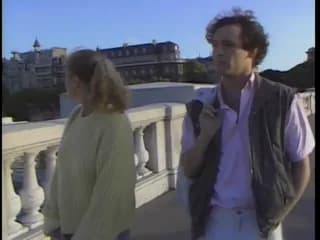
A scene from French in Action episode 38, Divertissements III
minutes of video
29
CEFR level
A2
key words
35
grammar patterns
6

By the end you can

  • suggest doing something: Et si on marchait un peu ? — Si on allait boire quelque chose ? — Ah oui, je veux bien.
  • ask about a film and give your opinion: Qu'est-ce que tu as pensé du film ? Ça t'a plu ? — Oui, mais à choisir, je préfère…
  • disagree or show surprise: Ah oui ? Quelle idée ! Ça, alors ! Pas moi !
  • say something is the real thing: Ça, c'est du cinéma ! Ça, c'est une glace !
  • be a tour guide: C'est là que j'ai loué une voiture. C'est l'église où Maman veut que je me marie.
  • give a reason with a noun: à cause de l'escalier, à cause de la circulation, à cause de toi
  • tell someone to calm down: Qu'est-ce qui te prend ? Tu y vas un peu fort !
  • say never / always / often in the right place: Je n'ai jamais dit ça. Tu l'as toujours ?

Listen out for

Five things to notice the first time you watch. Spotting them is half the lesson.

  • Robert's passport panic in front of the bookshop — and where the passport really was.
  • The film argument: Ma nuit chez Maud or Chaplin? Listen for Quelle idée ! and Ça, c'est du cinéma !
  • The tour from the pont de la Concorde: Orsay, the Louvre, the Madeleine — and why Maman loves that church.
  • The soldier's rude joke about Robert's striped jacket… and Mireille's answer.
  • Suggestions with si on + imperfect: Et si on marchait un peu ? Si on allait boire quelque chose ?
  • à cause de everywhere: à cause de l'escalier, à cause de la vue, à cause de toi !

Scene by scene

The episode in 19 short scenes, with the time each one starts in the video.

  1. Starts at 0:00

    1.Out of the cinema

    The short English intro: after the film, Robert and Mireille walk towards the Champs-Élysées. A passport scare, a talk about cinema, and a rude soldier.

  2. Starts at 1:06

    2.A walk in Montparnasse

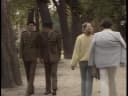
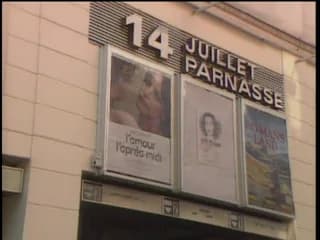
    They come out of the 14 Juillet-Parnasse. Et si on marchait un peu ? Mireille shows Robert Montparnasse, the old quarter of artists: Modigliani lived here; all around, painters' studios.

  3. Starts at 1:58

    3.My passport!

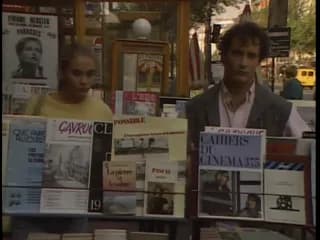
    In front of a bookshop Robert stops, searches his pockets — no passport! He runs back to his room and comes back in his seersucker jacket: it was in the pocket. Tout est bien qui finit bien.

  4. Starts at 2:50

    4.Ça t’a plu ?

    The literary cafés of Trotsky and Picasso. Did you like the film? Robert prefers Ma nuit chez Maud. Mireille: too chaste, nothing happens! Real cinema might be the silent films — Chaplin: Ça, c'est du cinéma !

  5. Starts at 4:20

    5.Balzac, a garage, the Assemblée

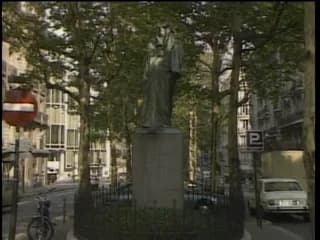
    Rodin's Balzac — little Marie-Laure once called it a cow. The garage where Robert rented a car 'to drive in Burgundy'. The Assemblée nationale, where bills are prepared.

  6. Starts at 5:04

    6.The view from the pont de la Concorde

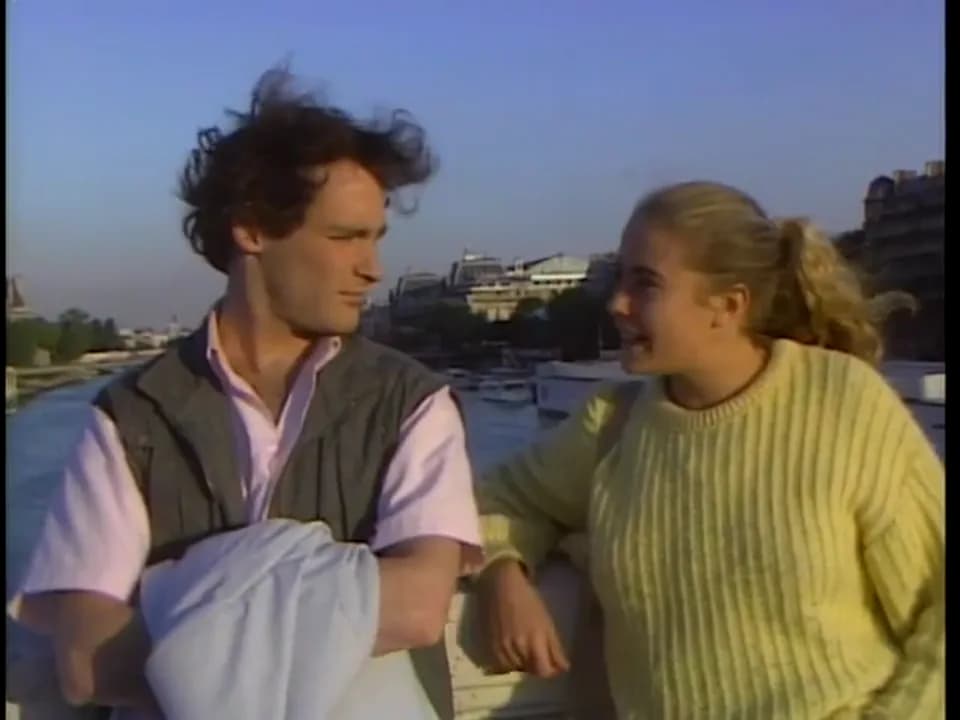
    On the bridge Mireille points out Orsay (once a station), the Louvre, the Madeleine — where Maman wants her married, because of the steps — and the American embassy. Robert wants to read the obelisk; Mireille: On va se faire écraser !

Show the other 13 scenes
  1. 7The soldier and the karateQuiet paths behind the Petit Palais, sparrows in the dust. Two soldiers on leave laugh at Robert's jacket. Mireille turns round — three moves — and the soldier rolls in the dust. Robert throws his jacket away; Mireille picks it up.Starts at 6:23
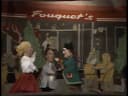
  2. 8Si on allait… ? A suggestionThey sit at the terrace of Fouquet's. Then the professor explains: Si on allait boire quelque chose ? is a suggestion. And Montparnasse: studios of painters, weaving, welding, cabinet-making…Starts at 7:25
  3. 9Ça t’a plu ? — Pascal’s betÇa t'a plu is the past of plaire. Ma nuit chez Maud is another Rohmer film, full of talk: Marxism, religion, Pascal's wager. Il faut parier — you have to bet.Starts at 9:03
  4. 10Silent films and CharlotFilms used to be muets. Charlot is Charlie Chaplin — not de Gaulle! Close-ups, wide shots, editing. Ça, c'est du cinéma ! Ça, c'est une glace ! And Marie-Laure is contre les devoirs à la maison.Starts at 10:57
  5. 11Your turn: you are RobertListen to the film argument, then play Robert's part: Oui, bien sûr. Mais à choisir… Pourquoi ? Parce que pour toi, le cinéma, c'est la violence ?Starts at 12:25
  6. 12Balzac, the MPs — and envoyerBalzac, the 19th-century novelist (not a cow). The MPs prepare the bills and send them to the Senate. Envoyer: a ball, a sweet, a suitcase, a kiss, a letter.Starts at 14:48
  7. 13À cause de l’escalierThe view again: Orsay, Notre-Dame, the Louvre, the Madeleine. Mme Belleau loves it à cause de l'escalier; M. Belleau loves their flat à cause de la vue. Marie-Laure: À cause de moi ? Elle est bien bonne, celle-là !Starts at 16:12
  8. 14The obelisk and the trafficNext time Robert loses his passport, he'll have to go to the embassy. The obelisk: hieroglyphs, deciphered first by Champollion. But the traffic! Robert has already nearly been run over.Starts at 18:00
  9. 15Paths, sparrows and soldiersUne avenue, une rue, un chemin, une allée. Sparrows bathe in the dust. Soldiers en permission vs en service. A café waiter, a baker's boy, a butcher's boy. Une nana = a girl.Starts at 19:49
  10. 16She sends him rollingMireille sends the soldier rolling; she sends Marie-Laure to fetch her album; Mme Belleau sends her to bed. The sparrows fly off: ils s'envolent. And Robert: Qu'est-ce qui te prend ?Starts at 21:30
  11. 17Rusty, thirsty, hungryMireille missed her karate lesson: elle l'a manqué. She's getting rusty, like a gate — and like Robert's Japanese. Now she's thirsty: avoir soif, avoir faim.Starts at 22:56
  12. 18Your turn: answer the professorListen, watch, think and speak: how do you suggest a drink? A walk? Atelier or office? Street or path? Silent or talking film? What do you say about a film you've just seen?Starts at 24:27
  13. 19Guignol wants violencePuppet Mireille asks Guignol what he thinks of the story: too chaste, no action! He wants violence… and gets it. Je suis contre la violence au cinéma ! Credits.Starts at 26:17

Key phrases, with Hindi and Punjabi pronunciation

Real lines from this episode, written the way they sound in Latin letters, Devanagari and Gurmukhi.

  • Et si on marchait un peu ?How about a little walk?
    ay see o(n) mar-SHAY a(n) PUH ?ए सी ओँ माग़-शे अँ पअ ?ਏ ਸੀ ਓਂ ਮਾਗ਼-ਸ਼ੇ ਅੰ ਪਅ ?
  • Mais quoi, tu l'as perdu ?What? You've lost it?
    may KWA, tü la pair-DÜ ?मे कुआ, tü ला पैग़-dü ?ਮੇ ਕੁਆ, tü ਲਾ ਪੈਗ਼-dü ?
  • Alors, qu'est-ce que tu as pensé du film ? Ça t'a plu ?So, what did you think of the film? Did you like it?
    a-LOR, kes-kuh tü a pa(n)-SAY dü FEELM ? sa ta PLÜ ?आ-लोग़, कैस-कअ tü आ पाँ-से dü फ़ील्म ? सा ता प्लü ?ਆ-ਲੋਗ਼, ਕੈਸ-ਕਅ tü ਆ ਪਾਂ-ਸੇ dü ਫ਼ੀਲ੍ਮ ? ਸਾ ਤਾ ਪ੍ਲü ?
  • Ah oui ? Quelle idée !Really? What an idea!
    a WEE ? kel ee-DAY !आ उई ? कैल ई-दे !ਆ ਉਈ ? ਕੈਲ ਈ-ਦੇ !
  • Ça, c'est du cinéma !Now that's cinema!
    SA, say dü see-nay-MA !सा, से dü सी-ने-मा !ਸਾ, ਸੇ dü ਸੀ-ਨੇ-ਮਾ !

Sounds to master in this episode

French sounds explained through the Hindi and Punjabi sounds you already make, with real lines from the episode to copy.

  • Liaison & linking‿

    शब्द जोड़ोਸ਼ਬਦ ਜੋੜੋ

    Workbook 38.5–38.6: enchaînement. It's the last spoken consonant that links to the next vowel — not the last written letter. In Robert et Mireille the t is silent, so it's the r that joins et: [ʁɔ-bɛ-ʁe-mi-ʁɛj]. Same in Ça a d'abord été Montmartre and C'est de l'art abstrait.

    • Oui… ça a d'abord été Montmartre, puis Montparnasse,Yes… first it was Montmartre, then Montparnasse,
    • Et à gauche, la maison blanche derrière les arbres, c'est l'ambassade américaine.And on the left, the white house behind the trees is the American embassy.
  • The ü of tu/y/

    ई + ऊ के होंठਈ + ਊ ਦੇ ਬੁੱਲ੍ਹ

    Lots of ü in this episode: ça t'a plu, muet, la circulation, bien sûr, tu l'as perdu ? Say ee with your lips rounded tight as for oo. Careful: muet (silent) has ü + è: [mɥɛ].

    • Ça t'a plu ?Did you like it?
    • Mais quoi, tu l'as perdu ?What? You've lost it?

Grammar patterns in this episode

Each pattern comes from real lines in the episode. Here is the short version; in the course you notice it in the video first, then drill it.

  1. 1Et si on marchait un peu ? — suggestions with si on

    The friendliest way to suggest something: si on + verb in the imperfect, said as a question. Et si on marchait un peu ? = How about a little walk? Si on allait boire quelque chose ? = Shall we go for a drink? Nothing to do with the past — it's a soft 'what if…'. To say yes: Ah oui, je veux bien ! Bonne idée ! Si tu veux. To say no: Allons plutôt… (let's go … instead).

    From the episode

    Et si on marchait un peu ?

    How about a little walk?

    Hindi and Punjabi link

    Si on allait boire quelque chose ? works just like Hindi क्यों न कुछ पीने चलें? / Punjabi ਕਿਉਂ ਨਾ ਕੁਝ ਪੀਣ ਚੱਲੀਏ? — 'why not…?' A suggestion dressed as a question.

  2. 2C'est là que… / C'est le garage où… — pointing at places

    To point out where something happens, say C'est là que + sentence: C'est là que j'ai loué une voiture. (qu' before a vowel: C'est là qu'on prépare les projets de loi.) Or name the place and add où: C'est le garage où j'ai loué une voiture. C'est l'église où Maman veut que je me marie. Careful: after a noun, où is for a place where; que is for the thing itself: C'est la voiture que Robert a louée. And qui when it's the subject: C'est Robert qui a loué la voiture.

    From the episode

    Oh, c'est là que j'ai loué une voiture l'autre

    Oh, that's where I rented a car the other

    Hindi and Punjabi link

    C'est là que… = यहीं पर तो…; le garage où… = वह गैराज जहाँ… / ਉਹ ਗੈਰਾਜ ਜਿੱਥੇ… — où is simply जहाँ / ਜਿੱਥੇ.

  3. 3À cause de l'escalier — because of

    à cause de + a noun or pronoun = because of: à cause de l'escalier, à cause de la vue, à cause de toi. It contracts like de: à cause du jardin, à cause des chiens. Before a whole sentence (subject + verb), use parce que: parce qu'il y a un très bel escalier.

    From the episode

    C'est là que Maman veut que je me marie, à cause de l'escalier.

    That's where Mum wants me to get married — because of the steps.

    Hindi and Punjabi link

    à cause de = की वजह से / ਦੀ ਵਜ੍ਹਾ ਨਾਲ (+ noun); parce que = क्योंकि / ਕਿਉਂਕਿ (+ sentence). Same split as in Hindi and Punjabi!

  4. 4Je n'ai jamais dit ça — jamais, toujours, souvent

    jamais (never), toujours (always, still) and souvent (often) go right after the conjugated verb. One-word tense: Je ne me trompe jamais. Il déjeune toujours chez lui. Compound tense: between avoir/être and the participle, like pas: Je n'ai jamais dit ça. Elle a toujours voulu être actrice. J'ai souvent entendu parler de lui. jamais takes ne, never pas (in speech the ne often drops: J'aurai jamais fini !).

    From the episode

    Je n'ai jamais dit ça.

    I never said that.

    Hindi and Punjabi link

    Hindi puts it before the verb: मैंने ऐसा कभी नहीं कहा. French puts it after the conjugated verb: Je n'ai jamais dit ça. Same trap as English 'I always eat' → je mange toujours.

  5. 5Elle les lui montre — le, la, les + lui, leur

    Two object pronouns again (Lesson 37). With me, te, nous, vous, those come first: Elle me les rend. But with lui / leur, the order flips: le, la, les come before lui, leur: Elle les lui montre. Il le lui a demandé. Elle les leur rend. Full order: me/te/nous/vous → le/la/les → lui/leur → verb. In the passé composé, both go before avoir; with an infinitive, before the infinitive: Je vais la leur envoyer.

    From the episode

    Mireille montre les cafés littéraires à Robert. Elle les lui montre.

    Mireille shows Robert the literary cafés. She shows them to him.

  6. 6Il faut que tu fasses… — faire in the subjunctive

    After il faut que, il fallait que, il faudrait que, vouloir que… you need the subjunctive (Lessons 36–37). faire has a brand-new stem: fass-. que je fasse, que tu fasses, qu'il fasse, que nous fassions, que vous fassiez, qu'ils fassent. Il faut que tu fasses connaissance avec le quartier. Il fallait que je fasse un peu d'exercice. Il faudrait qu'il fasse attention ! Add it to aille, sache, puisse, aie, sois.

    From the episode

    Il faut que tu fasses connaissance avec le quartier des artistes

    You have to get to know the artists' quarter

    Hindi and Punjabi link

    Hindi has a subjunctive too: माँ चाहती हैं कि मैं वहाँ शादी करूँ — not करती हूँ but करूँ. French: Maman veut que je me marie, il faut que je fasse. que = कि.

Words you will meet

Each word is written the way it sounds in Devanagari and Gurmukhi.

  • se promenerto go for a walkसअ प्रोम-नेਸਅ ਪ੍ਰੋਮ-ਨੇ
  • un quartierm.a neighbourhoodअँ काग़-त्येਅੰ ਕਾਗ਼-ਤ੍ਯੇ
  • faire connaissance avecto get to knowफ़ैग़ को-ने-साँस आ-वैकਫ਼ੈਗ਼ ਕੋ-ਨੇ-ਸਾਂਸ ਆ-ਵੈਕ
  • un atelierm.a studio, a workshopअँ ना-तअ-ल्येਅੰ ਨਾ-ਤਅ-ਲ੍ਯੇ
  • une librairief.a bookshopün ली-ब्ग़े-ग़ीün ਲੀ-ਬ੍ਗ਼ੇ-ਗ਼ੀ
  • une pochef.a pocketün पॉशün ਪੌਸ਼
  • une vestef.a jacketün वैस्तün ਵੈਸ੍ਤ
  • à choisirif I had to chooseआ शुआ-ज़ीग़ਆ ਸ਼ੁਆ-ਜ਼ੀਗ਼
  • Quelle idée !What an idea!कैल ई-देਕੈਲ ਈ-ਦੇ
  • muetsilent, mutemü-एmü-ਏ
  • parlanttalking (film)पाग़-लाँਪਾਗ਼-ਲਾਂ
  • la bande sonoref.the soundtrackला बाँद सो-नोग़ਲਾ ਬਾਂਦ ਸੋ-ਨੋਗ਼

Plus 23 more words in the lesson, each with its pronunciation.

Practice in all four skills

Listening, speaking, reading and writing: the four skills TEF Canada and TCF Canada score. Every task is built from this episode's own lines.

  • Listening

    8 dictation lines cut from the video: hear it, type it, check every accent. Plus 5 textbook audio drills.

    A line you will write down

    Il était dans ma veste.

    It was in my jacket.

  • Speaking

    Shadow 8 lines after the actors, answer 6 questions aloud, then a short role-play with Mireille.

    How the role-play opens

    Alors, qu'est-ce que tu as pensé du film ? Ça t'a plu ?

    So, what did you think of the film? Did you like it?

  • Reading

    A short story, “A walk after the film”, retold with this episode's words, then 5 questions on it.

    The story starts

    En sortant du cinéma, Robert propose de marcher un peu.

  • Writing

    8 fill-in sentences, 5 sentences to build and 2 short writing tasks with feedback.

    A writing task

    Suggest an outing to a French friend with si on…, then tell them about the last film you saw: did you like it, and why (or why not)?

Then a self-test of 8 questions to finish the episode, and new words go into your review deck.

Culture notes

Montparnasse, Montmartre, Saint-Germain

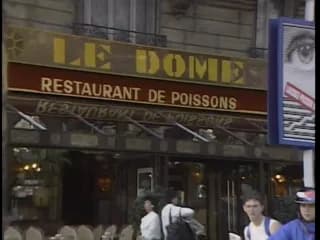
Paris's artists moved around: Montmartre at the turn of the century (Picasso, cubism), Montparnasse between the two World Wars (Modigliani, Foujita — and exiles like Lenin and Trotsky in its cafés), then Saint-Germain-des-Prés after 1945 (Sartre, existentialism, jazz). Montparnasse still has its literary cafés — la Rotonde, le Dôme, la Coupole — and many artists' studios.


A walk across Paris

Their route is a real one: boulevard Raspail (Rodin's Balzac), boulevard Saint-Germain, the Assemblée nationale (where MPs debate the bills before sending them to the Sénat, in the Luxembourg palace opposite the Belleaus), the pont de la Concorde. From the bridge: the Musée d'Orsay (a railway station turned 19th-century art museum in 1986), the Louvre and the Tuileries, the Madeleine church with its grand steps, and the obelisk from Luxor, standing since 1836 in the middle of very busy traffic.

Charlot and the silent films

The French call Charlie Chaplin Charlot — and take him very seriously, as a great artist, not just a clown. French students like Mireille read film magazines such as Les Cahiers du cinéma and admire Griffith and Eisenstein. Robert's joke: Charlot was also a teasing nickname for Charles de Gaulle.

Hindi and Punjabi linkIndia's first feature film, Raja Harishchandra (1913), was muet; the first talkie, Alam Ara (1931), was parlant. And Raj Kapoor's tramp in Awaara and Shree 420 was inspired by Charlot!

Who is in it

  • Mireilletour guide for the day — and a karate fan
  • Robertloses his passport — or does he?
  • Les militairestwo soldiers on leave
  • Marie-LaureMireille's little sister, in the professor's examples
  • Guignolthe puppet critic at the end
  • Le professeurPierre Capretz, who explains the new words

Watch this episode in your free trial

Start with Episode 1 free in two taps. Add your email when you are ready and every episode, this one included, opens for 7 days. No card needed.

Start free with Episode 1

What you get

  • Warm-up, tap-to-translate captions, words & patterns, practice
  • Hindi and Punjabi pronunciation help
  • Printable watch guide, master guide, transcript, textbook, and workbook
  • New words saved to your spaced review deck

Coming up next

Episode 39 — Divertissements IV. Robert and Mireille sit down at Fouquet's for that drink — and the conversation about evenings out in Paris goes on.